Warehouse storage is becoming a strategic asset as operators seek more capacity, higher throughput and better use of existing facilities without expanding their footprint. Well-designed storage systems help improve operational efficiency today while providing the flexibility to support changing inventory profiles and future automation.
Treat Storage Infrastructure as a Network Asset
Space constraints usually show up first as congestion, pallets in aisles, buffer stock in staging areas, and longer travel paths for lift trucks and pickers. Storage design becomes a network issue at that point because poor slotting and layout drive higher labor hours, slower throughput, and missed service commitments across the wider operation. Pallet racking is still the basic building block, but its configuration determines how effectively a building can support changing product profiles and order patterns.
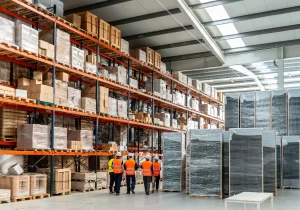
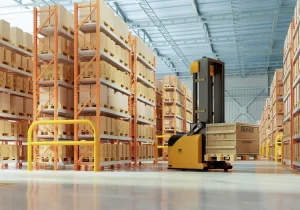
Selective racking supports fast access and high pick frequency, while double-deep, drive-in, or pallet shuttle systems compress slow-moving or high-volume inventory. When SKU velocity and handling requirements are mapped correctly, dense storage raises pallet positions per square foot without sacrificing access for items that drive daily orders. Industry benchmarks show that switching from floor stacking to engineered racking can lift effective capacity by double digits, especially in facilities with high clear heights that are not fully utilized.
Design choices extend beyond the uprights. Aisle width, rack height, and the interface with material-handling equipment determine the ceiling of what a building can deliver. Narrow-aisle or very-narrow-aisle layouts open up additional locations but require equipment decisions and operator training that need to be built into capital plans. Mezzanines, carton flow, and small-parts shelving add another layer of storage density for items not suited to pallet positions, which is increasingly relevant as many facilities carry a broader SKU mix to support omni-channel and late-stage customization.
Safety hardware is another structural element of capacity. Column protectors, rack end guards, and clearly defined pedestrian zones reduce the risk of rack damage and unplanned downtime. Industry loss data shows that impact-related rack incidents can shut down zones for inspection or repair, which removes capacity at the moment it is most needed. Treating safety equipment as part of the core design, rather than as an add-on, protects usable storage and maintains consistent throughput.
Integrated warehouse design and permitting services tie these decisions into a single plan. Structural calculations, local code requirements, fire protection rules, and egress standards all limit what a building can safely hold. A coordinated design and permitting approach helps avoid late redesigns, rework, or de-rated rack elevations once inspectors become involved. For operations teams, that translates into predictable capacity, clearer investment cases, and fewer surprises during ramp-up.
Align Layout, Flow, and Future Expansion
Storage decisions have direct consequences for picking efficiency and overall flow. A layout that maximizes pallet positions but forces pickers to cross long distances or navigate around blocked aisles quickly erodes the benefits of added capacity. Zone design, slotting logic, and the interface to receiving and shipping docks need to be modeled together so that pallets move through the building with minimal touches and consistent cycle times.
Dense storage amplifies these trade-offs. Deep-lane or shuttle systems can dramatically increase pallets per bay but reduce selectivity, which creates challenges for mixed-SKU pallets, tight customer delivery windows, or frequent promotion changes. The most effective installations reserve these dense systems for stable, high-volume items while keeping flexible racking and pick modules near dispatch for fast-moving or unpredictable lines. This blended approach supports a wider range of order profiles without resorting to external overflow storage.
Specialty storage solutions add further levers. Cantilever racking for long goods, vertical carousels for small components, and secure cages for regulated or high-value inventory help match physical form factors and compliance needs to the right equipment. That alignment lowers damage, improves inventory accuracy, and simplifies audits, especially in sectors where traceability and product integrity are closely monitored.
Installation and project management services are becoming more critical as timelines compress. Coordinated phasing allows work to proceed while operations continue, reducing the need for extended shutdowns or temporary offsite storage. Clear milestones, vendor alignment, and early engagement with insurers and code authorities also accelerate go-live dates, which is increasingly important when capacity upgrades are triggered by new customer contracts or seasonal peaks.
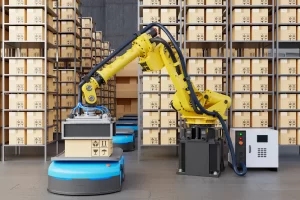
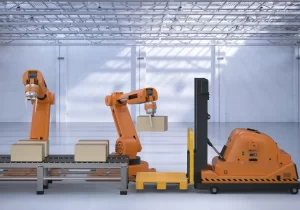
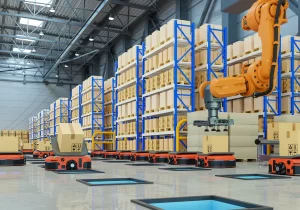
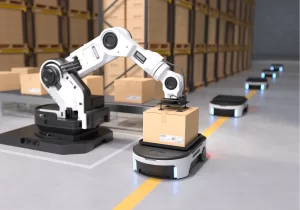
Forward-looking operators are also using layout and racking design to prepare for automation. Clear pick faces, standardized pallet footprints, and consistent aisle geometry make it easier to introduce autonomous mobile robots, pallet shuttles, or automated storage and retrieval systems later, without another full redesign. Recent trade data highlights strong growth in warehouse automation spending, which suggests that storage decisions made today will either enable or constrain those investments over the next planning cycle.
Storage Design Will Shape Long-Term Network Performance
As demand patterns and fulfillment requirements continue to evolve, warehouse storage decisions will increasingly influence how efficiently networks adapt to change. Designing layouts that balance storage density, operational flow and future reconfiguration can help organizations extend facility capacity, support automation initiatives and respond more effectively to shifting customer and inventory requirements.