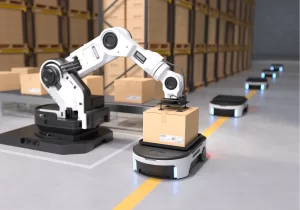
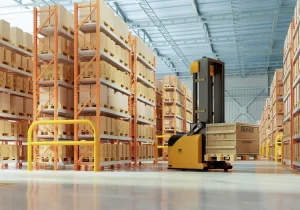
Pallet shuttle automation is gaining ground as intralogistics teams search for higher storage density, lower energy use, and fewer single points of failure in their warehouses. Trade fairs in Europe and the US signaled a decisive turn in capital spending toward modular shuttle systems that can scale with demand and retrofit into existing buildings.
Pallet Shuttles Lead The Next Wave of Warehouse Design
Spring gatherings at major intralogistics hubs in Germany and the US revealed a clear pattern: pallet shuttles dominated both exhibit space and serious buyer discussions. Suppliers from multiple regions brought shuttle-based storage platforms aimed at dense pallet handling in new builds and brownfield sites alike.
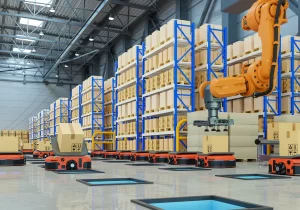
Several structural forces are driving that interest. Shuttle systems distribute throughput across many vehicles rather than concentrating it in a single stacker crane, which reduces the risk that one breakdown halts an entire automated storage and retrieval zone. Capacity can rise through incremental additions of shuttles and rack channels, giving designers a way to align investment with volume growth.
Energy costs sit alongside resilience in the business case. Dense storage uses cube more efficiently and cuts the volume that must be cooled, heated, or lit. Industry data shows that power can represent a significant share of cost in frozen and chilled environments, so shuttle platforms that trim energy per pallet movement support both cost control and emissions targets in food, pharma, and temperature-sensitive ecommerce.
Use cases are broadening beyond reserve storage. More layouts place shuttle blocks near shipping docks as high-density buffers that reclaim marshalling space and stage outbound loads. In manufacturing settings, shuttles serve as intermediate buffers between process steps, holding work-in-progress pallets until the next line segment is ready, which reduces forklift congestion and smooths material flow.
For many businesses, the most pragmatic benefit is retrofit potential. Shuttle racks and vehicles can be installed within existing walls with limited structural work, raising capacity in facilities that cannot expand their footprint or clear the hurdles for taller construction. That approach mirrors investment behavior seen in Europe and North America, where growth plans often emphasize staged upgrades over large greenfield complexes.
System Ownership Becomes The Strategic Question
As more vendors introduce shuttle hardware, the critical choice centers on who designs and stands behind the complete system. Some providers, including Movu within the stow Group, build racking, shuttle vehicles, lifts, and software as one integrated architecture. Others assemble solutions from a mix of partners tied together by interfaces.
This distinction shapes performance, safety, and lifecycle risk. Integrated providers can align rack geometry, shuttle behavior, and vertical transfer capacity as a single engineering problem, which simplifies ramp-up and throughput optimization. A unified technical stack also concentrates accountability for cyber protection, functional safety, and long-term support as software and controls evolve.
The UK illustrates how these decisions play out in practice. A market that has long leaned on manual picking and forklifts is seeing stronger demand for automated storage as service expectations rise, land near population centers tightens, and planning approvals for very tall buildings remain difficult. Shuttle systems help pack more pallets into standard-height warehouses by cutting aisle count and deepening storage lanes while still preserving selective access.
Labor dynamics strengthen the argument. Recruitment for general warehouse roles has eased in some regions, but experienced forklift drivers remain costly and scarce. Shuttle-centric layouts remove many forklift runs from dense storage blocks, shifting activity to lower-skill electric pallet truck tasks at interfaces and to supervision, maintenance, and exception management roles.
Third-party logistics providers are revisiting automation economics as modular shuttle platforms mature. Rather than commit to a full build-out on day one, newer entrants lean toward architectures that start with a small number of shuttles and lanes and expand with contract wins. Short-term rental fleets, such as those offered by Movu, add another degree of freedom by covering seasonal peaks or trial projects without locking in permanent capital.
Dense Hubs Raise The Stakes For Network Design
The surge in pallet shuttle deployments creates a fresh challenge that reaches beyond the four walls of any facility. As more inventory resides in compact, high-throughput hubs, decisions about product allocation, safety stock, and rerouting options take on greater weight in network design and risk modeling. Trade data shows that concentrated storage can lower handling cost yet heighten exposure to local disruption, so the winners from this shuttle wave will be those that pair dense automation with strong simulation, scenario planning, and cross-functional coordination on resilience and recovery paths.