Warehouse automation promises more capacity and less repetitive work, but buying equipment before resolving process weaknesses can make those weaknesses more expensive. Amazon’s robotics program offers smaller operators a useful guide to standardization, coordination and the costs that remain after machines arrive.
Pressure to increase warehouse throughput often produces an equipment shortlist before it produces a reliable diagnosis. Goods-to-person systems, automated storage, robotic picking and planning software each address particular constraints. Their value depends on whether those constraints are actually limiting the building’s performance.
A warehouse struggling with inaccurate inventory records, inconsistent containers or delayed replenishment can carry those problems into a highly automated system. Equipment may accelerate individual movements while orders continue to wait for missing stock or unresolved exceptions. The investment changes the speed of the process without necessarily improving its reliability.
Amazon’s experience provides a substantial case study. In June 2025, the company announced that it had deployed its millionth robot and introduced DeepFleet, an AI system designed to coordinate robot movements. Amazon attributed a 10% improvement in robot travel efficiency to the technology. Those figures describe the company’s own network and should be treated as company-reported results.
The useful lesson for a smaller warehouse concerns how work is defined, measured and connected. Amazon’s purchasing power, engineering resources and control over its technology cannot be replicated easily. Its approach to reducing the variability within individual tasks, however, offers a practical basis for evaluating investments with much smaller budgets.
It also calls for care in interpreting success. A large installed fleet does not establish that every deployment worked as intended, and faster robot travel does not automatically produce an equivalent increase in completed orders. Both distinctions matter when vendor presentations become the starting point for capital decisions.
Define the Work Before Specifying the Machine
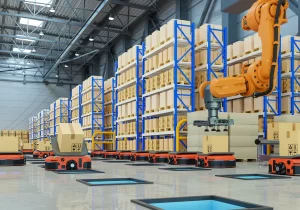
The goods-to-person model associated with Amazon’s Kiva systems addressed a bounded transport task. Robots moved shelving pods to workers, reducing the need for employees to walk through storage areas. Handling the variety of products inside those pods remained a separate activity.
That separation is central to the economics of automation. A warehouse may carry thousands of products with different dimensions, packaging and handling requirements. Moving them inside a consistent container creates a more predictable task than asking a machine to manipulate every product individually.
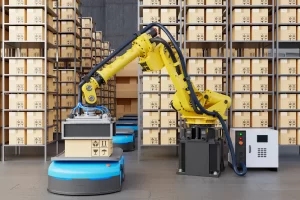
Amazon’s Sequoia system extends this approach through containerized inventory. Mobile robots, gantry systems, robotic arms and employee workstations operate around totes. At the Shreveport, Louisiana, fulfillment center, Amazon says Sequoia has capacity for more than 30 million items. The system brings inventory to workstations designed to reduce uncomfortable reaching and lifting.
For an existing warehouse, the corresponding preparation begins with container dimensions, labeling, inventory locations and replenishment rules. These details determine what equipment must recognize, move and present. Inconsistent inputs expand the range of exceptions that the installation must accommodate, increasing the burden on both its design and the people supporting it.
Measurement is equally important. A business case needs demonstrated information about travel, waiting, handling, errors and rework. An average picking rate alone cannot explain whether employees spend time retrieving products, searching for them or waiting for replenishment. Each cause points toward a different investment.
The baseline also needs to reflect the work the system will actually encounter. Product mix, order size and peak demand influence performance. Testing only predictable, easy-to-handle inventory can produce an attractive result that says little about the conditions responsible for missed dispatch deadlines.
This is where a narrow deployment becomes useful. A repetitive transport movement or a physically demanding handling task can provide a defined starting point, with a measurable workload and a clear boundary. The assessment can then establish whether the improvement survives normal exceptions before extending the installation.
Amazon’s own portfolio illustrates this task-specific approach. Its systems perform different functions, including handling packages, presenting inventory and moving carts to outbound docks. When the company announced testing of the humanoid robot Digit in 2023, its initial application was moving empty totes after inventory had been picked.
A narrow task does not, by itself, guarantee that a failure will remain contained. Machines may depend on shared software, conveyors, charging infrastructure or access routes. Deployment planning therefore needs to establish how work continues during an outage, how accumulated orders are recovered and which failures could affect adjoining processes.
Coordinate the Flow and Count the Support Costs
DeepFleet highlights another source of potential value within an automated warehouse. Amazon describes the system as coordinating robot movements to reduce congestion and improve travel efficiency. The reported gain concerns how an installed fleet works together, demonstrating the value of software alongside physical equipment.
The distinction between movement and output remains essential. A travel improvement can shorten one part of an order’s journey while packing, replenishment or outbound capacity continues to limit completion. Investment appraisal should trace the benefit through to orders shipped, service performance or costs that can actually be removed.
The same reasoning applies to warehouses with little automation. Supervisors need timely information about shortages, blocked locations, incomplete replenishment and queues. When those signals arrive late, labor and equipment can remain occupied without advancing the orders most at risk.
Better information is valuable only when someone can act on it. An exception alert needs an owner, a response rule and a route to resolution. Recording problems more quickly will have limited effect if the underlying replenishment or inventory-control process remains unchanged.
Software improvements therefore deserve their own assessment, alongside material-handling investments. Their priority should follow the diagnosed constraint. Where the principal problem is delayed coordination, additional equipment may have limited value; where physical handling capacity is demonstrably exhausted, information alone will not supply the missing capacity.
Automation also changes the support requirements of a building. Amazon said in its 2024 announcement that next-generation fulfillment centers and sites with advanced robotics would require 30% more employees in reliability, maintenance and engineering roles. That adds an important qualification to business cases centered on reduced manual handling.
For smaller operators, the relevant question is whether the required technical coverage can be secured at an affordable cost. Maintenance contracts, spare parts, software support, training and recovery time belong in the investment model. An installation that performs well during a demonstration may still be unsuitable if a routine fault requires unavailable expertise.
Workforce planning should begin during design. Employees who handle damaged packaging, stock discrepancies and unusual orders can help identify conditions that equipment trials overlook. Their future responsibilities, training needs and authority to intervene should be explicit before the new process becomes essential to daily output.
Amazon’s scale also limits direct comparisons. A company with extensive engineering resources can develop and integrate capabilities that a smaller business must purchase from several suppliers. Acceptance criteria should consequently reflect the buyer’s own inventory, demand patterns, service commitments and support arrangements. Published performance claims can inform an evaluation, but they cannot establish local payback.
Make the Next Change Affordable
An automation contract should account for the changes that may follow installation. Adding a product category, altering packaging or revising order priorities can require new programming, equipment or supplier support. Buyers should establish those costs and responsibilities before committing. The ability to adapt an installation deserves a place in the investment decision alongside its opening-day capacity, particularly when the equipment is expected to outlast today’s demand assumptions.