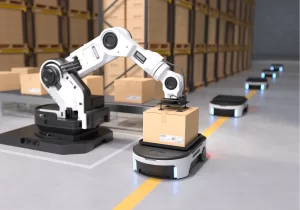
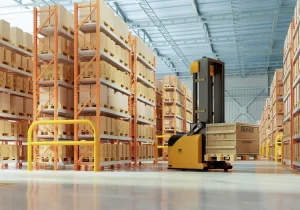
Warehouse automation has traditionally worked best when products arrive in predictable positions, packaging follows consistent specifications and exceptions are limited. AI-enabled machine vision is widening those boundaries, allowing robotic systems to interpret greater product variability and automate tasks that previously required human judgment.
AI Gives Automation More Flexibility
Machine vision has supported warehouse processes for decades, including barcode reading, character recognition, dimensioning and verification. Those applications remain valuable, but conventional systems typically rely on predefined rules and tightly controlled operating conditions.
That becomes harder as distribution centers handle larger SKU portfolios, packaging variations, mixed loads and shorter fulfillment cycles. A misplaced label, unusual carton orientation or unexpected product configuration can create an exception that conventional automation cannot resolve independently.
AI changes the economics of those exceptions by allowing vision systems to learn from examples rather than relying entirely on manually programmed rules.
Modern systems combine 2D or 3D cameras and sensors with machine-learning models capable of identifying products, determining their position and orientation, detecting defects and classifying items. That information can then guide robots, conveyors and other material-handling equipment.
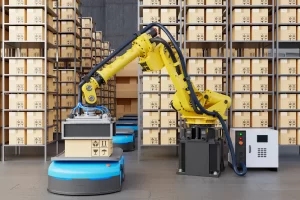
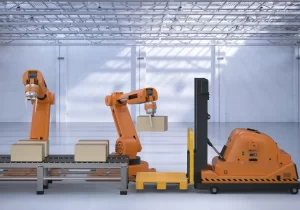
The result is particularly relevant to applications such as robotic depalletizing, mixed-SKU palletizing, piece picking, induction, sortation, product reorientation, dimensioning and quality verification. These are processes where the physical characteristics or positioning of products can change from one transaction to the next.
Returns processing illustrates the difference. Vision can inspect an item for visible defects and help determine how a robotic system should handle or route it. In picking applications, cameras can identify objects and calculate where and how a robot should grip them rather than requiring every item to arrive in precisely the same position.
This capability is becoming more important as warehouses seek automation that can accommodate assortment changes without extensive mechanical reconfiguration.
The Business Case Depends on the Entire System
Better cameras and AI models do not guarantee better warehouse performance. A vision application ultimately depends on how effectively visual information is converted into physical action.
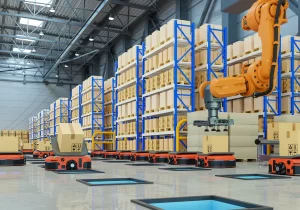
A complete system can include cameras or 3D sensors, lighting, optics, image-processing hardware, software, calibration tools, communications interfaces and application-specific algorithms. Those components must also work with robots, end-of-arm tooling, conveyors and warehouse control or orchestration software.
A system might identify an item perfectly but still fail if a robotic gripper cannot handle its packaging, the robot cannot reach it safely or upstream equipment cannot maintain sufficient product flow. That makes machine vision less a standalone technology purchase than part of an integrated automation architecture.
This distinction matters when evaluating ROI. AI can reduce some of the engineering traditionally required to configure vision applications because models can be trained using examples. Easier configuration could make advanced vision practical for a broader range of warehouses while reducing the effort required when products or processes change.
But AI vision is not automatically the best answer. Highly repetitive applications with consistent products and predictable presentation may continue to perform effectively with conventional rules-based systems. Adding machine learning where variability is minimal can increase complexity without producing a corresponding improvement in throughput or labor productivity.
Assessment therefore needs to extend beyond whether a task contains variability. Throughput requirements, packaging quality, lighting, environmental conditions, exception frequency, available product data, changeovers, labor availability and the financial consequences of downtime all influence the business case.
Implementation also requires time. Depending on application complexity, planning, integration, testing and deployment can take several months. Starting with a clearly defined bottleneck or exception-heavy process can provide a stronger basis for determining whether the technology can produce measurable gains before expanding it elsewhere.
AI also has uses outside visual product handling. Machine-learning models can monitor automation equipment for abnormal operating conditions, supporting predictive maintenance even where sophisticated computer vision is unnecessary.
The Next Constraint May Be Physical, Not Visual
As vision models become easier to train and better at handling unfamiliar objects, perception may stop being the hardest part of many robotic applications. Gripper reliability, robot reach, conveyor synchronization and exception recovery can become the limiting factors instead.
That changes how warehouses should evaluate the next generation of automation. Improving what a machine can see only creates value when the rest of the system can respond reliably at production speed. The strongest investment cases will therefore be built around complete process performance, not AI accuracy in isolation.