Logistics networks are shifting execution decisions closer to warehouses, yards and docks where disruptions first emerge. By combining real-time data with AI-driven orchestration, companies are improving asset utilization, reducing delays and strengthening supply chain resilience.
From Static Planning To Cognitive Execution At The Edge
For years, enterprise planning platforms promised end-to-end optimization while yards and docks ran on clipboards, spreadsheets and radio calls. That gap between digital ambition and physical control has become the primary failure point as congestion, strikes and climate events collide with tight labor and asset constraints. Inventory worth millions can sit unaccounted for in trailers just outside the building while upstream systems confidently show it as available.
Linear, deterministic workflows assume arrivals, labor and capacity will follow the script. They do not. When a vessel slips schedule, a port closes or a regional carrier misses a window, conventional systems hand the mess to local teams, who spend hours re-keying data, reprioritizing moves and escalating exceptions. The effective operating model turns planners and supervisors into transaction clerks, even as boards demand better service, lower carbon and tighter working capital.
The emerging architecture treats the edge as a cognitive environment rather than a physical dead end. In this model, every trailer, dock door, yard tractor, gate, material handling asset and labor resource publishes its status through an API-first infrastructure. Networked intelligence replaces fragmented device deployments so that transportation, warehouse and yard systems share the same live context, not reconciled snapshots. Industry reports point to double-digit improvements in dock throughput and trailer turn time when these nodes are instrumented and connected.
The N.O.W. Architecture: Networked, Orchestrated, Wide-Angle
The N.O.W. blueprint captures how that intelligence becomes operational discipline. Networked intelligence links previously isolated applications and assets into a single execution fabric. Instead of planning from historical averages, decision engines draw on streaming signals, truck telematics, gate reads, labor availability, congestion indices and weather feeds. Digital twins synchronize these inputs into a shared representation of the facility and its immediate network, creating a live basis for capacity and flow decisions.
Orchestrated agility then converts visibility into action. Event orchestration engines use rules and agentic AI to sequence tasks, trigger workflows and reconfigure operations as conditions shift. When a truck checks in, the system validates dock capacity, inventory priority, yard layout and labor plans before assigning a door and dispatching a spotter move. If a high-priority order risks missing its cut-off, the engine can resequence picks, upgrade transport mode or reassign labor within governance limits instead of waiting for a manager to discover the problem on a report.
Wide-angle visibility expands the lens beyond the fence line. Digital twins incorporate external signals such as port congestion, regional weather models, road closures and carrier performance trends. That data feeds predictive ETAs and risk scores, which drive proactive yard strategies, pre-allocating scarce doors, staging swing trailers, or flexing shifts before waves of late arrivals hit. Recent trade data shows that facilities using integrated external feeds for ETA prediction reduce demurrage, detention and accessorial fees in a measurable way.
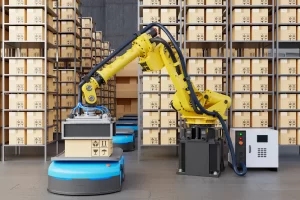
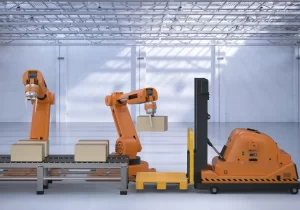
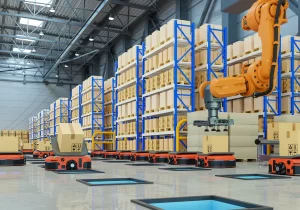
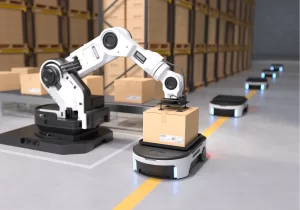
Across the site, autonomy begins to scale. Automated yard tractors reposition trailers against dock constraints derived from the twin, while AI scheduling tools refine dock assignments in real time. Human roles change accordingly. Operators move from chasing paperwork to supervising systems, validating edge cases and negotiating trade-offs between service, cost and ESG commitments. In high-turn environments, this shift can unlock up to 40% efficiency gains while cooling the burnout that has driven attrition in warehouse and driver roles.
Acting Now Or Paying The Inaction Tax
The economic logic of this change sits directly on the profit and loss statement. More accurate, self-correcting execution reduces premium freight, overtime and write-offs. Reliable on-time, in-full performance protects revenue as customers prioritize dependable partners in unstable markets. Tighter synchronization between physical flows and inventory records lightens stock buffers and compresses order-to-cash cycles, improving both working capital and asset turns.
The greater risk sits with delay. Treating edge modernization as a multi-year experiment erodes strategic options each quarter. As cognitive facilities learn and compound performance data, the performance gap widens, unit costs fall, capacity becomes more elastic, and resilience becomes an institutional capability. Those without this architecture face a different compounding effect, every disruption must be solved manually, every new automation bolt-on adds complexity, and every board demand for resilience runs into the same brittle execution core.
Execution Governance Will Determine AI Performance
As logistics execution becomes increasingly automated, the organizations achieving the strongest results are likely to be those that pair AI with disciplined governance. Defining decision boundaries, escalation processes and performance metrics across warehouses, yards and transportation can help ensure automation improves service, productivity and resilience while maintaining operational control as networks become more dynamic.