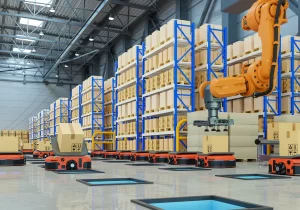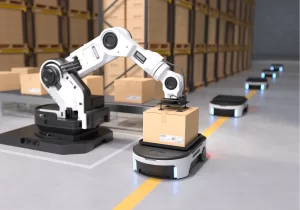
Amazon’s newest warehouse robot, Blue Jay, consolidates three core tasks, picking, sorting, and packing, into one coordinated system. The rollout marks a step toward fully automated fulfillment centers, underscoring how robotics are redefining both efficiency and the future of warehouse labor.
One Robot, Three Functions
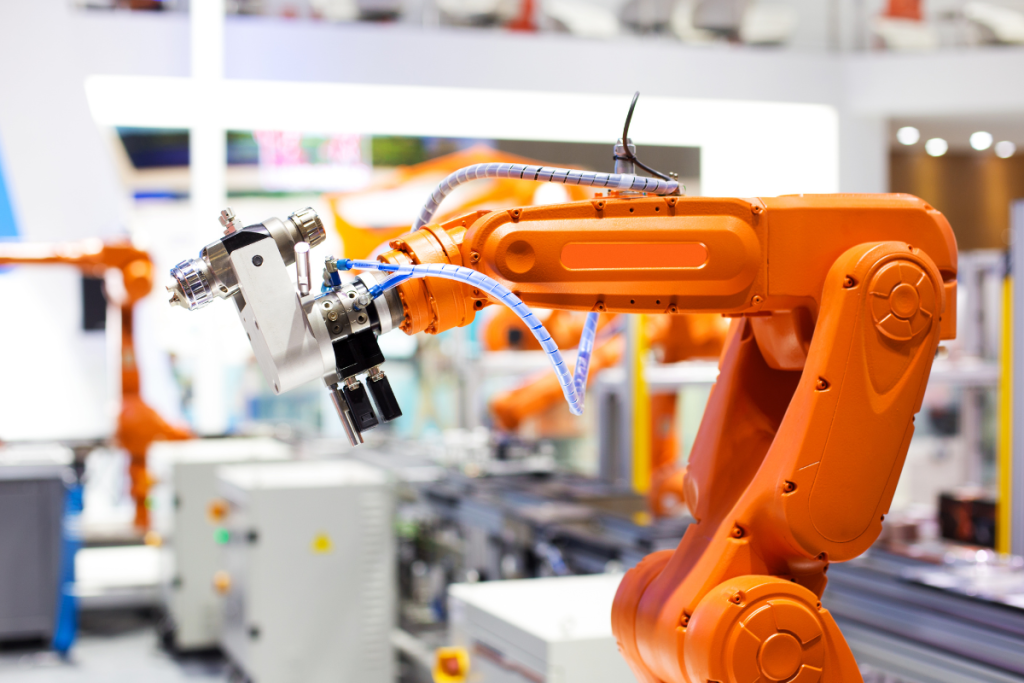
Amazon has introduced Blue Jay, a multi-function warehouse robot designed to handle several key tasks simultaneously, picking, sorting, and consolidating orders, within a single automated cell. The system consists of robotic arms mounted on an overhead track, each fitted with suction-cup grippers that can lift and organize items of varying size and shape.
By combining what were previously three separate stations, Blue Jay reduces physical space requirements and improves throughput across fulfillment lines. Amazon said early trials at its South Carolina facility show the robot can process roughly 75 percent of stored items. The company describes the initiative as part of an ongoing effort to support employees by taking on repetitive or physically demanding work.
Blue Jay joins an expanding ecosystem of automation that includes systems such as Vulcan, a robot with tactile sensing capabilities launched earlier this year, and the mobile platforms that trace back to Amazon’s $775 million acquisition of Kiva Systems in 2012. Together, these technologies form the backbone of Amazon’s next-generation logistics architecture, where machine coordination rather than manual sequencing drives productivity gains.
Automation Gains and Workforce Uncertainty
The rollout of Blue Jay comes as Amazon’s rapid automation program faces mounting scrutiny. A recent New York Times investigation suggested internal models project the company could avoid hiring more than 160,000 U.S. workers by 2027 through expanded robotics, potentially saving about 30 cents per package. Amazon disputed the characterization, calling it an incomplete view of its broader hiring strategy.
While the company maintains that robotics enhance safety by reducing strain injuries, labor advocates point to data showing higher injury rates at automated facilities compared with manual sites. Amazon continues to emphasize that employees remain “at the center” of its robotics development, highlighting training initiatives such as its mechatronics and robotics apprenticeship program aimed at transitioning staff into technical maintenance and system-monitoring roles.
Analysts at Morgan Stanley estimate that automation could deliver up to $4 billion in cost savings by 2027 through lower labor and fulfillment expenses. For a company employing more than 1.5 million people worldwide, such savings highlight how automation has evolved from a marginal efficiency play into a structural cost-management strategy.
From Automation to Adaptive Infrastructure
As robotics systems integrate real-time analytics and feedback loops, fulfillment centers are evolving into responsive ecosystems that adjust to order volume, SKU mix, and even regional demand. This convergence of robotics, AI, and data orchestration is setting the foundation for supply networks that operate more like living systems than linear production floors, a model now gaining traction across advanced logistics hubs in the U.S., Germany, and Japan.