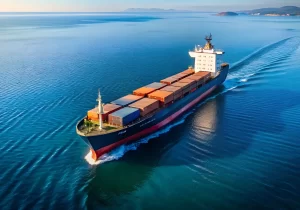
The Strait of Hormuz has renewed attention on global chokepoints, but the same constraint logic applies across factories, suppliers, ports and transport corridors. Constraint-based planning and digital planning tools are helping companies identify the few bottlenecks that govern overall network performance.
From Single Lane Disruptions To Network-Wide Constraints
Global networks are dense with potential bottlenecks, from narrow shipping straits and congested ports to single-source component suppliers and saturated warehouses. The current focus on the Strait of Hormuz highlights one visible risk, but similar constraints run through production, transportation, and data flows in every complex network. These constraints rarely exist in isolation; they stack and interact, turning a local issue into a system-wide performance ceiling.
The Theory of Constraints provides a useful operating lens. Instead of spreading attention evenly across the network, it argues that performance is gated by a small number of true constraints that limit throughput and service. In practice, this might be a critical chemical plant running at maximum safe capacity, an inland rail corridor with limited slots, or a customs regime that introduces unpredictable dwell time. Industry analyses of recent disruptions show that when such nodes are hit, lead times and working capital requirements can increase severalfold.
Modern planning and scheduling tools have revived and extended this logic. Constraint-based planning engines and advanced planning and scheduling platforms can now model capacity, lead times, and variability more accurately across multi-tier networks. When combined with external data on weather events, labor actions, or geopolitical risk, these tools help expose where physical or regulatory bottlenecks are most likely to bind. The Strait of Hormuz is simply one visible example; similar exposure exists wherever volume is concentrated through a narrow physical or contractual channel.
Turning Constraint Awareness Into Design and Governance
Identifying a bottleneck is only the first step. Treating constraints as design inputs changes how networks are structured, capital is deployed, and contracts are written. Critical lanes and facilities need explicit throughput strategies, realistic capacity envelopes, contingency routes, and inventory buffers that are dimensioned against the constraint rather than average demand. Recent trade data shows that firms with more diversified routing around the Suez and Panama corridors recovered service levels faster after canal disruptions than those that relied on single habitual routes.
Digital twins and scenario tools deepen this capability. A live twin of the end-to-end network can be used to test how volume surges, port closures, or export controls propagate through constrained nodes. Some organizations now run parallel simulations, comparing different routing, sourcing, or product allocation strategies before committing capital or promising service. When this is integrated with financial metrics, decision makers can see not just where a constraint will appear, but what it will do to margin, working capital, and carbon exposure.
Governance must keep pace. Constraint management benefits from a clear cadence where risk, operations, and finance review the health of known chokepoints and scan for emerging ones. Supplier diversification programs, co-investment in additional capacity, and long-term logistics contracts should be prioritized based on constraint criticality rather than simple spend or volume metrics. Industry reports indicate that organizations with formal risk councils tied to constraint dashboards have reduced disruption-related write-offs and premium freight spend compared with peers that rely on ad hoc escalation.
Clear operating rules at the constraint also matter. Priority models for scarce capacity, pre-agreed product cut lists, and customer communication protocols reduce decision latency when a chokepoint tightens. This is where workforce capabilities intersect with network design, teams need the judgment and data fluency to interpret constraint signals and act within hours.
Constraint Mapping Should Become a Standing Planning Discipline
Constraints evolve as trade flows, regulation, customer demand and supplier footprints change. A production line that limits output today may be replaced by a port, a supplier, an energy connection or a data dependency within months. Regularly reassessing where the network’s limiting factors sit, using live operational and external risk data, helps ensure that capital investment, sourcing decisions and contingency planning remain aligned with the parts of the network that ultimately determine throughput and service.