Artificial intelligence is beginning to influence not only how consumers shop but how orders enter fulfillment networks. New research from DHL suggests retailers and logistics providers may soon need to manage demand generated by autonomous shopping agents alongside growing expectations for speed, flexibility and sustainability.
AI-Driven Demand Will Not Look Like Today’s Orders
The 2026 e-commerce trends report from DHL, based on responses from 29,000 consumers and 5,800 businesses across 29 countries, shows that demand creation is moving toward machine-to-machine negotiation. Twenty-nine percent of consumers globally say they would trust AI to place purchases for them within five years, rising to 33% for Gen Z and 36% for millennials. At the same time, 59% of businesses expect shopping to flow through virtual assistants instead of today’s websites or apps.
That shift changes the shape of demand more than the volume. If AI agents search and compare in milliseconds, price, availability, delivery promise, and returns conditions will be tested continuously across competing networks. DHL eCommerce CEO Pablo Ciano describes AI as a force that allows consumers to surface the ‘best offer’ almost instantly, while retailers gain immediate insight into emerging patterns. In operational terms, this points to much denser decision cycles for assortment, allocation, and last-mile routing.
Futurist Tom Cheesewright notes the advance of open-source AI agents that already take on tasks such as comparing offers and managing subscriptions. His projection that retailers could operate ‘bot fronts’ where AI systems negotiate directly with consumers’ assistants implies a world where order capture, promotion, and service commitments are mostly automated. For supply operations, that means planning needs to cope with constant algorithmic repricing and real-time service differentiation rather than periodic campaign calendars.
This AI-led negotiation environment also exposes weak integration between order management, warehouse execution, and transportation. Industry reports already show many enterprises running fragmented OMS, WMS, and TMS stacks, which slows response to changes in promise times or delivery options. If shopping agents begin to adjust choices based on live delivery performance, networks that cannot surface accurate slot availability and lead times at the moment of search will quietly lose volume to better-orchestrated competitors.
Convenience, Returns, and Secondhand Flows Redraw Network Design
Despite the emerging role of AI, the DHL data confirms that human expectations on convenience remain a decisive trigger for conversion. One in five consumers say faster delivery would make them more likely to complete a purchase, and around three in ten now use out-of-home options such as parcel lockers or pickup points. These behaviors require granular inventory positioning, micro-fulfillment options, and carrier mixes that support both home and alternative delivery locations without driving up unit cost.
Delivery economics are also shaped by payment and returns. According to the report, 62% of shoppers will abandon a cart if their preferred payment method is missing, which pushes more orders through specific payment providers and fraud controls that have their own settlement timelines and data feeds. Free delivery and free returns still play a heavy role in buying decisions, even as many retailers report rising losses on returns and are experimenting with fees, longer windows, or selective free-return policies.
DHL’s findings on secondhand activity add another layer of complexity. Globally, 52% of consumers have sold items through online marketplaces, and 45% say they buy secondhand or refurbished products for sustainability reasons. Cheesewright expects that by the next decade a large majority of adults will routinely recycle furniture, fashion, and electronics through marketplaces. This trend converts one-way flows into circular ones, with more inspection, grading, refurbishment, and recommerce operations embedded in the network.
Recent trade data and industry case studies show that returns already account for double-digit percentages of parcel volumes in many consumer sectors, with reverse flows often less automated than outbound. As secondhand and trade-in programs scale, return centers resemble upstream production sites, with bill-of-materials logic for parts harvesting, quality rules, and resale-channel allocation. Networks that treat reverse logistics as a secondary process will struggle to manage the combined impact of AI-driven ordering, high return expectations, and circular inventory.
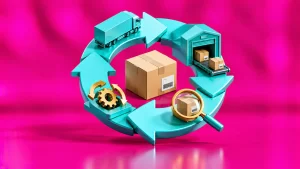
For operators designing the next generation of fulfillment, the DHL report effectively frames a convergence problem. AI agents accelerate the tempo of order creation and price testing. Consumers lean harder on free shipping, easy returns, and delivery flexibility. Regulators and investors raise expectations on sustainability, which makes consolidation, out-of-home delivery, and refurbishment more attractive. The constraint is that most physical networks, contracts, and workforce models were built for slower cycles and one-directional flows.
The Next Challenge Is Managing More Dynamic Demand
Retailers have spent years improving forecasting, inventory placement and last-mile execution. AI-driven commerce introduces a new variable by enabling purchasing decisions to react continuously to price changes, delivery promises and product availability. Networks built around fixed planning cycles may struggle to keep pace, while those with stronger visibility into inventory, transportation and capacity could be better positioned to absorb increasingly fluid demand patterns.