PepsiCo’s latest move puts digital twin execution at the center of its network redesign. In a multi-year collaboration with Siemens and Nvidia, the company is building physics-based virtual replicas of plants and warehouses to re-architect how materials, labor, and assets flow from production to customer delivery.
Digital Twins as The New Control Layer
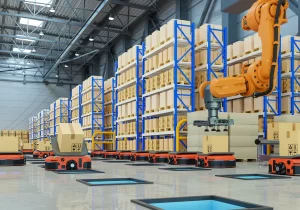
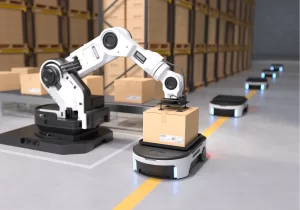
The partnership uses Siemens’ Digital Twin Composer, running on Nvidia’s Omniverse platform, to recreate end-to-end facility behavior in a virtual space. These models capture conveyor speeds, pallet routes, equipment placement, operator movements, and inventory flows with physics-based accuracy.
In practice, this gives planners and engineers a persistent sandbox for supply chain decisions. Instead of relying on static spreadsheets or one-off simulations, they can run multiple layout options in parallel, adjust routing rules, test new automation, and see how each choice affects throughput, congestion, labor utilization, and service.
PepsiCo reports that early pilots delivered about a 20 percent lift in throughput at trial sites, while cutting capital expenditure on new layouts or expansions by roughly 10 to 15 percent. The same models are detecting the majority of operational issues in simulation, with claims of up to 90 percent of potential problems identified before changes touch the warehouse floor.
Those numbers matter because they reposition network design as a continuous, data-driven process instead of an episodic engineering project. Every proposed change becomes a testable hypothesis inside the twin. Design cycles compress from months to weeks, and the cost of being wrong drops sharply because failure happens in code, not concrete.
The digital twins do more than mirror single buildings. Siemens’ industrial metaverse approach connects live sensor data, control systems, and warehouse management information back into the models, so virtual performance stays aligned with physical reality. Over time, this creates a digital infrastructure layer that can coordinate multiple facilities under a single decision logic, rather than treating each plant or distribution center as a silo.
For a global network that spans thousands of stock-keeping units, multiple manufacturing technologies, and diverse logistics partners, a unified AI-ready model becomes the backbone for intelligent orchestration, not just local optimization.
From Fixed Footprints To Adaptive Capacity
The strategic break in PepsiCo’s approach lies in how it uses digital twins to change investment logic. Historically, capacity and layout decisions locked in years of cost and risk: new lines, added wings, or incremental automation based on best-guess forecasts and limited scenario analysis.
With a persistent virtual network, the sequence reverses. Teams can simulate alternative expansion paths, carrier strategies, and labor models across many sites, then choose where to deploy capital based on validated performance and risk metrics. The pilots show design validation rates approaching completeness, which gives more confidence in long-term commitments.
This matters in an environment defined by demand volatility, labor constraints, and rising resilience expectations. Digital twins allow planners to stress-test facilities against spikes in volume, transport disruption, or new product mixes, and to rehearse mitigations before real-world events hit.
Industry reports on AI in logistics highlight that most current deployments still focus on forecasting and visibility, with fewer organizations tying AI directly into physical reconfiguration of assets. PepsiCo’s move signals a shift toward what many analysts describe as ‘AI-governed ecosystems’ where the system learns from live performance and recommends structural changes, not just tactical adjustments.
The company is piloting the approach in selected US plants and warehouses, with a stated intention to scale globally. As the models mature, each new facility can be designed against a shared digital blueprint, rather than reinvented locally. That creates a consistent pattern for automation, data standards, and resilience design while still allowing regional variation.
The Nvidia and Siemens partnership also illustrates how compute-intensive simulation is becoming integral to operations. Running physics-accurate twins across an entire network demands graphics processing at scale, but it also enables ‘twins of twins’ scenarios where multiple network designs or disruption responses can be evaluated side by side for cost, carbon, and service impact.
Digital Twins as a New Basis For Operating Discipline
One practical next step for any large network is to treat the twin as part of formal governance, not just an engineering tool. When major changes to footprint, automation, or service models require evidence from structured simulations, decision-making gains a repeatable standard. Over time, that discipline shapes how portfolios of sites evolve, how resilience is budgeted, and how often core assumptions about demand, labor, and capacity are challenged against a living model rather than static plans.