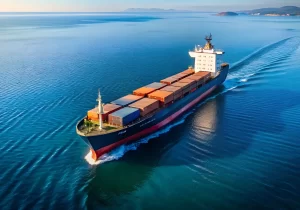
The reopening of the Strait of Hormuz eases pressure on global shipping networks, but carriers and shippers still face weeks of disruption as services, equipment and schedules work back toward normal. The recovery phase will test how quickly supply chains can translate renewed access into reliable flow.
Rethinking Network Design Around a Fragile Chokepoint
The new framework between the US, Iran and Israel lays out a roadmap to restore transit through one of the world’s most sensitive maritime corridors, where Iranian officials estimate roughly one-fifth of global crude exports normally pass. For routing and inventory decisions, that corridor has shifted almost overnight from unavailable to partially accessible, with conditions attached.
Iranian forces will conduct sea mine clearance for the first 30 days after the treaty signing on 19 June, during which naval escorts will govern safe passage. Commentators with naval experience, including retired US officers, expect this process to take weeks and warn that fully unescorted navigation could take far longer. In practice, transit will restart through controlled convoys, not open sailing lanes.
That structure matters for planning. Escorted sailings require carriers to hit defined departure windows instead of optimizing schedules solely around port operations and asset utilization. Voyage plans that once flexed within hours of port readiness may now need to align with military timetables, adding one to two days of buffer on either side of the strait.
The treaty also waives transit tolls for the first 60 days, creating a temporary cost offset against extended voyage times, higher war-risk insurance and residual congestion. For some operators, this relief will be eclipsed by the complexity costs of re-sequencing sailings and repositioning equipment after months of diversion.
During the closure, container and tanker traffic shifted to the Cape of Good Hope, adding around 3,500 nautical miles and roughly two weeks sailing time to standard Asia–Europe rotations. That detour pushed lead times for European importers from approximately 30–35 days to 45–50 days, with downstream effects across production schedules and customer commitments. Automotive manufacturers in continental Europe reported specific disruptions tied to delayed electronic and specialist components that normally move through Gulf ports.
Attempts to build temporary alternatives, such as rail land-bridges through Central Asia and Turkey, absorbed only a fraction of displaced volume and were economical mainly for high-value or urgent shipments. The reopening of Hormuz will therefore unwind an improvised patchwork of routes and modalities and force a second round of network reconfiguration, this time back toward the Gulf.
From Crisis Routing To Structured Resilience
Energy markets reacted quickly to the prospect of resumed flows. Brent crude prices dropped by more than 4% to roughly US$83.60 a barrel, while West Texas Intermediate fell toward US$80, extending a decline of about US$6 per barrel across the previous week and a further US$4 overnight, according to analysts at PVM Oil Associates. Lower crude prices reduce bunker fuel costs, but the benefit will be unevenly distributed until sailing patterns stabilize.
Container carriers are preparing gradual service reinstatement. Major lines such as Maersk and MSC expect six to eight weeks before schedules resemble pre-conflict rotations, reflecting vessel repositioning, port congestion and crew planning. Early sailings are likely to prioritize critical cargoes and long-deferred contracts, leaving some segments facing extended delays even as the corridor technically reopens.
The operational sequencing of this recovery creates a distinct planning profile. Logistics and planning teams now have a 60-day horizon with zero transit tolls, ongoing mine clearance, and evolving naval escort availability. Insurance markets will respond in stages as risk models adjust to verified reductions in threat levels around the strait and in nearby theaters such as Lebanon, which continue to influence underwriters’ assumptions.
Commentary from execution specialists at technology providers such as Blue Yonder underscores that the reopening reduces pressure but does not erase it. Backlogs built during the closure, refinery and port disruptions, and a global equipment imbalance will continue to distort flow patterns. Recovery will arrive in waves, with bursts of capacity unlocked as channels clear, followed by new bottlenecks at congested terminals.
Recent industry experience with Red Sea diversions and pandemic-era port congestion shows that network shocks often linger in the form of skewed container positions, crew rotations and charter commitments long after the triggering event ends. The Hormuz reopening sits squarely in that pattern. The strategic task now is to turn temporary workarounds into codified options rather than abandon them once the main corridor is usable again.
The Value of Keeping Alternative Routes Alive
One lesson from recent disruptions is that alternative routes become far more useful when they are maintained before a crisis rather than rebuilt during one. Rail corridors, secondary ports, regional warehousing and diversified carrier relationships often appeared expensive when Hormuz was fully accessible, yet they provided critical flexibility when primary routes failed. As traffic returns to the Gulf, companies have an opportunity to evaluate which contingency options genuinely improved service, inventory availability and customer performance. The strongest networks are likely to be those that preserve a measured level of optionality, treating alternative pathways as part of everyday network design rather than temporary emergency measures.