Warehouse leaders face mounting pressure from labor shortages, automation investment demands and expanding compliance requirements, even as customers expect faster fulfillment and greater visibility. The strongest performers are strengthening data discipline, execution consistency and workforce productivity while preparing facilities for higher levels of automation.
Labor Scarcity, Rising Complexity, and the Automation Gap
Many distribution networks have regained volume stability, but the labor model that carried warehouses through the last decade is no longer dependable. Demographic shifts, tight local labor markets, and greater role expectations mean hourly and supervisory positions are harder to fill, more expensive to retain, and slower to train. At the same time, omnichannel fulfillment, SKU growth, and service differentiation add task variety and decision load on the floor.
This combination pushes manual processes past their natural limit. Pick paths, slotting rules, and dock operations designed for predictable wholesale flows now need to support mixed case, piece-pick, and rapid order cutoffs without sacrificing safety or accuracy. Industry surveys indicate that fulfillment labor can account for more than half of warehouse operating cost in high-velocity facilities, so even small productivity erosion compounds quickly.
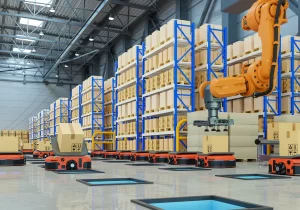
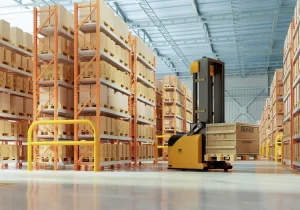
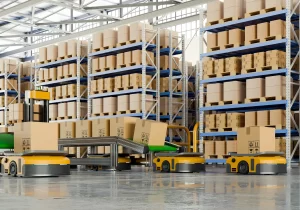
Automation and robotics are moving from optional efficiency levers to structural capacity. However, the adoption path is uneven. Many facilities sit between eras, legacy WMS platforms, scattered point solutions, pilot robots, and paper-based exceptions. Fragmented systems make it difficult to orchestrate work, balance utilization, or redeploy capacity when demand shifts. The challenge for 2026 is not simply acquiring automation, but integrating it into a coherent operating model where tasks, data, and people work from a single version of reality.
Data quality and system discipline become critical. Without accurate locations, standard processes, and consistent event capture, even advanced equipment struggles to deliver promised throughput. Recent implementation data shows that warehouses with clear process governance and clean master data reach automation payback faster than peers with similar technology but weaker foundations. The next wave of projects will prioritize integration architecture, exception design, and end-to-end visibility over isolated hardware wins.
Omnichannel, Compliance, and the New Transparency Mandate
Customer expectations around speed, delivery choice, and order visibility continue to rise. Retail and B2B buyers increasingly expect accurate promised dates, real-time status, and flexible delivery options, which pushes warehouses into closer coordination with transportation, inventory planning, and customer service. Operations must support multiple order profiles and service tiers from the same footprint, while keeping working capital and space under control.
This omnichannel pressure intersects with a tightening compliance landscape. Environmental and social regulations are expanding traceability requirements for products, packaging, and emissions. Warehouses sit at the data intersection, they hold the records that prove where goods came from, how long they stayed, how they moved, and in some cases how much carbon was emitted from on-site activity. European and North American rules on sustainability reporting, product traceability, and worker safety are already reshaping how storage locations capture and share data.
Meeting these obligations requires more than after-the-fact reporting. Warehouse management systems need to embed compliance logic into day-to-day execution. That includes capturing batch and serial data at receipt, maintaining chain-of-custody records during storage and value-added services, and linking outbound documentation to specific orders, carriers, and destinations. Industry reports indicate that companies able to generate audit-ready data directly from operational systems reduce the cost of regulatory response and minimize disruption from inspections or customer inquiries.
Transparency expectations also extend to partners. Shippers are asking third-party logistics providers for granular performance reporting, emissions data, and evidence of ethical labor practices inside facilities. This raises the bar on standard operating procedures, training, and governance for outsourced operations. Contracts increasingly include service level incentives tied to inventory accuracy, cycle time, and environmental performance, which pull warehousing decisions into broader network and ESG strategies.
Capacity Without Expansion
Many warehouses still focus capital planning on adding space, equipment or labor. Yet industry experience increasingly shows that substantial capacity can be unlocked through better inventory accuracy, faster decision cycles and tighter coordination between warehouse, transportation and planning teams. Facilities that reduce delays between signal and action often gain the flexibility to absorb growth, support new service commitments and manage disruption without the cost and complexity of continual physical expansion.