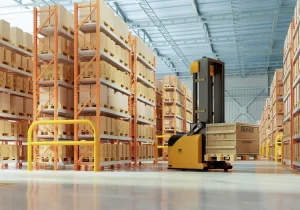
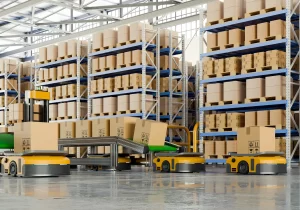
Physical AI is gaining real traction in logistics as fleets of autonomous robots take on work across warehouses, plants and delivery hubs. Under pressure from labor scarcity and reshoring, executives are treating these systems as a core lever for throughput, flexibility and service reliability.
From Basic Automation To Autonomous Decision-making On The Floor
Physical AI describes robots that sense, interpret and act in changing real-world settings instead of following fixed, preprogrammed paths. Recent research from Capgemini finds that roughly 79 percent of organizations worldwide use some form of physical AI, and about 27 percent are in rollout or scale-up. In warehousing and logistics, around 69 percent of leadership teams classify this as a major opportunity, which signals that autonomous behavior on the warehouse floor and in transport yards is becoming a planning assumption rather than a side project.
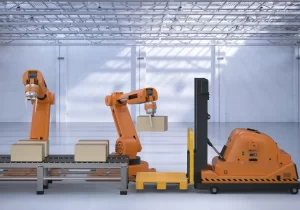
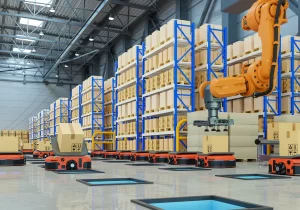
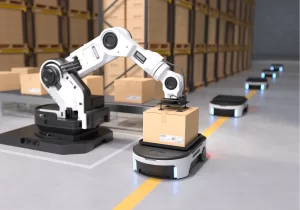
The most visible applications sit inside distribution centers and factories. Autonomous mobile robots move goods between storage, picking and packing zones, while robotic arms and cobots handle pick and place or assist workers at packing and kitting stations. AI systems orchestrate these machines with live order feeds and inventory data, adjusting work queues in line with cut-off times, dock capacity and service priorities. Earlier generations of automation were tied to rigid conveyors or guided vehicles. The current wave relies on sensors, computer vision and edge processors so that robots can navigate congestion, avoid hazards and reposition themselves as layouts and volumes change.
Several technology shifts make this level of autonomy more practical. Advanced AI models support robust perception and path planning in crowded facilities, and simulation platforms allow teams to train and validate robot behavior in digital twins of their sites before deployment. Hardware costs continue to ease down, and commercial models such as robotics-as-a-service convert large upfront purchases into recurring fees. In Capgemini’s survey, 60 percent of executives state that physical AI enables robotics in areas that would previously have been impossible or impractical for cost or safety reasons.
Labor and location strategy give the trend extra momentum. Persistent staffing gaps in warehousing, transportation and adjacent sectors limit growth and raise the risk of service failures during peaks. Executives in agriculture, high-tech manufacturing, retail, logistics and automotive sectors point to physical AI as a way to sustain domestic production and distribution as supply networks move closer to end markets. More than 43 percent of respondents globally, and 36 percent in the Netherlands, explicitly link interest in physical AI to reshoring and re-industrialization, seeing autonomous systems as a way to keep unit economics viable in higher wage environments.
Scaling Physical AI Across Networks, Not Single Sites
Large-scale use remains relatively rare. Only about 4 percent of organizations report that they already use physical AI extensively, even though nearly two-thirds expect substantial expansion within five years. The main brakes show up inside facilities: fragmented data, immature practices for collaboration between people and robots, and limited experience integrating robotics into planning, risk and investment decisions. Analysts tracking warehouse and fulfillment trends report similar patterns. AI for slotting, labor planning and transportation routing is spreading quickly, yet turning isolated robotics pilots into coordinated multi-site networks demands new thinking in design and governance.
The leading programs treat physical AI as a design choice that cuts across process, technology and workforce. Autonomous mobile robots, cobots and fixed cells connect into a control layer that draws on demand, labor and asset data, then assigns tasks across humans and machines. That design changes work on the floor. People focus on exception handling, quality control, maintenance and customer-specific requirements. Robots handle repetitive lifts, long walks and ergonomically risky moves with consistent cycle times. Investment in training, safety rules and change support becomes as important as the hardware itself.
Financing models are evolving in step. Robotics-as-a-service contracts, often priced per pick, pallet move or hour of uptime, let networks add or remove robot capacity with greater agility than traditional capital purchases. Trade reports show that facilities pairing RaaS with AI-driven task allocation ramp capacity faster during seasonal peaks or disruption recovery than sites based solely on fixed automation. These variable-cost models also raise new questions. Operations, procurement and finance teams need clear service-level agreements, performance baselines and failure protocols so that robot decisions stay aligned with inventory, working capital and risk appetites.
Technology roadmaps inside logistics-heavy organizations are converging on a similar set of priorities. Capgemini identifies autonomous mobile robots, industrial robotic arms and cobots as the fastest-growing categories for the next three to five years, far ahead of more speculative humanoid concepts. Market data from multiple research firms point to strong growth for mobile robots in e-commerce fulfillment, manufacturing intralogistics and parcel centers. Physical AI capabilities increasingly sit alongside software-based AI for demand planning, network design and transportation management, forming combined stacks where predictive engines set priorities and autonomous machines execute at the edge of the network.
The Real Test: Enterprise Readiness For Autonomous Logistics
The most significant risk in the rise of physical AI lies less in the technology and more in underestimating what it takes to adapt organizations. Survey results already highlight technological and organizational readiness as the main barriers to scale. Facilities that bolt robots onto legacy processes often see congestion shift rather than disappear, and maintenance or data gaps erode expected returns. The stronger position goes to networks that design physical AI into their broader orchestration strategy, treating robots, people and data as one coordinated system with clear rules for who or what decides, when and on what basis.