
Why planning only creates value when it becomes the rhythm for enterprise decisions
The plan is not the decision
Most businesses do not suffer from a lack of planning activity. They have demand reviews, supply reviews, forecast cycles, inventory meetings, commercial updates and finance conversations. The calendar is full. The problem is that activity does not always translate into better decisions.
That is why S&OP and IBP remain persistent leadership topics. The issue is not whether organisations understand the theory. It is whether planning has enough authority, cross functional ownership and financial connection to shape the choices that matter.
The central tension is clear. Supply chains are being asked to respond faster, but many planning processes are still designed to align slowly.
Monthly alignment is too slow for moving assumptions
Planning has always involved uncertainty, but the assumptions now move faster. Demand shifts. Lead times change. Suppliers miss commitments. Logistics capacity tightens. Customers expect more flexibility. Inventory costs more to hold. Margin pressure increases the penalty for late or poor decisions.
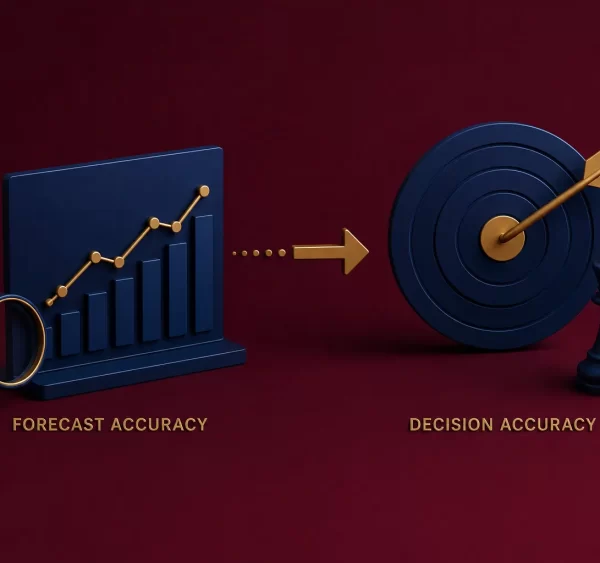
In that environment, a better forecast is helpful, but it is not enough. The bigger question is whether the business can make better trade offs when the forecast changes.
If planning remains a supply chain routine, it will keep producing numbers that other functions challenge, adjust or ignore. If it becomes an enterprise operating rhythm, it can force the right conversations earlier. What service level are we protecting? What inventory are we prepared to carry? Which demand should we prioritise? What capacity constraint matters most? What is the financial consequence of waiting?
Finance cannot join after the trade offs are made
One of the weaknesses in many planning processes is that finance is connected too late. The business may discuss demand, supply and inventory, but only translate those choices into financial impact after the operational debate has already moved on.
That weakens IBP. The value of integrated planning is not simply that finance can see the plan. It is that financial consequences are part of the decision while the plan is still being shaped.
A service decision is also a margin decision. An inventory decision is also a cash decision. A supply decision is also a revenue protection decision. A capacity decision is also a customer commitment decision.
When those links are visible, planning becomes more than coordination. It becomes the mechanism through which the business decides what it is willing to fund, protect, prioritise and risk.
The operating rhythm needs clearer choices
For IBP to work, leaders need to be more explicit about the decisions the process is meant to drive.
Too often, planning meetings become reporting forums. Teams explain what has changed, where the gaps are and what the latest numbers show. That may create awareness, but it does not guarantee action.
A stronger planning rhythm starts with the decisions that need to be made. Which exceptions need escalation? Which trade offs require executive agreement? Which assumptions have changed enough to trigger a different response? Which gaps can be managed inside supply chain, and which require commercial, finance or operational intervention?
This is where IBP becomes a leadership discipline. It creates a structured way to connect demand, capacity, supply, inventory, finance and customer promise before the business is forced into reactive decisions.
The measure of maturity is decision quality
The most mature planning organisations will not be the ones with the most sophisticated calendar or the most detailed forecast pack. They will be the ones that can make better decisions sooner.
That means planning has to move beyond alignment as the goal. Alignment is only useful if it changes what the business does.
The real test is whether IBP helps the organisation protect service, release cash, manage risk, improve margin and make trade offs with greater confidence. If it does not, it remains a process. If it does, it becomes the enterprise execution system.
The real test of IBP
IBP only earns its place when it becomes the operating rhythm for enterprise decisions, not the supply chain meeting where everyone reviews the latest version of the plan.
The evolution of Integrated Business Planning is ultimately about more than improving planning processes—it is about creating a shared operating rhythm for enterprise decision-making. This is one of the central themes of the SupplyChain360 Summit, taking place at The Belfry, Sutton Coldfield, on 3 and 4 March 2027. Through keynotes, case studies, workshops, roundtables and curated 1-to-1 meetings, senior supply chain, procurement and operations leaders will explore how organisations can strengthen cross-functional planning, improve decision quality and build operating models that respond more effectively to today’s volatile business environment.
The opportunity is to turn planning into the place where commercial ambition, operational reality and financial consequence meet. The value is not a better planning process. It is a business that can decide earlier, act faster and understand the cost of its choices before volatility makes those choices more expensive.