Hybrid Scanning Models Balance Durability and Flexibility
Smartphone barcode scanning now sits at the center of many supply chain data capture strategies, pushing dedicated hardware into a narrower role. The change touches

Smartphone barcode scanning now sits at the center of many supply chain data capture strategies, pushing dedicated hardware into a narrower role. The change touches

Barcode labeling risk increasingly dictates how fast goods move, how reliably data flows, and how much tariff and compliance exposure sits on each pallet. As

AI forecasting now spans agents, orchestration layers, and large models, yet forecast value add is what determines whether any of it improves operational decisions. Treating

Generative AI in inventory management is reshaping how teams read signals, frame trade-offs, and set stock policies across complex networks. The real impact comes when

Plugin-based supply chain technology is reshaping how core logistics and operations systems evolve under pressure for speed, resilience, and control. Modular, API-driven components let organizations
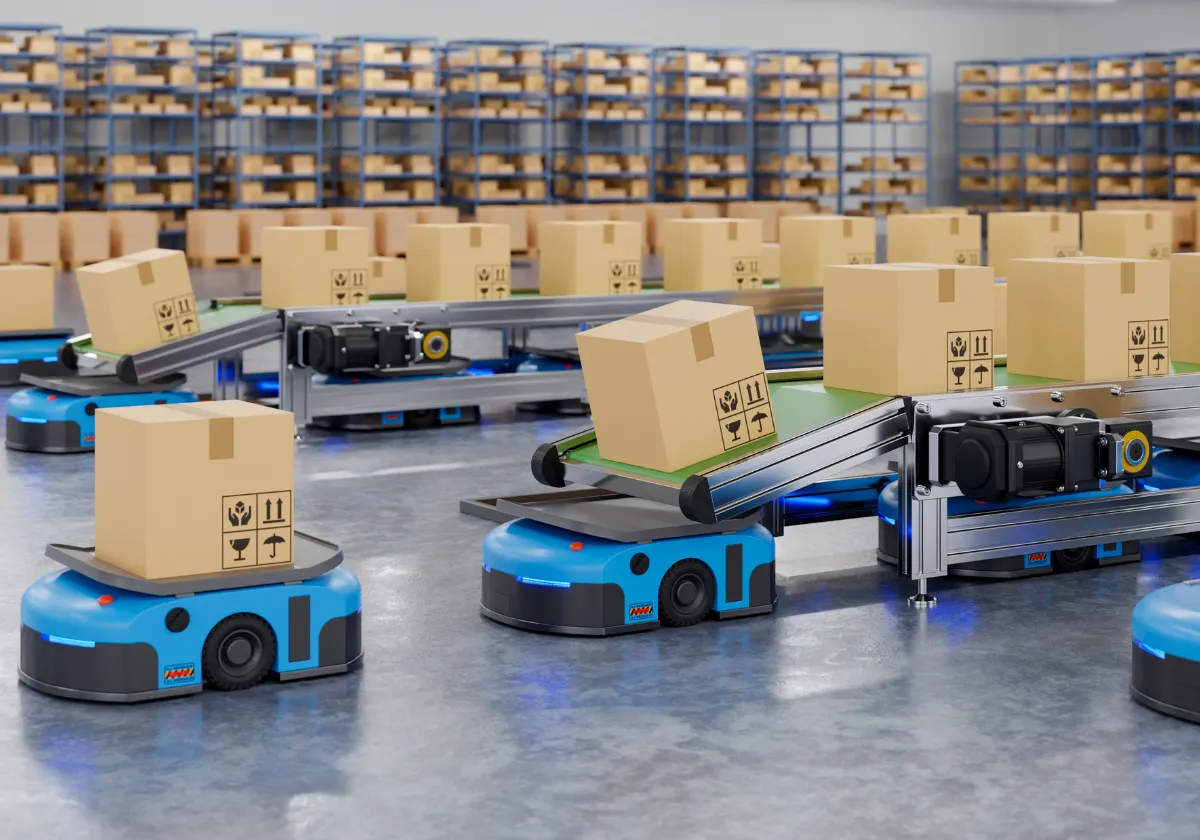
Phased warehouse automation gives legacy facilities a way to lift throughput and reduce labor strain without ripping out equipment that still delivers. Careful consulting work,

Picture a high-volume distribution center in the middle of peak season. Autonomous mobile robots move inventory across aisles while a vision-enabled robotic arm handles mixed-SKU

Artificial intelligence is becoming embedded in routine planning workflows, yet companies are deliberately keeping human judgment at the center of execution. New data from RELEX

Balancing inventory across a distributed network has long forced companies to choose between excess stock and missed service levels. A new AI-driven simulator from MIT

AI in supply chain has shifted into daily practice, steering decisions on fulfillment, routing, and inventory with far more data than human planners can process
Smartphone barcode scanning now sits at the center of many supply chain data capture strategies, pushing dedicated hardware into a narrower role. The change touches
Barcode labeling risk increasingly dictates how fast goods move, how reliably data flows, and how much tariff and compliance exposure sits on each pallet. As
AI forecasting now spans agents, orchestration layers, and large models, yet forecast value add is what determines whether any of it improves operational decisions. Treating
Generative AI in inventory management is reshaping how teams read signals, frame trade-offs, and set stock policies across complex networks. The real impact comes when
Plugin-based supply chain technology is reshaping how core logistics and operations systems evolve under pressure for speed, resilience, and control. Modular, API-driven components let organizations
Phased warehouse automation gives legacy facilities a way to lift throughput and reduce labor strain without ripping out equipment that still delivers. Careful consulting work,
Picture a high-volume distribution center in the middle of peak season. Autonomous mobile robots move inventory across aisles while a vision-enabled robotic arm handles mixed-SKU
Artificial intelligence is becoming embedded in routine planning workflows, yet companies are deliberately keeping human judgment at the center of execution. New data from RELEX
Balancing inventory across a distributed network has long forced companies to choose between excess stock and missed service levels. A new AI-driven simulator from MIT
AI in supply chain has shifted into daily practice, steering decisions on fulfillment, routing, and inventory with far more data than human planners can process