Phased warehouse automation gives legacy facilities a way to lift throughput and reduce labor strain without ripping out equipment that still delivers. Careful consulting work, targeted retrofits, and flexible funding models turn aging assets into a platform for capacity, safety, and cost control.
Turning Legacy Infrastructure Into a Strategic Asset
Many facilities still run on racking, conveyors, and lift trucks installed decades ago. The hardware often remains mechanically sound, yet the control layer, software, and workflows were built for bulk movements rather than today’s high-frequency, smaller orders. Pressure comes from tighter delivery windows, continued labor constraints, and rising space and energy costs.
A phased modernization path reframes that legacy footprint as a platform rather than a sunk cost. In one long-running European facility, close to thirty years old, operators kept core storage and handling infrastructure in place while upgrading warehouse software, control technology, and select conveyor and tray-handling components. With focused changes around pallet and small-parts storage automation, the site reached performance levels comparable to a greenfield build and lifted overall system capability by about 60 percent.
That result reflects a broader pattern. Consultation-led walkthroughs, workflow analysis, and data reviews often show that only a handful of processes cap throughput. Typical pinch points include manual sortation, product movement between zones, and high-touch tasks such as picking, packing, and order consolidation. These are also where safety risks and ergonomic strain concentrate, as repetitive lifting, walking, and bending compound over time.
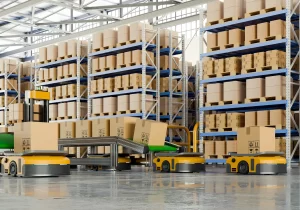
Targeted automation directly at these points offers a faster, lower-risk payback than sweeping redesigns. Small bulk-flow conveyor systems with singulation and sortation can stabilize flow from picking to packing. Mobile robots can take over predictable horizontal transport routes that previously relied on forklifts or tuggers, reducing travel time and incidents while freeing operators for value-adding work. Industry reports indicate that such incremental deployments often cut error rates and stabilize service performance well before a full automation program is funded.
This approach is not a blanket ‘sweat the assets’ doctrine. Legacy equipment should be maintained until it reaches true end-of-life, but only where it does not embed strategic risk. A clear-eyed assessment of failure modes, obsolescence of spare parts, and dependence on scarce skills is essential. When aging equipment constrains capacity at peak or cannot support new digital controls, the case for replacement on that specific node becomes stronger than stretch-and-patch.
Funding Modernization Through Incremental and OpEx-Based Models
Capital discipline is often the main brake on warehouse transformation. Large, monolithic automation projects demand big upfront investment, long lead times, and a high degree of confidence in future demand. Phased automation spreads both risk and spend, matching each step to defined performance outcomes and time-bound payback.
Consultation frameworks support this by anchoring every recommendation in sensitivity and data analysis. Layout reviews, time-and-motion studies, and order profile evaluations show how different configurations behave under varying volume, SKU mix, and labor availability. Scenario testing exposes how a conveyor loop, a goods-to-person zone, or a mobile robot fleet would respond under peak loads or return spikes, long before hardware is ordered.
Operating models are shifting as well. Robotics-as-a-Service agreements allow operators to add or remove autonomous mobile robots as demand fluctuates, treating capacity more as an operating expense than a fixed asset. This flexibility is particularly valuable in environments with pronounced seasonality or uncertain growth trajectories, where a full fleet purchase feels premature.
A disciplined approach to what gets automated is just as important as how it is funded. Processes with repetitive, low-variance tasks and limited product diversity tend to be strong candidates. Examples include pallet or tote transfers, zone-to-zone shuttling, and standardized packing activities. Work that involves wide variation in part types, frequent exceptions, or heavy judgment often resists automation without major process redesign; in those zones, digital work instructions, better slotting, or improved ergonomics can deliver safer, steadier output without complex machinery.
Common missteps appear when modernization effort gets ahead of the business case. Leaders may approve systems that look impressive but do not relieve the true constraints, or they may automate isolated islands without integration into warehouse management and enterprise planning systems. Industry case studies show that the most successful projects begin with small pilots, clear metrics for success, and explicit criteria for scaling. Throughput, error rates, labor utilization, and service-level stability under peak conditions are more informative than headline picking speed alone.
Where Phased Automation Changes the Conversation
Incremental automation also alters how networks evolve. When sites are upgraded in smaller modules with clear economics, it becomes easier to compare facilities, redirect investment to the best-performing nodes, and retire capacity that no longer earns its keep. Over time, that pattern produces networks that are shaped less by historical footprint and more by measured productivity, resilience, and capital efficiency.