Warehouse productivity is often constrained by small inefficiencies that accumulate across thousands of daily tasks. Long travel paths, inventory searches and fragmented workflows consume valuable labor time, limiting throughput even in facilities equipped with modern warehouse systems.
Where Execution Breaks Between Decision and Action
Many distribution centers have invested heavily in planning and warehouse management platforms, yet the last ten meters of execution still depend on people bridging gaps the system does not see. Associates lose minutes on every task navigating pick paths that ignore real travel distance, hunting for misplaced stock or reconciling conflicting instructions across handhelds, voice devices and paper. The work is intense, overtime is routine and metrics are visible on every wall, but the environment remains fragile when volume spikes.
The core problem sits in how execution logic translates plans into tasks. Traditional systems were designed for predictable demand and static layouts. They assign work based on order priority or zone, not on the compound impact of congestion, travel, load size or task switching. As networks layer on more SKUs, more channels and tighter service commitments, that rigid approach produces chronic micro-delays. Recent industry surveys show that labor can account for 50 to 70 percent of warehouse operating cost, yet a significant share of time is still consumed by non-productive walking and searching.
Execution also strains under fragmented digital experiences. Associates move between radio-frequency screens, paper lists, voice prompts and messaging apps to complete a single order wave. Each transition introduces latency and error risk. When exceptions occur, resolution depends on whoever holds the most tribal knowledge about product locations, carrier cut-offs or system workarounds. That knowledge is rarely codified, so performance during peak seasons hinges on keeping a small group of veterans on the floor for long shifts.
Five Practical Levers To Remove Friction
The first lever is to modernize pick-path logic using real travel data. Instead of static routes, task assignment can draw on heat maps of congestion, slotting history and distance by aisle to reduce steps per order. This does not require a new warehouse management system. Many sites start by exporting task and location data, analyzing actual movement patterns and then tightening slotting rules and work release parameters. Even before advanced optimization software is deployed, simple changes to location families, fast-mover zones and sequencing rules can cut walking time by double digits.
A second lever is inventory certainty at the point of pick. Near-real-time location accuracy reduces both hunting and rework. That can mean tighter integration between receiving and put-away tasks, so stock is confirmed and visible in locations before picks are released. It can also involve low-cost sensing such as barcode audits by exception or periodic mobile scans driven by AI models that flag high-risk items or locations. Industry reports indicate that even a one to two percentage point improvement in inventory record accuracy can have outsized impact on order cycle time and labor planning.
The third lever is a unified work interface. A single, role-based screen or device view that orchestrates picks, replenishment, quality checks and exception handling reduces cognitive load and toggling. This interface should present the next best task, surface exceptions early and allow associates to confirm, skip or flag issues without diving into multiple menus. Some operations are overlaying lightweight execution layers on top of the WMS that translate complex system codes into simple, prioritized work queues. The goal is to let associates focus on movement and verification, while the orchestration layer handles sequencing.
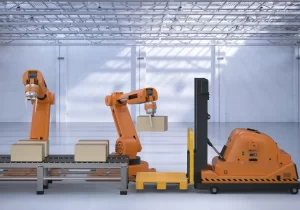
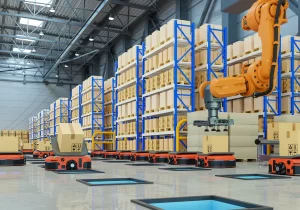
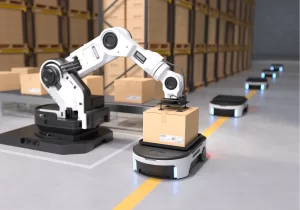
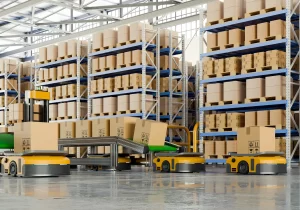
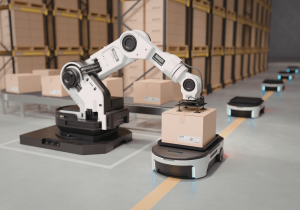
A fourth lever is to embed micro-automation tactically, rather than chase large, monolithic projects. Autonomous mobile robots, smart carts, put-to-light walls or automated label application can all remove specific pain points without redesigning the entire operation. The most effective deployments follow a clear rule: automation is assigned to repetitive transport or sorting steps, while humans stay focused on exception-heavy work and judgment calls. Trade data shows that sites which start with narrow, high-friction use cases often achieve payback faster than sites that attempt full-scale automation from day one.
The fifth lever is to codify operational know-how into playbooks and smart alerts. Peak performance should not depend on who happens to be on shift. Digital playbooks can capture rules for re-slotting ahead of promotions, adjusting labor across zones, or triaging carrier delays. AI-driven alerts can interpret live data on backlog, dock congestion or inventory anomalies and propose corrective actions. Over time, this turns tribal knowledge into reusable logic, so each season starts from a higher base of readiness instead of relearning under pressure.
Small Delays Add Up Faster Than Most Realize
Warehouse performance is rarely constrained by a single bottleneck. More often, productivity erodes through hundreds of small interruptions: an extra walk to a location, a missing inventory record, a delayed exception response or a confusing task sequence. Individually these moments seem insignificant. Across an entire facility, they can consume substantial labor capacity. The most effective operations treat these sources of friction as measurable performance issues and address them with the same discipline applied to larger automation initiatives.