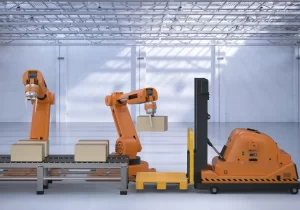
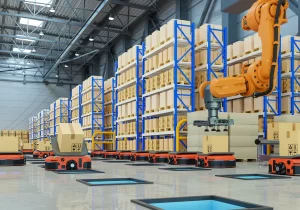
Warehouse robotics is spreading well beyond mega fulfillment centers as modular mobile fleets and AI-driven orchestration software make automation viable for a wider range of distribution networks. Companies facing labor shortages and volatile order flows are using robots to stabilize throughput, tighten resilience and add capacity without large fixed infrastructure bets.
Robots As a Flexible Capacity Layer, Not a Monolith
The most visible story on trade show floors is no longer towering fixed automation, but fleets of smaller mobile robots, grid-based pickers, and task-specific units that bolt into existing workflows. According to Peerless Research Group’s 2026 Intralogistics Robotics Study, 52% of companies now run at least one kind of robot in warehouses or distribution centers, up from 48% a year earlier, and another 32% intend to deploy them within three years.
That trajectory means 84% either use or plan to use robots, while the share with no plans has dropped to just 3%. Robotics budgets are following the same curve: 45% of respondents expect to spend more on robotics in 2026, up from 43% in 2025. Labor cost and labor scarcity sit at the center of this shift, but the way automation is deployed is changing as much as the volume.
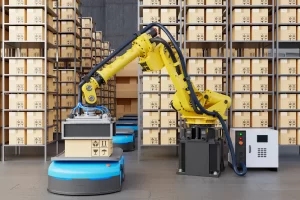
Vendors are leaning into modularity. Smaller operations can now layer in a handful of mobile units to shuttle goods, cut walking time, and stabilize throughput in specific zones such as receiving, replenishment, or order consolidation. Others are adding robots into grid storage systems or put-walls to handle sortation, or using autonomous mobile robots fitted with screens to support person-to-goods picking in high-SKU environments.
Industry groups point to these mobile fleets as a way to avoid single points of failure that plague traditional conveyor-led systems. Each robot operates independently, so capacity can flex with actual demand and units can be parked during off-peak periods to conserve energy and reduce wear. When one unit fails, the rest of the fleet continues to run, which increases operational resilience during events like promotional spikes or seasonal peaks.
The experience at shows such as MODEX and LogiMAT underlines another reality: expectations of full facility automation are giving way to more mixed environments where people and robots share workflows. Providers like Piaggio Fast Forward report strong demand in picking and other manual tasks that remain hard to mechanize end-to-end. Robots are being used to strip out repetitive travel and handling, while people manage complex decisions, exceptions, and quality-sensitive work.
Integration, Orchestration, and the Real Robotics ROI
The ease of acquiring robots is rising, but the bar for integration is rising with it. As more units, grid pickers, and automated subsystems populate the same footprint, disconnected islands of automation create new bottlenecks. Executives evaluating robotics investments are placing as much weight on the software layer and orchestration logic as on the hardware itself.
Leaders from established automation players such as Ocado Intelligent Automation highlight that a robot working well in isolation is no longer a sufficient success metric. The critical questions now focus on how different fleets coordinate, how routing and task allocation are governed, and how quickly systems can adapt when order profiles or product ranges shift. This mirrors a broader trend in intralogistics, where the ‘holy grail’ is dynamic capacity that scales up or down without large fixed infrastructure and without single points of failure.
Recent disputes and intellectual property clashes around grid-based robotics underscore how fast vendors are combining storage, picking arms, and mobile units into new configurations. As sortation and picking are increasingly augmented by AI, fixed systems face limitations in speed variability and recovery from disruption. Mobile-first designs, directed by smarter orchestration software, offer a way to tune throughput in line with live order flows and to reroute work automatically when one node slows down.
For operations teams, this changes how business cases are built. The question is not whether to ‘go robotic’ across an entire site, but which pain points justify targeted automation and how those pilots will connect into a wider control architecture. The most effective programs start with a narrow use case, validate the productivity and labor impact, and then scale horizontally via a common software backbone rather than a series of one-off projects.
Technology choices also need to anticipate post-deployment drift. Industry associations warn that the value of automation often erodes when workflows, order patterns, or product mixes evolve away from the original design. Flexibility, integration, and the ability to reconfigure robots after go-live are becoming central selection criteria, on par with throughput rates.
Software Discipline Becomes the Constraint
As robotics fleets spread across warehouse networks, standardizing workflows and data models may matter as much as adding more machines. Facilities built through acquisitions or years of layered systems often struggle to coordinate inventory logic, task priorities and exception handling across mixed automation environments, limiting how much throughput flexibility the robots themselves can actually deliver.