According to new research from Gartner, fewer than 100 companies worldwide are expected to move humanoid robots beyond early testing by 2028, and fewer than 20 will deploy them in live production environments. Even among those adopters, most use cases will remain constrained to narrow, predictable settings rather than dynamic warehouses or factory floors.
Humanoid robots, built to resemble the human form with arms, legs, sensors, and vision systems, have attracted attention as a potential response to labor shortages and rising wage pressure. But Gartner’s assessment suggests that form factor alone does not translate into operational readiness, particularly in environments where speed, uptime, and exception handling are critical.
Why Humanoid Robots Struggle Outside the Lab
Gartner’s analysis points to persistent technical and economic barriers that keep humanoid robots from scaling. Current models still struggle with mixed-SKU handling, trailer unloading, and exception-heavy workflows common in high-volume distribution centers. Battery life remains limited, reducing usable shift time, while integration with warehouse management and execution systems often requires extensive customization.
Cost is another constraint. In many cases, humanoid robots are priced several times higher than purpose-built automation while delivering lower throughput and availability. Maintenance requirements and safety validation further complicate deployment in shared human-robot environments.
“The promise of humanoid robots is compelling, but the reality is that the technology remains immature and far from meeting expectations for versatility and cost-effectiveness,” said Abdil Tunca, senior principal analyst in Gartner’s supply chain practice. He cautioned companies against committing capital to solutions that cannot yet meet operational demands or deliver predictable returns.
Why Polyfunctional Robots Are Gaining Ground Instead
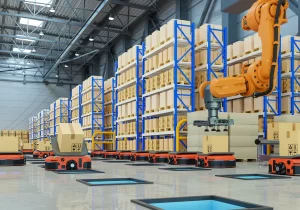
While humanoid platforms remain experimental, Gartner notes growing momentum behind polyfunctional robots, machines designed around specific tasks rather than human imitation. These systems typically combine wheels, articulated arms, and sensors optimized for targeted activities such as case handling, inventory scanning, or inspection.
A wheeled robot with a telescoping arm, for example, can move cartons, scan locations, and perform checks using less energy and with higher uptime than a bipedal humanoid attempting the same sequence. The result is higher throughput per dollar invested and fewer operational trade-offs.
“Organizations with a high tolerance for risk and a strong innovation mandate may explore humanoid robots today,” said Caleb Thomson, senior director analyst at Gartner. “But for most operations focused on measurable productivity and return on capital, polyfunctional robots remain the more practical choice.”
How Automation Budgets Are Being Quietly Rewritten
As robotics spending comes under the same scrutiny as material-handling equipment and core systems, decision-making is becoming more procedural and less aspirational. Recent trade reporting shows automation proposals increasingly required to clear standard hurdles on utilization, energy consumption, maintenance exposure, and system compatibility before pilots are even approved. That shift favors technologies that slot cleanly into existing workflows and planning models. Platforms that require new safety regimes, retraining cycles, or bespoke integrations face longer approval paths, not because they lack promise, but because capital governance has tightened around what can be absorbed operationally without destabilizing throughput or cost controls.