AI talent is getting harder to find as supply chains expand their use of the technology. Companies are finding that employees who already understand suppliers, freight and disruption may be their strongest source of AI capability.
AI Hiring Demand Is Outrunning the Talent Pool
Demand for supply chain professionals with artificial intelligence skills increased 387% between the first quarter of 2023 and the first quarter of 2026, according to Gartner. The increase has significantly outpaced growth in the wider labor market and is intensifying competition for people who combine technology expertise with supply chain knowledge.
The shortage is particularly acute because AI-related supply chain positions are increasingly concentrated at the mid- and senior levels. Companies are therefore competing for professionals who bring two capabilities that are difficult to develop quickly: familiarity with emerging AI tools and experience making decisions across complex supply chain networks.
Recruitment can address part of that requirement, but it cannot provide enough experienced talent to meet rapidly expanding demand. Internal workforce development offers another route.
Existing employees already understand supplier relationships, freight flows, customer requirements, contractual commitments and the way disruptions spread through a network. That knowledge has accumulated through years of decisions and exceptions. Teaching those employees how to work effectively with AI can preserve that expertise while expanding what they are able to do with it.
The distinction becomes increasingly important as AI takes on tasks that extend beyond traditional process automation.
Warehouse management systems, transportation management systems and visibility platforms have long helped companies execute or monitor defined processes. AI can also organize large volumes of information, identify patterns, prioritize exceptions, summarize events and recommend possible actions.
That puts greater emphasis on the quality of the person interpreting the output.
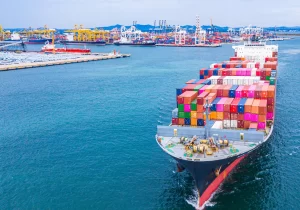
A marine logistics disruption, for example, can involve port congestion, weather, customs requirements, contractual obligations and customer priorities simultaneously. AI can help consolidate those signals and identify possible responses, but selecting an appropriate course of action still depends on understanding the commercial and physical consequences of each option.
Experienced employees therefore remain an important control around AI-assisted decisions. They can identify recommendations that conflict with contractual requirements, overlook local conditions or fail to account for priorities that may not be represented adequately in the underlying data.
AI Literacy Becomes a Broader Business Skill
Building that capability does not require every employee to become a data scientist or understand how to develop machine-learning models.
AI literacy at the business level means knowing what a tool can do, how its output should be interpreted and where additional scrutiny is necessary. Employees also need to recognize circumstances in which experience or other evidence should take precedence over an automated recommendation.
Training becomes particularly important because adoption can vary substantially inside the same organization. Employees who understand how AI applies to their responsibilities are more likely to identify useful applications. Those without sufficient guidance may struggle to determine where the technology belongs in existing workflows.
Leadership communication matters as well. Employees need clarity about how AI will be used, what responsibilities remain with people and how new capabilities affect their roles. Without that clarity, uncertainty about job security can discourage the employees whose participation is needed to make implementation work.
Practical use can help close that gap. When employees see AI reducing the time required to summarize information, investigate an exception or prepare routine analysis, the technology becomes easier to evaluate in the context of their own work. It also gives organizations a clearer view of where AI produces measurable value and where human judgment remains essential.
The workforce economics strengthen the case for developing those capabilities internally. Gartner has argued that organizations should invest in upskilling existing employees and make better use of entry-level talent as competition for experienced AI professionals intensifies.
That approach can also protect institutional knowledge that would otherwise be difficult to replace. Supply chain expertise develops through exposure to supplier failures, transportation disruptions, demand changes and the compromises required when cost, service and inventory objectives conflict.
An AI specialist recruited from outside may bring deeper technical expertise but still need considerable time to understand those relationships. Developing AI capability among existing employees can combine technical fluency with knowledge of how decisions affect the wider network.
The Next Skills Gap May Be in Judgment
As AI becomes more capable, training programs will need to cover more than how to use individual tools. Companies will also need people who can challenge outputs, recognize weak assumptions and understand when an apparently efficient recommendation creates risk elsewhere in the network.
That makes institutional knowledge increasingly important rather than obsolete. AI can compress the time required to analyze information, but faster analysis raises the value of knowing which information deserves attention. Companies that develop that combination of AI fluency and experienced judgment can build capability without depending entirely on an increasingly competitive external talent market.