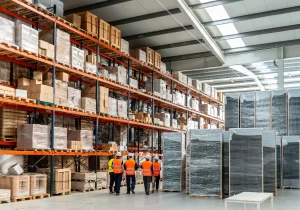
Robotics adoption is accelerating across warehouses as automation expands beyond high-volume distribution centers into a broader range of fulfillment environments. Software integration, interoperable systems and disciplined process design are becoming central to long-term investment returns.
Robotics Value Now Sits In System Design
Robotic picking, pallet handling and autonomous movement have established credible performance records in high-volume facilities. Advances in machine vision, end effectors and navigation have expanded the range of items, packaging formats and operating environments that automated equipment can handle. The investment question has consequently moved toward how multiple assets work together under real operating conditions.
That shift represents the strategic break in warehouse automation. A robot can complete an assigned movement or handling task with considerable speed and accuracy. The wider operation still depends on coordinated inventory, labor, equipment and order decisions. Performance is determined by the connections among warehouse management software, enterprise planning platforms, transportation systems and the control layers governing automated equipment.
Software has become central to this architecture. It assigns work, manages traffic, identifies exceptions, balances equipment utilization and provides the data required for maintenance. It also determines whether a facility can add a new type of robot without creating another isolated control environment. Integration quality now has a direct bearing on throughput, uptime and the useful life of an automation investment.
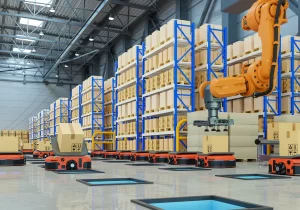
Interoperability carries particular weight as facilities adopt equipment from multiple vendors. A warehouse may combine autonomous mobile robots, fixed conveyors, automated storage, robotic arms and manual workstations. Each component can perform well independently while the overall flow remains constrained by weak handoffs, conflicting priorities or delayed data. The strongest operating model establishes a common orchestration layer and clear rules for how work moves across the system.
This favors technology-agnostic platforms and equipment with accessible interfaces. It also increases the importance of implementation partners that understand process engineering, software integration and physical automation. Selecting the fastest machine has limited value when upstream replenishment cannot keep it supplied or downstream packing becomes the next bottleneck.
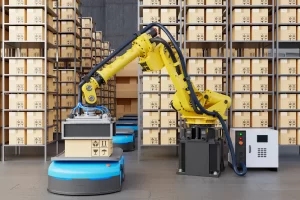
The spread of robots into less automated facilities reinforces the need for modular design. Autonomous mobile robots can be introduced with less fixed infrastructure than conventional automation and can often be redeployed as volumes or layouts change. Service-based commercial models can further reduce the initial capital commitment and allow capacity to expand during seasonal peaks.
That flexibility is helping broaden adoption. The International Federation of Robotics reported that more than 113,000 transportation and logistics service robots were sold worldwide in 2023, an increase of 35% from the previous year. The figures cover a wide market, but they demonstrate how mobile automation is moving beyond a small group of highly engineered distribution centers.
Flexible deployment does not remove the requirement for operational discipline. Mobile robots need accurate mapping, stable wireless connectivity, well-defined travel rules and consistent inventory processes. Rapid installation can expose weak master data or poorly designed workflows sooner than a fixed automation program would. Scalability depends on correcting those foundations before equipment numbers grow.
Artificial intelligence adds another layer to the operating model. It can improve object recognition, predict equipment failures, optimize task sequencing and help systems respond to changing conditions. AI can also support decisions about labor allocation, order prioritization and congestion. These applications produce value when they are attached to a defined operational problem and supported by reliable data.
Robotics engineering and AI governance remain distinct capabilities. Mechanical safety, controls, maintenance and physical flow require specialized oversight. AI models introduce separate questions involving accuracy, explainability, data security and decision authority. Treating both disciplines as a single technology category can obscure accountability when performance deteriorates.
Pressure-testing Becomes The Investment Gate
The increasing sophistication of warehouse robotics raises the consequences of poor design. Large automation programs often make assumptions about demand, order profiles, product dimensions, labor availability and processing time. Small errors can compound once machines and software begin operating as one system.
A credible business case therefore needs more than projected labor savings and headline throughput. It should test volume variability, order mix, inventory accuracy, exception rates, maintenance requirements and the ability of upstream and downstream processes to support the proposed equipment. Working-capital effects also matter. Higher processing capacity delivers little benefit when inventory is positioned incorrectly or replenishment cannot respond.
Process analysis should begin before technology selection. Automation preserves the logic embedded in a workflow and executes it repeatedly. Unnecessary touches, poor slotting rules and excessive exception handling can become faster and more expensive after automation. Mapping those conditions exposes whether the planned investment addresses the actual constraint.
Pilot programs provide the first practical test. They should use representative items, realistic peaks and the same data quality expected in production. Trials conducted under controlled conditions can miss congestion, unusual packaging, damaged inventory and other exceptions that shape daily performance. The objective is to validate system behavior across a credible range of operating conditions.
Digital twins can extend that testing before physical deployment. A detailed virtual model can simulate order releases, equipment interactions, labor availability and changes in product mix. It can also identify where queues form when demand exceeds the assumptions used in the original design.
The analytical value increases when several scenarios run in parallel. One model may test seasonal demand, another an equipment failure and a third a disruption to inbound inventory. Comparing the results helps determine whether the proposed system protects service and margin under stress. It also clarifies where redundancy has economic value and where extra capacity would remain idle.
Simulation should continue after go-live. Actual cycle times, downtime and exception data can update the model and improve future decisions. The twin then becomes an operating tool for evaluating layout changes, new equipment, maintenance schedules and shifting order patterns. This creates a disciplined route from strategic scenario planning to live capacity management.
Governance is equally important. Automated decisions need clear thresholds for intervention, particularly when software reallocates tasks or changes the sequence of work. Routine actions can be automated within defined parameters. High-impact exceptions require escalation paths that identify who can override the system and how the decision will be documented.
Cybersecurity belongs in the same design process. Connected robots exchange operational data with local control systems and wider enterprise platforms. More interfaces create more dependencies and potential access points. Network segmentation, authentication, software patching and recovery procedures should be treated as operating requirements from the start of the program.
Workforce design completes the investment case. Automated facilities still require people who can interpret system signals, resolve exceptions and coordinate maintenance with production priorities. Roles increasingly center on orchestration and problem solving. Training must cover the interaction among machines, software and workflow instead of focusing only on individual pieces of equipment.
Performance measures should reflect this integrated model. Robot utilization alone can encourage local optimization and conceal wider constraints. End-to-end measures such as order cycle time, service attainment, cost per completed order, system availability and recovery speed provide a clearer view of value. Financial measures should also capture inventory effects, avoided disruption and the cost of technical support.
Planning for Continuous Adaptation
Warehouse robotics investments increasingly extend well beyond the initial deployment. As product portfolios, order profiles and fulfillment networks evolve, organizations will need governance that continually reassesses workflows, software performance and equipment utilization against changing business conditions. Regular simulation, performance reviews and disciplined integration planning can help ensure automation capacity continues to support service, inventory and capital objectives throughout the life of the system.