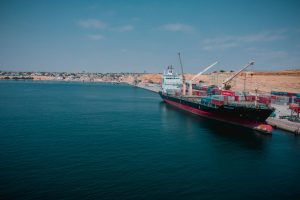
Turkey is redirecting efforts to local backers for the future of Izmir’s Alsancak Port after high-profile negotiations with Abu Dhabi’s AD Ports Group broke down earlier this year. The pivot highlights both Turkey’s search for capital and the growing geopolitical weight of port infrastructure across the Eastern Mediterranean.
Local Interest Emerges After Foreign Talks Falter
Transportation Minister Abdulkadir Uraloglu confirmed that discussions are advancing with several Turkish entrepreneurs, some of whom may bring in foreign partners. “We’re considering both investment and operation for a certain number of years,” Uraloglu told Bloomberg during a visit to Igdir last week. The Alsancak facility, one of the country’s busiest commercial ports, currently handles around 1.2 million TEUs annually and welcomes roughly 4,000 vessels, according to the national railways authority TCDD.
The renewed local focus follows the collapse of negotiations with AD Ports Group, a subsidiary of Abu Dhabi sovereign wealth fund ADQ. The UAE had pledged $51 billion in Turkish investments in 2023, but progress has been limited, with few agreements materializing. Turkey’s sovereign wealth fund has controlled Alsancak since 2017, though privatization attempts date back nearly two decades. A $1.28 billion bid from Hutchison Port Holdings and Global Yatirim Holding in 2007 was ultimately derailed by a court ruling, leaving the port under state operation.
Infrastructure Integration Shapes Next Moves
Beyond Izmir, Ankara is exploring ways to tie regional logistics assets more closely to industrial growth. Plans are being developed to integrate Candarli Port, located 40 nautical miles north of Izmir, with surrounding shipyards and manufacturing zones. The effort reflects Turkey’s broader strategy of linking transport hubs directly with production centers, reducing reliance on transshipment via foreign ports.
This approach aligns with a wider regional pattern. Trade reports show that Greece has been expanding the Piraeus hub under COSCO’s management, while Italy has drawn new investment into Trieste and Genoa as entry points for Asia–Europe trade. Turkey’s push to strengthen Izmir and Candarli signals a bid to remain competitive along the same corridor, especially as container flows through the Suez Canal rebound following earlier disruptions.
The Overlooked Factor: Domestic Financing Resilience
While attention often centers on foreign capital, Turkey’s pivot to domestic investors could strengthen resilience by limiting exposure to geopolitical friction. Local ownership structures may lack the headline value of foreign sovereign funds, but they often create more stable, long-term commitments to national infrastructure. For Turkey, where port capacity is a direct lever for both export competitiveness and industrial expansion, that stability could prove more valuable than chasing a single high-profile deal.