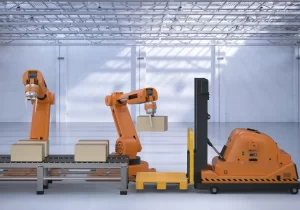
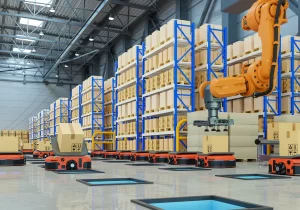
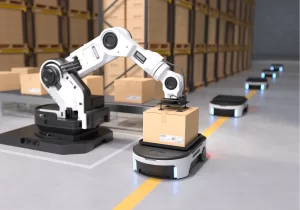
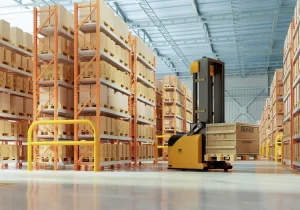
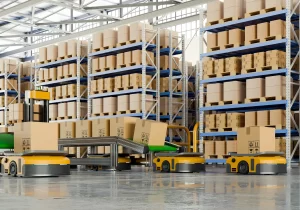
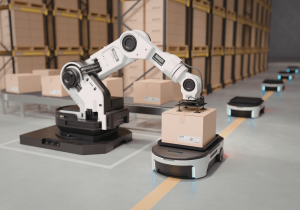
Robotic order fulfillment has turned into a software story, as integration bottlenecks and fragmented control blunt returns on expensive hardware. The sites that hit their automation targets treat fulfillment software as the decision layer that aligns robots, legacy systems, and human labor in real time.
The Integration Trap Inside Robotic Fulfillment Programs
Many automation roadmaps begin with fleets of mobile robots, high-density storage systems, and new conveyance lines. Capital plans emphasize throughput and labor savings, yet the hardest work often starts once those assets must interact with existing warehouse management systems and legacy controls. The weak point is rarely the mechanics of the machines themselves. The friction lies in how they connect, share data, and respond to changing work.
Projects built on custom, point-to-point integrations end up with a dense web of connections between each vendor platform and core systems. Every new workflow requires code changes. Every change request triggers another test cycle. When volumes spike, new product categories appear, or service promises tighten, teams discover that the warehouse cannot flex without reopening integration design. That rigidity leaves robots underutilized and slows the payback period promised in business cases.
Industry analyses show integration work consuming a disproportionate share of time and budget in large automation deployments, even where hardware delivery stays on track. Conflicting data models, inconsistent status signals, and overlapping control logic between subsystems add to the drag. Symptoms include longer ramp-up periods, erratic pick rates, and patchy visibility into where tasks stall inside the automated flow.
A different pattern is emerging in high-performing sites. Instead of wiring every machine directly into the warehouse management system, teams introduce a neutral control layer that acts as a single interface between automation and upstream applications. This fulfillment software exposes standard services for task creation, status updates, and exception handling. Robots, shuttles, and other assets plug into that layer once, which allows new workflows to be configured without rewriting multiple integrations.
This model gives technology teams a clearer separation of concerns. Core systems define what needs to happen for orders and inventory. The orchestration layer decides how work is distributed to the floor. Device controllers focus on local safety and motion. Change in one tier has less chance of breaking another, and testing becomes easier to repeat as the automation footprint grows.
Orchestration Software As The Warehouse Nerve Center
Attention is shifting toward software that can direct all warehouse resources as a single pool: robotic fleets, static automation, and human workers. These platforms sit alongside warehouse management and control systems, aggregating order backlogs, inventory positions, equipment status, and labor availability. Their role is to assign, in near real time, which resource executes each move to keep service levels and cost targets on track.
Modern orchestration tools apply rules, optimization engines, and machine learning models to allocate work. They factor in travel distance, congestion, charging windows, skill constraints, and order priorities. In practice, that means robotic units can be retasked during a shift as demand concentrates in certain zones, or as specific docks back up. When a piece of equipment fails, the software redirects tasks to other robots or to manual stations with minimal human intervention.
The scope extends across the entire flow. Effective software coordinates inbound receipt, storage, replenishment, picking, packing, and outbound staging so that every zone works from the same picture of constraints and objectives. Decisions about batching and routing no longer sit inside separate vendor controllers that optimize for local throughput only. Industry reports indicate that warehouses using this pattern reach target productivity faster and hold it more consistently through peak events.
Integration practices in these environments lean on APIs and event-driven messaging. Status changes and exceptions propagate quickly instead of waiting for batch file transfers. New automation providers can be onboarded through configuration of standardized interfaces rather than bespoke code, which shortens deployment cycles. Some operations use digital models of their fulfillment flow to trial rule changes and orchestration strategies before rolling them onto the floor.
Human work also changes under this model. Supervisors and planners focus less on manual task assignment and more on tuning rules, watching dashboards, and intervening when the system flags situations it cannot resolve. Clear governance around who maintains business logic, who authorizes changes, and how performance is reviewed becomes critical. Without that, orchestration tools risk adding another opaque layer instead of clarifying how the warehouse runs.
The Next Productivity Gains Will Be Software-Led
The most significant gains from the next generation of robotic order fulfillment are likely to come from software that raises utilization of existing assets rather than from ever-larger fleets. Trade data already shows wide performance gaps between sites with similar hardware but different integration discipline and control logic. The organizations that invest in fulfillment software as a unifying layer will be better placed to adopt new automation options quickly, adapt to volatile demand, and treat their warehouses as configurable systems rather than fixed installations.