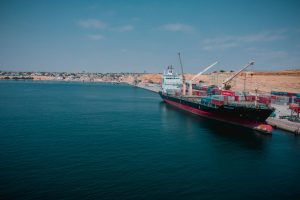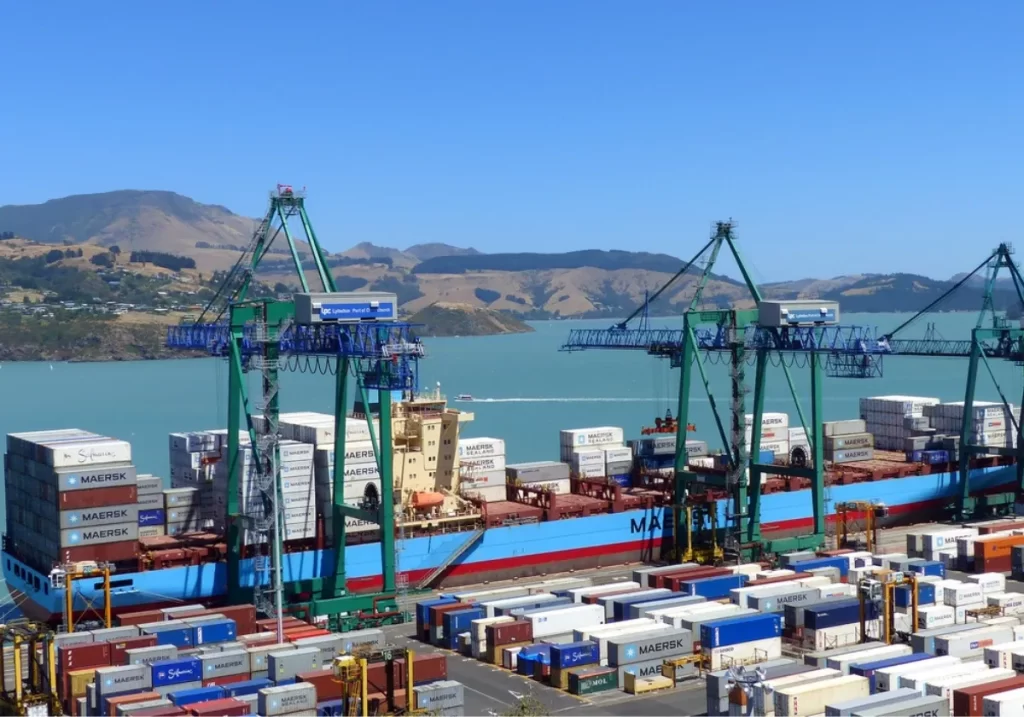
Following a series of successful trial transits, Maersk is reinstating its Middle East–India to U.S. East Coast (MECL) service via the Suez Canal. The return follows voyages by Maersk Sebarok and Maersk Denver through the canal, after which the carrier opted to restore the original service pattern rather than continue routing vessels around the Cape of Good Hope.
For the MECL string, which links the Middle East and Indian subcontinent with the U.S. East Coast, the Suez route remains the most direct option. Maersk says the shift will shorten transit times, lower operating costs, and reduce emissions compared with the extended Africa diversion that became standard during the Red Sea security crisis.
Why the Suez Still Matters to Network Economics
Before attacks in the Red Sea disrupted traffic in late 2023, the Suez Canal carried roughly 10% of global seaborne trade. Avoidance of the region forced carriers to reroute vessels thousands of miles south, adding days at sea, burning additional fuel, and absorbing higher crew and insurance costs.
The difference is material. A Singapore–Rotterdam voyage via Suez typically takes about 26 days, covering roughly 8,500 nautical miles. The Cape of Good Hope alternative extends the journey to around 36 days and close to 11,800 nautical miles. That gap has flowed directly into freight rates, schedule reliability, and inventory planning over the past two years.
Industry groups expect some easing of cost pressure as capacity gradually shifts back. Germany’s chemical industry association, VCI, said the reopening should help cool freight rates, particularly for long-haul east–west lanes that have borne the brunt of rerouting premiums.
Maersk has stressed that the decision is conditional. Security conditions in the Red Sea will continue to be monitored, and contingency plans remain in place should volatility return and force another suspension of Suez transits.
Sustainability Gains Come With Operational Trade-Offs
From an emissions standpoint, the Suez route is difficult to replace. Shorter sailing distances mean lower fuel consumption and reduced carbon output per container. Prior to the disruption, daily shipping volumes through the canal averaged around 3.5 million tonnes. At the height of the crisis, volumes dropped by nearly 60%, to roughly 1.25 million tonnes, according to trade estimates.
For Maersk, which has publicly committed to long-term decarbonization targets, restoring Suez transits helps reverse the emissions penalty imposed by Cape diversions. Customers also benefit, particularly those under regulatory or contractual pressure to document reductions in transport-related emissions.
But the sustainability upside does not eliminate operational friction. Shorter transit times can compress arrival windows, raising the risk of port congestion, yard crowding, and inventory imbalances as networks adjust. These effects were visible during the initial shift away from Suez and are likely to reappear, in reverse, as services move back.
Planning for Faster Isn’t the Same as Planning for Stable
The reopening of Suez-facing services forces a quiet recalibration that many networks are not yet modeling explicitly: faster transit compresses decision windows. Shorter voyages reduce buffer time for demand signals, port handoffs, and inventory rebalancing, shifting more risk upstream into planning accuracy rather than transport duration. Trade data from 2024–2025 already showed that variability, not distance, was the dominant driver of service failures during the Red Sea diversion. As lanes normalize, the discipline now lies in adjusting reorder points, contract flex terms, and port allocation assumptions to match tighter cycle times. Speed returns value only when the rest of the system is tuned to absorb it.