Consumers now expect flexible time windows, real-time tracking, and delivery precision once considered premium services. New research by Avery Dennison highlights widening gaps between what shoppers demand and what carriers can reliably deliver, placing fresh pressures on cost, visibility, and last-mile execution.
Flexible, Precise, and Always Visible
E-commerce has reset the delivery baseline. What was once a differentiator, accurate ETAs, choice of delivery windows, and live parcel tracking, has become a consumer expectation. Avery Dennison’s latest survey of 5,000 shoppers across the U.S., U.K., France, and Germany reinforces the trend: real-time visibility is now viewed as a basic requirement, not a luxury.
That shift has created structural strain. Parcel carriers are working to meet rising expectations while simultaneously reducing cost per shipment. “Consumers expect precision and control over deliveries,” says Julie Vargas, Vice President and General Manager of Identification Solutions at Avery Dennison. “Delays are tolerated only if transparency is maintained.” Industry analysis supports that view, recent data shows that 54% of global consumers believe real-time tracking reduces delivery stress, and nearly a third of U.S. shoppers abandon brands after a single poor experience.
These expectations are not evenly distributed. Younger shoppers show greater willingness to pay for premium tracking, while older consumers are more cost-sensitive. Only 5.4% of 16- to 24-year-olds said they would never pay more for delivery visibility, compared with nearly 39% of respondents aged 61 to 70. Regional variations also matter. U.K. and German shoppers cite tracking anxieties more frequently than U.S. consumers, who instead prioritize speed. High-value, fragile, and bulky items consistently rank as the most tracking-sensitive categories across all four markets.
The willingness to pay is not theoretical. Sixty-one percent of online shoppers say they would pay more for a delivery that fits their specific preference, suggesting carriers and retailers have room to commercialize differentiated service tiers. That dynamic is shaping investment: Pitney Bowes expects parcel volumes to exceed 500 billion by 2028, and most major carriers are accelerating spend on automation and visibility infrastructure to keep pace.
Where Delivery Breaks Down
Every parcel touches multiple handoffs before reaching a doorstep, and each presents a point of failure. The most common pain points, according to industry benchmarks, occur in five areas:
Order confirmation: Delayed acknowledgement erodes trust immediately. Phantom inventory and unverified picks still plague many retailers, RFID-based picking checks and instant confirmation alerts are increasingly used to close the gap.
First mile: Retailers often label orders as “shipped” before carrier pickup. This creates what Vargas calls a “custody gap”, one of the most common triggers of consumer distrust.
Sorting hubs: Despite years of investment, many mid-tier sorting centers remain only partially automated. High parcel density, mis-scans, and legacy labelling systems increase manual touches and error risk.
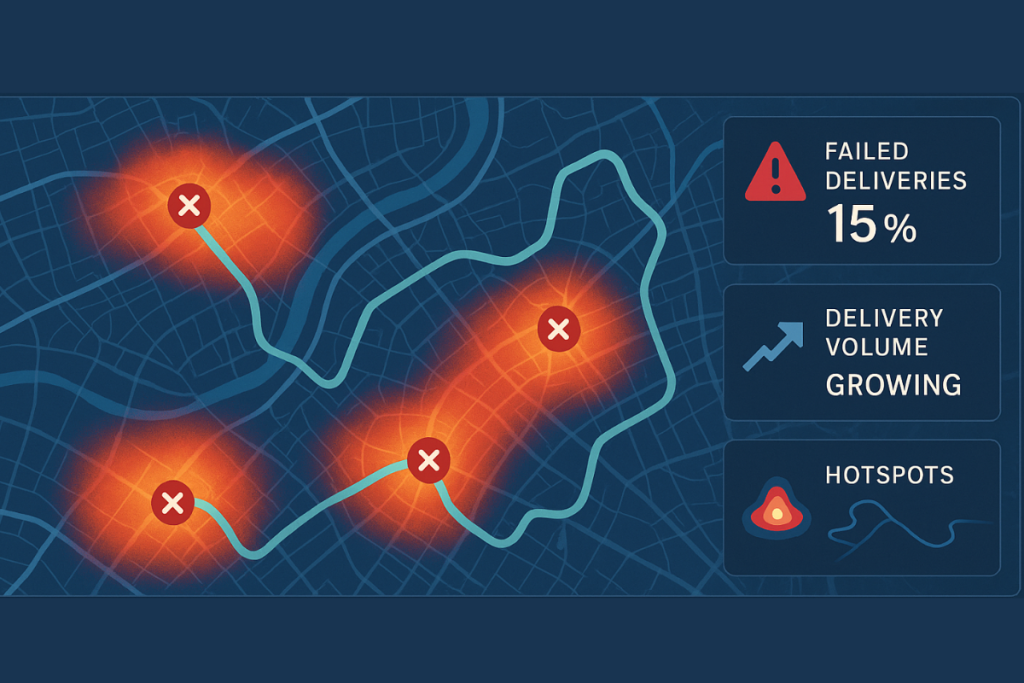
Last mile: The absence of live ETA data fuels anxiety. According to multiple trade reports, 20% of parcels fail on first delivery, a metric that has barely improved in five years. Routing errors and missed hand-offs remain the dominant causes.
Returns: Avery Dennison’s research confirms what logistics operators have long known: poor return visibility is one of the fastest ways to destroy brand trust. Missing labels, unclear instructions, and slow refunds increase churn risk more than slow outbound deliveries.
Digital proof of delivery, AI-driven address validation, and real-time ETA systems are gaining traction in response. UPS, FedEx, and major European carriers have all invested in machine-learning powered routing tools to shrink window estimates from hours to minutes. According to recent trade data, the share of parcels with photo confirmation more than doubled between 2021 and 2024.
Yet many of the most significant breakthroughs are happening upstream. Walmart’s expanded use of RFID has reduced inventory-related order inaccuracies across thousands of SKUs. IKEA’s recent shift to synchronized carrier-retailer tracking feeds has reduced blind spots in hand-offs. These investments cost millions—but they prevent billions in failed delivery costs, redelivery mileage, and customer service burden.
Where Competitive Leverage Is Quietly Moving
One emerging trend worth watching is the link between delivery transparency and margin discipline. Several major retailers are now using delivery performance data to decide which customers merit fast-track fulfillment and which orders can shift to slower, lower-cost modes without hurting loyalty. If this model scales, delivery visibility will become more than a customer experience metric, it will function as a pricing and profitability lever, quietly reshaping how logistics networks allocate speed, assets, and capital.