Warehousing is no longer a passive cost buried in the supply chain. As volatile demand, tighter capital, and uneven freight flows reshape logistics economics, storage and fulfillment networks are being revalued as strategic tools for absorbing risk and protecting margins. The shift is forcing operators and shippers alike to rethink not how much space they control, but how flexibly it can respond when conditions change.
Warehousing Becomes a Risk Management Tool
Storage and fulfillment networks are increasingly designed as extensions of enterprise risk management. Facilities are expected to flex with demand, reposition inventory closer to consumption, and provide optionality when transport capacity tightens or sourcing plans change.
Yet many providers still approach warehousing as an add-on to trucking rather than as a stabilizing revenue stream and strategic asset. That mindset is showing strain. Operators that integrate warehousing more deeply into their operating models are better positioned to smooth earnings through freight downturns, improve asset utilization, and diversify beyond rate-dependent transport revenue.
Inventory placement has become a competitive lever. The ability to stage goods closer to customers reduces exposure to last-mile disruptions and shortens response times when demand shifts unexpectedly. In an environment where volatility is structural rather than cyclical, that proximity matters.
At the same time, the financial cost of holding inventory is reshaping expectations on both sides of the market. Elevated interest rates and tighter capital discipline have made excess stock far more expensive. Post-pandemic inventory drawdowns have left many markets with an oversupply of generic warehouse space that no longer aligns with how goods are actually handled, turned, or fulfilled.
From Generic Space to Purpose-Built Networks
The industry is moving away from uniform, long-term storage toward specialized and hybrid facilities designed around specific products, workflows, and industries. After a brief return to “just-in-case” buffers, companies are again tightening inventory positions. According to trade reports, higher financing costs and persistent uncertainty are reinforcing leaner operating models through 2026 and beyond.
This is not a return to the fragile just-in-time systems of the past. Today’s JIT relies on analytics, predictive planning, and real-time visibility to respond faster without carrying excess stock. That makes high-performing warehousing more—not less—critical.
The pressure point is idle inventory. Slow-moving stock ties up cash and erodes margins at a time when tolerance for inefficiency is low. As a result, demand is shifting toward facilities that support faster turns, dynamic slotting, and continuous visibility, rather than long dwell times.
Developers and operators are responding by investing in fit-for-purpose environments: cold storage, automation-ready layouts, cross-dock hybrids, and multi-client configurations that improve utilization and share risk. Multi-tenant and fourth-party logistics-style models are gaining traction as one way to balance flexibility with capital efficiency.
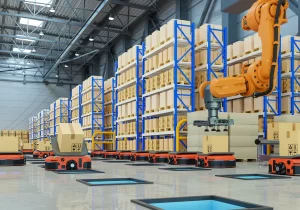
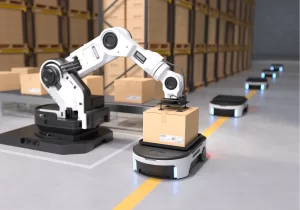
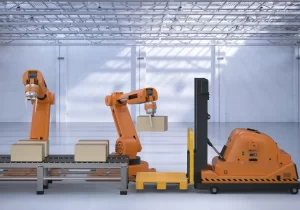
Across the sector, operators are redesigning layouts, upgrading racking, and deploying advanced material-handling systems to increase throughput without expanding footprints. Nearshoring and onshoring are reinforcing this trend, driving demand for sites that can combine storage, cross-docking, and light assembly under one roof. Sustainability targets and AI-enabled warehouse management systems are further raising the bar on performance expectations.
Capital Optionality Becomes a Design Constraint
As financing costs stay elevated, warehousing choices are being filtered through capital discipline in ways that were less visible during the low-rate cycle. Space that cannot be reconfigured, shared, or throttled up and down quickly now carries a measurable penalty, even if service levels are strong. That is quietly shifting network design away from fixed commitments and toward structures that preserve exit paths, defer long-dated bets, and align inventory posture with cash exposure. The strategic edge is emerging not from how much capacity a network controls, but from how easily that capacity can be reshaped when volumes, financing conditions, or trade flows move out of alignment.