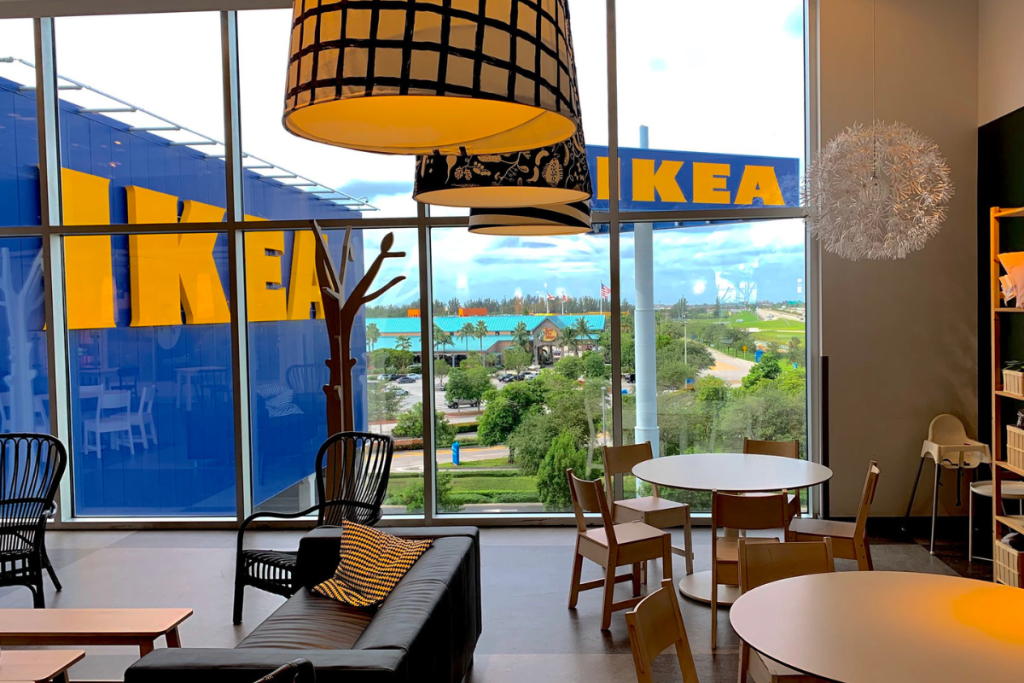
Ingka Group, the largest franchisee of IKEA, has acquired Locus, a U.S.-based logistics technology company known for its artificial intelligence–driven delivery optimization. The deal marks a decisive move by the Swedish retailer to bring more of its delivery intelligence in-house as e-commerce continues to reshape its fulfillment model.
From Outsourced Networks to Intelligent Control
IKEA’s delivery model has long depended on third-party providers to manage transport, assembly, and customer scheduling. Locus changes that equation. Its platform combines real-time route optimization, fleet orchestration, and dynamic capacity management, allowing Ingka to tighten control over the last mile while reducing dependency on external logistics firms.
“This acquisition strengthens the digital capabilities required to meet rising customer expectations, while ensuring the quality and reliability IKEA is known for,” said Parag Parekh, global chief digital officer for IKEA Retail (Ingka Group), in an official statement.
Industry experts say the move reflects a broader logistics trend: retailers consolidating fragmented tech stacks into unified control systems. Ram Ganeshan, professor of operations and supply chain at William & Mary, described the deal as “a smart move to bring the ‘brains’ of last-mile delivery in-house.” With Locus’s AI software, IKEA can promise tighter delivery windows, higher reliability, and fewer failed appointments, while trimming logistics costs. “It completes an end-to-end digital chain, from warehouse to doorstep,” Ganeshan added.
Beyond IKEA, Locus’s continued independence could position it as a reference platform for high-volume home delivery, serving other retailers that require heavy, scheduled freight orchestration.
AI Becomes the New Fulfillment Backbone
Integrating Locus’s technology will allow IKEA to push AI deeper into its delivery stack, enhancing predictive capacity planning, real-time customer updates, and fleet productivity analytics. According to David Welsh, vice president of fulfillment at 3PL provider Radial, these tools can “give customers more precise delivery windows and better live tracking,” a growing differentiator during peak shopping periods.
Radial’s consumer research shows that 66% of shoppers would forgo a 5% discount, and a third would pass up 20%, just to guarantee delivery reliability. That willingness highlights why brands are investing in algorithmic route scheduling and intelligent resourcing.
As more fulfillment flows migrate to IKEA-managed systems, Welsh noted, the retailer’s orchestration standards will likely pressure partners to improve. “TikTok, for instance, rewards same-day confirmations, retailers need 3PLs that prioritize by channel logic, not just first-in, first-out,” he said.
Where AI Logistics Moves Next
As retailers like IKEA pull delivery intelligence in-house, the distinction between technology provider and logistics operator is narrowing. The next competitive edge will depend on how well companies integrate AI decision-making with sustainability and cost governance, turning delivery optimization into a tool not just for speed, but for measurable carbon and capital efficiency. Those that link AI logistics to enterprise planning,treating routing data as part of the same decision layer as inventory and demand, will be positioned to shape how omnichannel fulfillment is costed, executed, and ultimately financed across global networks.