Kroger’s decision to scale back its robotics program shows how quickly the economics of online grocery have shifted. With demand leveling off and expectations for faster delivery rising, the company is turning back to its stores as the core of its fulfillment strategy.
A Costly Bet That Failed to Scale in the U.S. Market
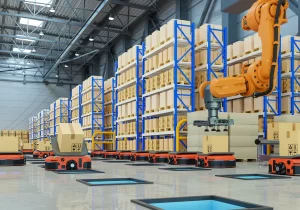
Kroger’s Nov. 18 decision to shutter three Ocado-powered customer fulfillment centers follows years of optimism that robotics could deliver profitable online grocery margins. The retailer had continued to invest in the model as recently as mid-2024, approving new Ocado technologies and signaling further network expansion. Internal doubts, however, had been brewing for some time. Kroger paused new site development in 2023 to evaluate early facility performance, later closing several spoke sites after they failed to meet operational benchmarks.
By 2025, senior leadership acknowledged that the economics simply weren’t materializing. Interim CEO Ron Sargent said in September that the company would reassess each automated site and redirect e-commerce strategy toward Kroger’s 2,700-plus supermarkets, a network that offers geographic proximity, higher delivery density, and lower incremental capital risk. According to industry data, U.S. grocers have increasingly emphasized store-fulfilled delivery because it enables faster order cycles and leverages existing labor and inventory, reducing the fixed costs associated with standalone facilities.
The reversal is expensive. Kroger expects approximately $2.6 billion in charges tied to the closures and related restructuring, though the company projects roughly $400 million in benefits as it retools for more profitable digital operations. Former Kroger executive Ken Fenyo said the outcome reflects a broader reality: online grocery volumes have not maintained their 2020–2021 trajectory. Third-party marketplaces like Instacart and DoorDash have trained consumers to prioritize immediacy, making the Ocado model, optimized for accuracy and cost, not speed, a tougher fit for the U.S. market.
Automation Strategy Collides With Geography and Consumer Behavior
One of the model’s most fundamental constraints was geography. Several Ocado hubs were built outside major population centers to manage land and construction costs. But lower customer density and longer delivery routes drove higher last-mile expenses, pushing order volumes below what was needed to justify the capital-intensive facilities. Fenyo noted that the centers simply could not process enough orders to offset fixed costs, a challenge echoed by other retailers experimenting with large-format robotic fulfillment.
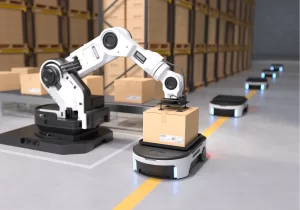
The pivot also reflects a more nuanced understanding of automation’s role within grocery e-commerce. While fully automated networks have struggled to scale, selective automation within stores continues to attract interest. Kroger plans to test capital-light, in-store automation in high-volume markets, while deepening partnerships with third-party delivery providers. Recent public reports show that Amazon is piloting similar small-footprint automation in a Whole Foods Market location, a sign that retailers are exploring flexible models that prioritize speed and reduce upfront investment.
Ocado, meanwhile, faces its own inflection point. Its shares have fallen back to levels seen at the time of its IPO 15 years ago, underscoring investor concern about the scalability of its technology in lower-density markets. Analysts note that while Ocado’s model remains technically sophisticated and profitable in the U.K., the U.S. mix of sprawling geographies, higher labor variability, and consumer demand for rapid delivery creates structural hurdles the original partnership may not have accounted for.
What This Signals for the Next Wave of Grocery Automation
Retailers testing compact, task-specific systems, from automated picking modules to inventory-scanning robots, are finding that smaller tools often deliver clearer returns than large, standalone facilities. Recent pilots from Amazon, Walmart, and regional grocers show a growing interest in automation that reduces repetitive tasks, tightens inventory accuracy, and speeds pick times inside the store itself. As more companies reassess where automation genuinely earns its keep, the industry may move toward a model that treats robotics as a targeted tool, one deployed only where density, demand, and labor pressures align, rather than a default blueprint for the future.