Smarter inventory management in supply chain management has become the backbone of operational agility and profitability. As global networks expand and product cycles shorten, organizations are re-engineering how they plan, store, and move inventory to protect margins and deliver reliably in volatile markets.
From Static Stock to Intelligent Flow
Effective inventory management in supply chain management goes far beyond counting products on shelves. It is now a real-time discipline powered by data, AI, and predictive analytics that align materials, production, and customer demand across continents.
In the past, inventory systems functioned reactively, responding to shortages or surpluses after they occurred. Today, advanced platforms integrate warehouse, logistics, and procurement data to anticipate fluctuations before they disrupt operations. Artificial intelligence models evaluate sales velocity, supplier performance, and transport constraints, allowing teams to recalibrate stock levels dynamically.
The results are measurable. Companies that connect inventory visibility across suppliers and distribution centers report faster order cycles, reduced carrying costs, and fewer stockouts. Predictive insight has effectively turned inventory from a liability on the balance sheet into a strategic asset.
However, globalization and supply volatility have complicated control. The pandemic underscored how quickly regional bottlenecks can cripple a global network. Building an adaptive inventory strategy—one that can flex with logistics shocks, raw-material shortages, or demand surges—has become a central priority for manufacturers, retailers, and distributors alike.
Balancing Capital, Risk, and Speed
Inventory decisions sit at the intersection of finance, operations, and customer service. Too little stock jeopardizes service levels; too much ties up cash and raises storage costs. Striking that balance is the essence of modern inventory management in supply chain management.
For example, over-ordering during uncertain demand cycles can erode liquidity and create write-offs when products expire or become obsolete. Under-ordering, on the other hand, risks lost sales and reputational damage, particularly in sectors such as healthcare or electronics, where continuity is critical. The challenge lies in determining optimal stock levels that protect both profitability and responsiveness.
Leading organizations employ a range of analytics-driven tools to manage this equilibrium:
Demand-Supply Integration (DSI): Aligns commercial forecasts with supply-side capacity, ensuring synchronized decisions on production, replenishment, and working capital.
ABC Analysis: Segments inventory by turnover or value, directing tight control to high-impact SKUs and reducing oversight on slower-moving goods.
Economic Order Quantity (EOQ): Balances purchase volume with carrying costs to minimize total expenditure.
Safety Stock Modeling: Adds calculated buffers to absorb transportation delays or demand spikes, as highlighted during the 2021 Suez Canal blockage and other logistics crises.
Digital twins and AI-driven forecasting are now elevating these methods further. By simulating multiple demand scenarios, companies can stress-test policies before execution—identifying where additional stock or faster replenishment cycles are needed. This proactive approach transforms uncertainty into manageable variability.
The Technology Backbone of Modern Inventory Control
The digitalization of inventory management in supply chain management is redefining how networks operate end-to-end. Cloud platforms and IoT-enabled sensors provide continuous visibility across factories, warehouses, and in-transit goods.
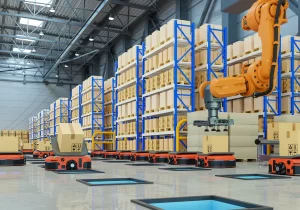
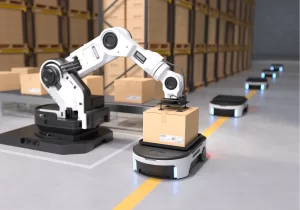
Real-time tracking has replaced manual counts and spreadsheets. Automated alerts flag anomalies such as sudden demand surges, production lags, or temperature deviations for sensitive cargo. Advanced warehouse management systems (WMS) now integrate robotics and AI vision tools to improve picking accuracy and throughput, while transportation management systems (TMS) optimize routes and capacity utilization.
Integration is key. When WMS, TMS, and ERP systems share live data, companies gain a holistic view of product flow and cost impact. This connectivity shortens decision-making cycles and enables continuous optimization, a hallmark of next-generation inventory management.
Even sustainability goals are being linked to these systems. Smarter inventory control reduces waste, curbs overproduction, and minimizes unnecessary freight moves, cutting both emissions and costs. Many global brands are tying inventory KPIs directly to ESG metrics, seeing resource efficiency as a competitive differentiator as well as a compliance necessity.
From Efficiency to Strategic Advantage
The evolution of inventory management in supply chain management reflects a broader shift from operational efficiency to strategic enablement. Where once inventory was managed primarily to minimize expense, it is now leveraged to capture market share and resilience.
Consider how retailers with real-time stock visibility were able to redirect inventory between stores and e-commerce channels during demand swings, while competitors faced shortages. Manufacturers that digitized supplier and logistics data have been quicker to recover from disruptions, using insight to pre-position materials closer to customers or adjust sourcing to alternate regions.
Moreover, inventory transparency has become essential to financial and risk governance. CFOs increasingly view inventory health as a proxy for organizational agility and cost discipline. Supply chain executives are therefore partnering more closely with finance teams to embed AI-based inventory analytics into enterprise planning and performance dashboards.
Inventory as Intelligence
The next frontier of inventory management in supply chain management will be defined by autonomous decision-making. Agentic AI systems are already emerging that can autonomously trigger purchase orders, reroute shipments, or recommend price adjustments based on real-time data. As these capabilities mature, inventory will cease to be a static count and instead become a continuously optimized flow, guided by algorithms, monitored by humans, and aligned to business strategy.
Ultimately, the companies that treat inventory not as a cost center but as a living intelligence system will lead the next era of supply chain performance. Precision, transparency, and adaptability, once seen as aspirational, are fast becoming the new baseline.