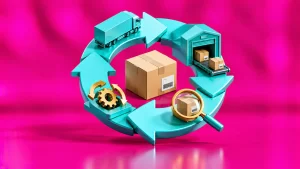
Packaging has long been treated as disposable, with logistics networks designed for one-way flows of boxes, pallets, and protective materials. Rising waste costs, tightening regulations, and sustainability mandates are changing that assumption. Logistics operators are now experimenting with circular packaging logistics, closed-loop systems that retrieve, clean, and redeploy packaging at scale. The result is a new class of reverse flows where packaging itself becomes an asset, not a consumable.
From Single-Use to Closed-Loop Flows
The one-way packaging model creates mounting inefficiencies: cardboard waste at fulfillment centers, plastic dunnage in landfills, and escalating disposal fees. Regulations are accelerating the shift. The EU Packaging and Packaging Waste Regulation, for example, mandates higher reuse and recycling thresholds by 2030, while large retailers are under pressure to prove progress on circularity.
Circular logistics reframes packaging as part of the network:
1. Reusable totes and bins replace single-use cartons in intra-warehouse and last-mile flows.
2. Smart pallets and crates are tracked with RFID or IoT tags to monitor return cycles.
3. Cleaning and refurbishment nodes are integrated into reverse logistics networks, ensuring packaging can be turned quickly.
Operators are already piloting models in food, apparel, and e-commerce. In grocery, reusable totes are being cycled through regional distribution centers. In parcel networks, returnable padded mailers are collected via locker systems and routed back for reuse.
Building the Circular Packaging Stack
Tracking and Visibility: IoT-enabled tags and RFID chips transform packaging from a consumable into a traceable asset. These sensors record not only where a tote, crate, or pallet is at any given time but also how many times it has cycled through the network, whether it has been delayed in a reverse flow, and when it requires cleaning or repair. The data creates a digital thread that allows operators to treat packaging with the same asset-management discipline they apply to vehicles or inventory.
Reverse Collection Flows: Returns networks are being repurposed as packaging retrieval channels. Instead of designing separate pickup routes, operators can fold packaging recovery into existing reverse logistics flows, whether parcel return lockers, grocery tote collection points, or backhaul trucking routes. By piggybacking on these established systems, the cost of retrieval falls sharply, and packaging assets can be returned to circulation faster.
Cleaning & Refurbishment Hubs: Durable packaging must be cycled back into service quickly and reliably, which makes regional refurbishment capacity essential. These hubs are designed to sanitize food-grade totes, repair damaged crates, and quality-check returnable mailers before they reenter the network. Locating these nodes close to consumption centers reduces turnaround time, avoids bottlenecks, and keeps the loop in motion.
Orchestration Platforms: The shift to circular packaging requires orchestration across warehouse and transport systems. Integrating packaging pools into warehouse management systems (WMS) and transport management systems (TMS) ensures that reusable assets are allocated to the right orders and routes. The same orchestration tools can rebalance packaging inventories across multiple sites, reducing shortages in one location while preventing overstock in another.
Metrics and Compliance: Closed-loop packaging must prove its value not only in cost terms but also in regulatory and sustainability reporting. Systems now track reuse rates, cycle times, and carbon savings at the asset level, providing auditable evidence for compliance with regulations such as the EU Packaging and Packaging Waste Regulation. For operators, these metrics serve as both a risk shield and a selling point, demonstrating progress on waste reduction to customers and regulators alike.
When Packaging Redraws the Cost Map
The overlooked consequence of circular packaging is its impact on cost architecture well beyond materials. Once packaging becomes a managed asset, it can change how companies calculate working capital, design insurance coverage, and negotiate supplier contracts. A reusable crate with a five-year service life isn’t just a logistics tool, it becomes part of the balance sheet, with depreciation schedules and asset recovery value. Firms that recognize this shift early will be able to convert what looks like an operational tweak into a structural cost advantage.