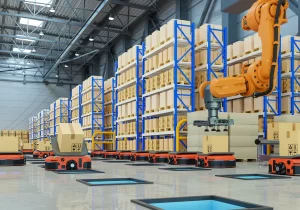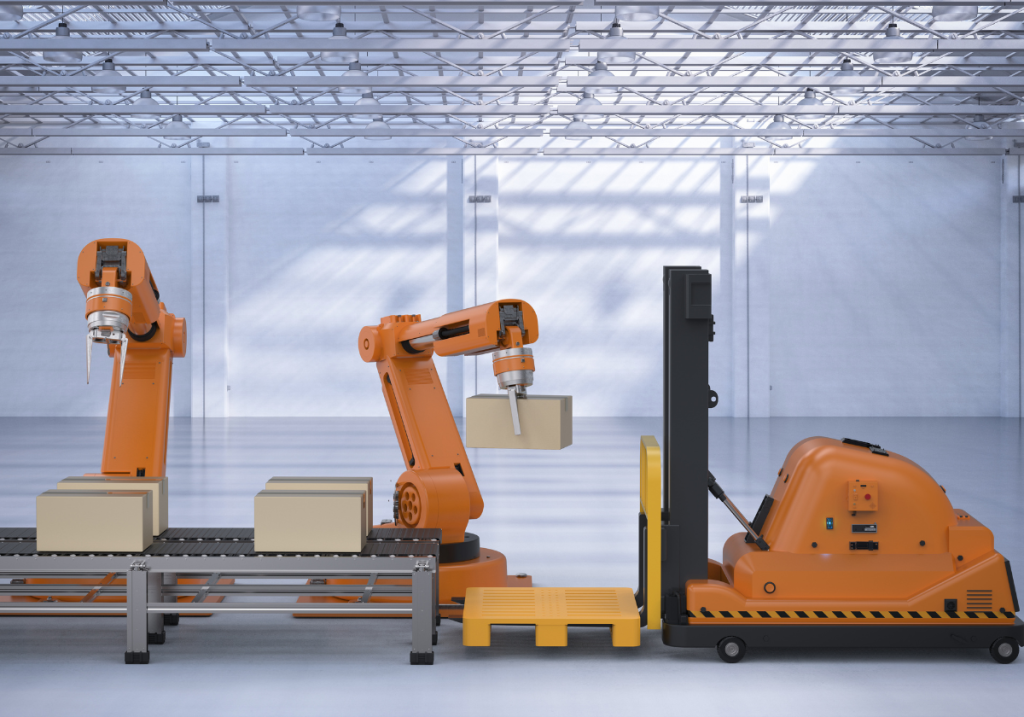
Warehouse robotics are rapidly moving beyond fixed-path automation toward highly adaptive systems that navigate dynamic environments. From mobile manipulators to early-stage humanoid pilots, robotics programs across logistics networks are stretching the limits of existing risk protocols. As this shift accelerates, companies are rethinking how to keep operations safe when machines no longer follow predictable routines.
AI Pushes Warehouse Robotics Into Uncharted Safety Territory
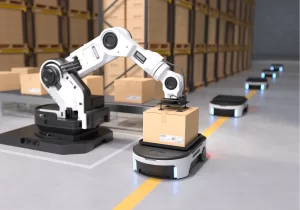
The rise of more versatile warehouse robotics has blurred the boundaries between predictable automation and context-dependent behavior. Companies are deploying autonomous mobile robots (AMRs) at scale and experimenting with mobile manipulators that combine dexterity with fleet mobility. Interest in humanoid platforms is also growing, but the middle tier, agile manipulators on mobile bases, is where deployment is accelerating most quickly.
Unlike legacy robots, these systems cannot rely on static safety approaches. AI and machine learning models learn from large datasets and adjust their behavior dynamically, which makes deterministic validation nearly impossible. Recent reports from standards bodies, including work underway on updates to ISO 10218 and ISO 10218-2 for industrial robots, highlight that current frameworks were built for predictable systems, not adaptive autonomy.
Model integrity is another emerging pressure point. Poorly labeled training sets, mismatched timestamps, or incomplete warehouse scenarios can produce models that behave safely in one context but unpredictably in another. And with data increasingly stored both in the cloud and on the robot itself, cybersecurity becomes inseparable from physical safety. Robotics developers now treat IP protection, data access control, and model tamper-proofing as core components of safeguarding strategy.
Simulation is becoming essential as testing alone cannot cover the unbounded combinations of robot behaviors and warehouse conditions. According to trade reports, robotics firms are now running millions of simulated scenarios to expose edge cases that traditional testing cannot replicate. This shift reflects an industry-wide transition toward “test-enabled learning” rather than fixed validation.
Integrated Systems Raise New Risk Layers for Warehouse Robotics
As warehouse robotics become more deeply embedded in fleet orchestration platforms, the safety perimeter expands beyond the robot itself. Fleet management software, third-party analytics tools, and cloud-based workflow engines now influence robot decision-making in ways that must be incorporated into the safety case.
Organizations are increasingly adopting rule-based safety governance that mirrors human training: maximum travel speeds by zone, acceptable lift parameters, attachment usage limits, and task-specific movement constraints. But these rules only work when robots understand context, whether they are navigating a congested dock, lifting near personnel, or handling variable payloads. That shift is driving rapid adoption of context-aware safety architectures across warehouse deployments.
Industry groups, including the Robotics Industries Association (now A3), are working on updated guidelines for integrated safety in adaptive systems, but companies cannot wait for certification cycles to conclude. Firms investing heavily in warehouse robotics are embedding safety at the design stage to ensure new capabilities can scale without compromising operational integrity. Companies that postpone this work risk slower deployments, reduced uptime, and widening gaps in competitive performance.
Why Safety Will Shape the Next Automation Threshold
One emerging factor that deserves more attention is how insurers and regulators are beginning to scrutinize autonomous systems in high-volume warehouses. According to industry filings and ongoing standards work, underwriters are evaluating not just incident histories but the quality of a company’s validation processes, data governance, and oversight of third-party integrations. As warehouse robotics become more capable and more interconnected, the strength of an operator’s safety architecture may influence coverage terms and even eligibility. That shift could quietly steer which technologies scale first, rewarding companies that treat safety engineering as a foundational enabler rather than a final checkpoint.