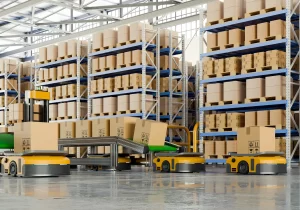
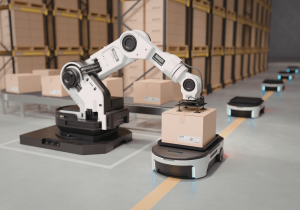
Warehouse automation is redefining how fulfillment capacity is built as automated storage and retrieval systems support denser inventory, faster execution and tighter service commitments. Their value increasingly rests on software coordination and long-term adaptability as much as mechanical performance.
Automation Value Moves Into Orchestration
AS/RS has traditionally offered a clear operating proposition. The technology uses cranes, shuttles, lifts, carousels, robots or cube-based structures to place inventory into defined locations and retrieve it when required. That reduces travel, improves access to vertical space and shifts labor toward picking, replenishment and exception management.
The strategic break comes when the system becomes a warehouse execution node. Inventory may enter as pallets, cases, totes, trays or bins, but its movement must remain synchronized with receiving, picking, packing, returns and shipping. Mobile robots, automated guided vehicles and other transport systems add further dependencies around the storage engine.
Software architecture therefore carries more weight in the investment case. Facilities commonly operate warehouse management, execution and control applications alongside equipment from multiple suppliers. Unclear command boundaries can create duplicate decisions, conflicting priorities and difficult recovery procedures.
A durable design assigns order and inventory logic to a defined host or orchestration layer while preserving machine-level control within the AS/RS. This creates clear ownership of allocation, sequencing and escalation. It also allows individual technologies to work as part of one operating flow rather than as separate automation islands.
Exception design is equally important. Short receipts, late order changes, depleted containers and approaching carrier cutoffs all disrupt the planned sequence. Digital twins and simulation can pressure-test these conditions before installation, but operating procedures must also define when software acts automatically and when people intervene. Irregular, oversized or unstable items will continue to require manual handling in many facilities.
The Business Case Must Follow a Changing Operation
AS/RS projects can take two years or longer to progress from design to stable operation. During that period, order profiles, SKU velocity, service commitments and sourcing patterns can change materially. A design optimized around the original data set may enter service against a different operating reality.
That risk is growing as SKU activity becomes less predictable. An item may generate intense demand for a short period and then become inactive. Fixed slotting and static pick areas struggle with that volatility. Automated retrieval can shorten access time without constant physical repositioning, provided the software can continuously reprioritize inventory.
Flexibility also extends to network decisions. Shifts in sourcing, tariff exposure and peak demand can alter inbound flows or require additional capacity. Temperature-controlled operations add ambient, chilled and frozen zones to the design brief. These requirements favor modular configurations and early capacity planning over rigid assumptions about volume and product mix.
Performance governance should continue after go-live. Throughput, availability, labor use, storage density and exception recovery need to remain connected to service, cost and inventory objectives. Service contracts, spare-parts access, field coverage and remote support deserve the same scrutiny as equipment specifications. An integrator coordinating several suppliers does not remove the need for explicit support ownership.
Automation Value Extends Beyond Installation
The long-term value of AS/RS will depend less on storage density or retrieval speed than on how well it adapts as warehouse networks evolve. Organizations that invest in orchestration, lifecycle support and flexible control architectures alongside automation will be better positioned to sustain throughput, protect service levels and maximize return on capital as demand patterns, fulfillment models and supply chains continue to change.