Automation is accelerating across warehouses and plants, but the most persistent safety risks are not inside fenced-off cells. They emerge in shared, fast-changing spaces where people, vehicles, and machines overlap, and where traditional safeguards fall short.
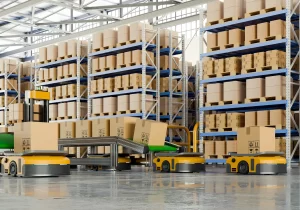
In many facilities, the most hazardous moments happen at the edges of defined processes: a forklift cutting across a pedestrian route, a robot cell temporarily opened for intervention, or an aisle where autonomous and manual traffic converge. As automation density increases and labor constraints persist, these gray areas are becoming harder to manage with legacy safety approaches that were never designed for dynamic interaction.
At the same time, safety controls cannot introduce friction. Slowing throughput, reprogramming machines, or forcing operators into cumbersome workflows undermines the very productivity gains automation is meant to deliver. What operators have lacked is a way to extend protection into these shared zones without disrupting existing operations.
Why Brownfield Facilities Struggle With Modern Safety Risks
Most brownfield warehouses rely on safety systems built around static assumptions: fixed barriers, light curtains, emergency stops tied to individual machines. These controls work well in predictable environments but struggle when layouts change, traffic patterns shift by the hour, or humans and automation work side by side.
Incidents and near misses disproportionately occur in transition zones, between aisles, around blind corners, or during temporary process changes. Addressing those risks with traditional tools often requires invasive steps: modifying machine code, retrofitting every vehicle with sensors, or deploying wearables that raise adoption, privacy, and maintenance concerns.
Workforce dynamics compound the issue. Ongoing labor shortages have increased reliance on temporary staff and contractors who may not fully understand automation behavior or site-specific movement patterns. According to recent trade reporting, facilities with higher workforce churn consistently report elevated near-miss rates, even when core equipment safety systems remain unchanged.
Modern operations need a safety approach that can observe risk across zones, react in real time, and coexist with legacy equipment, without turning safety into a bottleneck.
How Virtual Safety Fences Extend Protection
Virtual safety fence systems address these gaps by adding a software-defined safety layer over existing operations rather than replacing them. Fixed cameras create continuous video coverage of hazardous and shared zones, while edge AI processes those streams locally to model worker positions, vehicle trajectories, and separation distances in real time.
Instead of hard physical barriers, safety zones are defined virtually. A digital twin of the facility allows teams to design camera placement, virtual boundaries, and response rules before deploying them live. These models can be stress-tested against different traffic patterns or shift conditions without touching the physical floor.
When the system detects a boundary breach or unsafe convergence, it issues targeted commands over a time-sensitive network to slow or pause only the relevant equipment, often within a single control cycle. Visual alerts and alarms clarify the situation for operators, and once the risk clears, normal operations resume automatically.
Every event is logged with precise time and location data. Over weeks and months, this creates a detailed safety record showing where near misses cluster, which routes or shifts carry higher risk, and how small layout or speed changes could improve protection without sacrificing throughput.
Why Time-Sensitive Networking Is the Enabler
The reliability of virtual safety fences hinges on the network underneath them. Multiple video streams must remain tightly synchronized so the system can construct an accurate, three-dimensional view of people and machines. Any latency or jitter introduces uncertainty, and uncertainty undermines safety decisions.
Time-sensitive networking (TSN) provides deterministic, low-latency transport for both video and control traffic, even on busy industrial networks. By guaranteeing delivery within strict time budgets, TSN ensures that safety actions are based on current conditions, not delayed frames.
This deterministic foundation also extends the value of the investment. The same TSN infrastructure supporting safety can carry inspection imagery, event metadata, and digital-twin data for adjacent use cases such as high-speed quality inspection or process monitoring. For brownfield operators, that means one network upgrade can underpin multiple physical AI applications, rather than creating new silos for each initiative.