Automation-first warehouse software architecture is redefining how fulfillment centers scale automation and manage risk at high volume. Treating the SaaS WMS as an orchestration hub, and building event-driven, vendor-neutral integration around it, is emerging as the decisive factor for throughput, resilience, and long-term flexibility.
Automation Density Shifts The Bottleneck Into Software
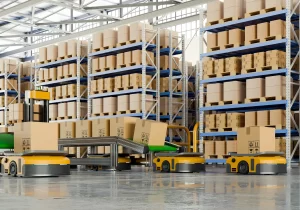
Automation investment has accelerated as labor markets tighten, delivery promises shrink, and product ranges expand. Facilities built around goods-to-person shuttles, automated storage, high-speed sorters, and packing lines can push far more volume through a fixed footprint than manual operations, while also supporting more granular service offers and shipping cost optimization.
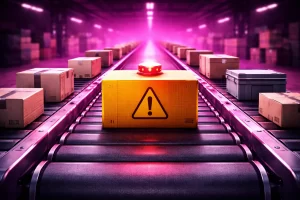
In these environments, the limiting factor is no longer a single piece of equipment. The real constraint is how well warehouse management, execution, and control systems coordinate thousands of interdependent events per minute. When that coordination fails, symptoms show up quickly: induction queues back up, shuttles idle despite available work, or packing stations starve while upstream zones appear fully utilized.
SaaS WMS platforms add another layer of complexity. Multi-tenant services emphasize configuration rather than customization, which protects upgrade paths but restricts direct intervention in execution logic. That design forces decisions about task release, prioritization, and exception handling into the integration fabric that connects the WMS to warehouse execution systems and machine controllers.
Many deployments still assume vendor interfaces will knit together with minimal engineering. In practice, each system brings different data structures, latency expectations, and error behaviors. Without an explicit architecture model, these differences create brittle point connections, hidden timeouts, and operational workarounds that erode the expected return on automation.
A software-first approach reframes the problem. The WMS defines business intent: which orders matter most, how to allocate inventory, when to release waves or continuous flows. Execution systems closer to the floor manage routing, buffering, and real-time adjustments. Between them, an event-driven integration layer carries state changes as asynchronous messages rather than synchronous calls, allowing the network to absorb spikes without cascading failures.
Industry implementations show that this separation of concerns is easier to extend than older, tightly coupled stacks. New automation modules can attach to the execution layer through stable contracts. Additional sites can reuse the same patterns, with policy changes at the orchestration level tailoring behavior to local demand and labor conditions.
A Layered Blueprint For Orchestration, Execution, and Intelligence
A reusable model for automation-first warehouses groups software responsibilities into four layers: orchestration, integration, execution, and intelligence. Each layer has a clear role in translating commercial priorities into physical movement.
At the orchestration layer, a cloud WMS governs orders, inventory and fulfillment policies. It holds the system of record for stock, determines which orders are eligible for release, and enforces rules on service levels, batching, and carrier selection. Crucially, it does not attempt to micromanage equipment. That restraint keeps core logic stable while automation assets evolve over time.
The integration layer sits beneath as an event backbone. It exposes business events such as ‘order released’, ‘container inducted’, ‘pick completed’, or ‘carton manifested’ as standardized messages. Systems subscribe and publish without direct knowledge of one another, which reduces coupling and allows independent scaling. Designing this layer with explicit service level classes lets latency-sensitive flows such as divert confirmations use optimized patterns, while less critical updates follow more relaxed paths.
The execution layer covers warehouse execution systems and control software. These platforms interpret orchestration signals and decide which tote, case, or pallet moves next, which workstation to feed, or when to re-route to protect throughput. Because they are physically close to the equipment and usually run on premises, they can continue operating during transient network disruptions, reconciling with the cloud once connectivity returns.
An intelligence layer wraps the stack with analytics, simulation, and optional AI. This layer ingests events from across the network to track utilization, dwell times, and exception hotspots. It can recommend policy changes in the WMS, such as adjusting cut-off rules, rebalancing work across zones, or reclassifying SKUs for different storage modes. Recent industry reports highlight growing use of simulation and digital twins at this layer to test layout or policy changes against realistic order streams before deployment.
Policy-driven configuration binds these layers together. Routing logic, prioritization rules, and recovery behaviors sit in configurable policies rather than custom code buried in interfaces. That design shortens the path from insight to change, allows operations teams to adjust behavior within guardrails, and reduces the need for repeated integration rewrites during network expansion or technology refresh.
The Overlooked Risk: Architecture Ownership
The most under-estimated risk in automation-first programs is diffuse ownership of software architecture. Mechanical design, slotting, and labor standards typically receive clear accountability, while integration patterns and event models are treated as implementation details. As automation density rises, that imbalance becomes a structural vulnerability.
Organizations that treat warehouse software as a platform, not a project, are starting to rebase ROI expectations. They plan automation rollouts alongside event schemas, error-handling playbooks, and policy governance, and they budget for ongoing architectural stewardship. Over the next planning cycles, the gap in resilience and upgrade agility between those environments and ad hoc integrations is likely to become a visible competitive line item rather than a hidden IT concern.