Accenture, Vodafone and SAP have run a warehouse humanoid robots pilot in Germany, using physical AI to execute inspection tasks inside a live operation. The trial links robotics directly into core warehouse systems, turning the robot into a mobile sensor that feeds structured data into existing decision frameworks.
Turning The Warehouse Into a Live Physical AI Testbed
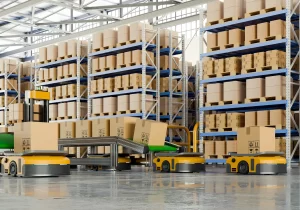
At Vodafone Procure & Connect’s facility in Duisburg, a humanoid robot was integrated with SAP Extended Warehouse Management so it could receive inspection tasks like any other resource in the system. Instead of working as an isolated prototype, the unit drew work orders from the same digital backbone that orchestrates storage, picking and dispatch. The robot then navigated the site autonomously, carrying out visual checks that would normally fall to roaming supervisors or safety teams.
During these rounds, the robot scanned racks, pallets and aisles to flag misplaced or damaged goods, uneven stacking and unstable loads. It also recorded unused or poorly configured storage zones, highlighting opportunities to re-slot inventory or redesign layout to improve cube utilisation. When it encountered blocked aisles, protruding items or misaligned pallets, it logged hazards that can trigger accidents or force manual workarounds.
All findings flowed back into the SAP environment as structured observations and recommendations, rather than as unstructured video or one-off alerts. That design choice turns the robot into part of a closed loop: tasks are issued from the warehouse management system, the robot executes and measures conditions, and the system receives machine-readable signals that can drive follow-on actions, from work orders to layout adjustments.
Accenture describes the approach as ‘physical AI’ because the robot is trained against digital twins and operational models before it enters the facility. The same logic sits behind growing use of simulation tools in logistics, where network twins are used to test scenarios before touching bricks and mortar. Here, the digital twin informs how the robot interprets its surroundings and what constitutes an exception worth reporting.
From Safety Inspection To Data Asset
The partners frame the pilot as a way to move advanced robotics out of labs and into industrial settings where uptime, safety and integration matter more than novelty. The focus is not on replacing pickers or lift truck drivers. The robot focuses on repetitive inspection passes that are costly to maintain at high frequency with human labour and are prone to inconsistency when done ad hoc.
By assigning this work to a machine that operates on a consistent route and cadence, the warehouse gains a more reliable stream of condition data. That supports earlier detection of damage that can drive write-offs, claims and customer dissatisfaction. It also helps identify patterns in pallet build quality or handling practices that indicate training needs further up the chain.
Christian Souche, who leads advanced robotics at Accenture, links the trial to two sets of outcomes: direct operational gains and strategic insight into what a humanoid workforce might deliver at scale. On the cost side, the company points to potential reductions in overtime and temporary labour, as well as a decline in safety incidents when hazards are detected and removed earlier. On the strategic side, Vodafone Procure & Connect gains empirical data on robot utilisation, failure modes and integration overhead that it can use to design future services based on humanoid deployments.
This aligns with a wider push in warehouse automation to treat mobile systems as data generators rather than only as mechanical capacity. Industry reports indicate that sites using autonomous mobile robots and vision systems are starting to fold telemetry into broader control tower views, linking floor conditions with transport performance, forecast error and service outcomes. A humanoid platform with articulated movement and rich sensing adds another layer of granularity to that picture, especially in older facilities that cannot easily be retrofitted with fixed sensors.
What a Humanoid Inspector Changes In Network Design
If humanoid inspection becomes reliable and economically viable, it introduces new variables into network and workforce planning. Safety audits, layout reviews and visual quality checks can move from periodic projects to continuous processes, backed by a standard data structure that can be aggregated across sites. That creates the potential for network-wide benchmarks on storage discipline, damage rates and hazard hotspots, which can then be tied to procurement, packaging and carrier performance.
There is also a labour model implication. Repetitive inspection and incident reporting is a task that many operations push to supervisors or cross trained operators when time allows. A dependable robotic layer can free those roles to focus on orchestration, coaching and exception decisions rather than walking aisles. That matches the broader trend toward roles centred on managing AI enabled systems and interpreting combined human machine signals.
A more nuanced consequence sits in capital planning. As more sensor data on real conditions becomes available, operators will have firmer evidence for when to expand, reconfigure or consolidate storage. Instead of sizing new capacity around static assumptions, planners can test whether better slotting, safer stacking practices or targeted training would unlock space and reduce loss incidents without major build out.
The Less Visible Constraint: Trust and Governance
The physical capabilities of humanoid robots attract attention, but the gating factor for wider use will likely be trust in the data they deliver and the governance around how they are tasked. Inspection alerts only add value if they are accurate, prioritised and aligned to clear response playbooks. Without that structure, operations risk a flood of low signal exceptions that dilute focus. The Duisburg pilot addresses this by embedding the robot inside existing warehouse management workflows, an approach that will need to extend into network level risk, safety and maintenance governance before humanoid inspection becomes a standard tool in the supply chain kit.