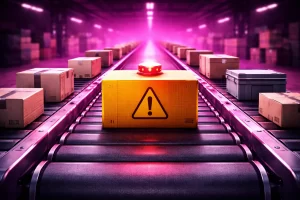
Supply chain orchestration links data, decisions, and execution into a single rhythm across tiers, systems, and partners. As networks stretch across regions and channels, this discipline gives enterprises a way to read conditions in real time, act on risks early, and align cost, service, and sustainability on the same screen.
From Connected Data To Coordinated Decisions
Most networks already track orders, loads, and inventory positions, yet teams still spend hours stitching together status updates to understand exposure. Orchestration addresses that gap by treating each status change as an event that can activate predefined responses across systems, facilities, and external partners.
In an orchestrated setup, a late vessel or missed pickup does not wait for a planner to notice. Event rules can trigger alerts to commercial teams, open alternative routing with approved carriers, reassign inventory between customers, and refresh delivery commitments within minutes. Similar patterns apply across order-to-cash and procure-to-pay flows when workflow engines replace email threads and ad hoc spreadsheets.
This model depends on a harmonized data layer that reconciles information from enterprise platforms, trading partners, and connected devices. The orchestration tier sits above transactional applications such as ERP, which retain system-of-record status, and uses standardized data to run rule-based and AI-supported workflows. Real-time event buses, APIs, EDI connections, and managed file transfer services keep modern and legacy applications synchronized without a disruptive rip-and-replace.
Analytics and AI increasingly sit inside this loop. Forecasting models highlight likely disruption on lanes, suppliers, and key materials before service metrics deteriorate. Machine learning can tune safety stocks, transport plans, and allocation policies based on observed variability instead of static assumptions. Generative copilots compress the time needed to diagnose an exception, compare scenarios, and capture the rationale behind each decision for audit and governance.
Industry research now links this approach to measurable gains. Organizations that embed orchestrated control towers report higher on-time, in-full performance, shorter decision cycles, and lead-time reductions in the range of 10 to 30 percent once cross-functional workflows run on shared, current data rather than lagging reports.
Building an Orchestration Operating Model
Treating orchestration as a software installation tends to produce isolated dashboards and short-lived pilots. The discipline lands when it is framed as a new way of working that binds planning, execution, finance, and partner collaboration around a common view of risk, margin, and service.
A focused starting point helps. Many teams begin with a contained use case that carries visible value, such as transport exceptions, inbound supplier reliability, or last-mile coordination in a specific region. They define event rules, KPIs, and playbooks in advance: which signals matter, who owns each response step, what thresholds trigger automation, and when issues move to a cross-functional triage group. Once results are visible, the pattern extends into adjacent flows.
Governance sits at the center of sustained progress. A dedicated orchestration or control function typically owns the data model, rule library, and performance framework, working alongside IT on architecture while capturing regional know-how from planners, buyers, and logistics leads. Clear accountability for data standards and master data stewardship underpins every attempt to automate decisions at scale.
Change management remains one of the hardest constraints. Teams that grew up in function-specific tools may resist a construct that exposes trade-offs in real time, especially when service, cost, cash, and emissions cannot all be optimized at once. Training must emphasize reading forward-looking signals, using AI suggestions as structured input rather than autopilot, and understanding how a single routing or allocation decision reshapes capacity and working capital across the network.
Sustainability pressures are pulling orchestration into board-level discussions. End-to-end traceability strengthens Scope 3 emissions estimation and automates the capture of supplier and logistics data required under emerging reporting regimes. Flow optimization supports smarter mode choices, better consolidation, and tighter inventory, which improves both cost and carbon outcomes when guided by deliberate rules.
Orchestration as a Strategic Imperative
The next performance gap will hinge on the speed and coherence with which enterprises translate network signals into action. Those that pair a disciplined data foundation with orchestration as a management habit will set the pace on resilience, commercial responsiveness, and credible sustainability delivery, while slower peers remain stuck in manual coordination and after-the-fact firefighting.