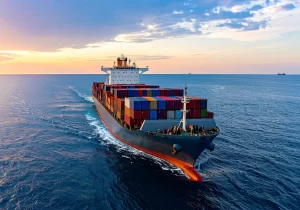
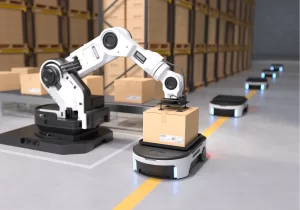
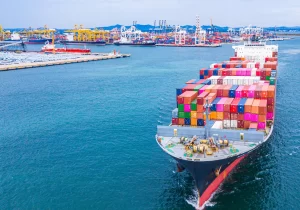
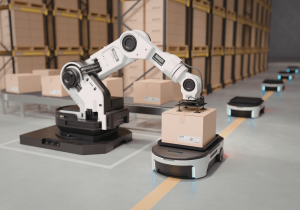
As AI agents shift from pilots to daily operators, supply chains face a new kind of congestion. The pressure is no longer just about moving goods, it’s about whether digital systems can handle nonstop activity without breaking cost discipline, resilience, or compliance.
In Brief:
AI Agents Create Always-On Pressure
AI agents are moving from test projects to round-the-clock operators, running tasks in constant interaction with people and systems. Cisco noted in its latest earnings call that this shift will create “unprecedented levels of network traffic” and intensify the risks of disruption.
For supply chains, this changes the frame. Digital tools once seen as support functions, planning engines, orchestration platforms, simulation models, now sit on infrastructure that can become saturated in the same way a warehouse fills up or a port clogs. That makes digital capacity a front-line constraint for execution.
Tariffs and Digital Strain Converge
Cisco also underscored how tariffs are reshaping cost structures. Duties of 30% on China, and 25–35% on Mexico and Canada for certain components, would normally eat into margins. The company’s answer is the flexibility of its global supply chain, built to reroute flows and adjust sourcing when trade winds shift.
The same principle applies to digital strain. Just as physical supply chains need alternative suppliers and routes, digital supply chains need built-in flexibility, the ability to reroute tasks, secure sensitive flows, and absorb continuous demand without disruption.
From Strain to Strategy: What to Do Now
The warning signs from Cisco point to a clear agenda for supply chain leaders. Digital pathways must be stress-tested as rigorously as ports or warehouses. That means:
1. Stress-test digital infrastructure to see how orchestration, planning, and AI-driven tools hold up under constant load.
2. Run scenario planning that layers tariff shocks on top of digital congestion risks, recognizing that both disruptions can compound.
3. Tighten IT and security partnerships so that digital supply chains are built with the same redundancy and rerouting options as physical networks.
The next resilience frontier will be the junction of data and goods. Leaders who treat digital capacity as a supply chain asset, and prepare it for the same volatility as cross-border flows, will be best positioned to keep decisions and deliveries moving when the strain is nonstop.