Pallet pooling is emerging as a digital, data-rich logistics utility that cuts waste, stabilizes costs, and supports ESG reporting across complex networks. As tracking and inspection systems advance and plastic platforms scale, pallet choices now influence network design, automation performance, and how capital is tied up in support assets.
Shared Platforms as a Network Utility
Pooled pallets give shippers access to a common fleet of reusable platforms instead of owning and managing their own inventory. A specialist provider holds the assets on its balance sheet, directs circulation across manufacturers, distributors, and receivers, and retrieves units for inspection, repair, or recycling. Capital and maintenance effort move out of individual warehouses and into a shared infrastructure that spans many users.
The economic logic rests on asset productivity. Standardized dimensions and engineered circulation patterns reduce idle time and loss, which lowers the total pallet count required to support a given volume of goods. That cuts working capital tied up in platforms and narrows write-offs from damage or disappearance. Industry analyses of large pooling programs regularly highlight lower loss rates and more predictable cost per trip once responsibility concentrates with a dedicated operator.
Wood still dominates most pooled fleets because it is familiar, widely accepted, and compatible with existing handling equipment. Plastic alternatives are gaining ground where dimensional accuracy, hygiene, or automated handling carry more weight. Plastic pallets tend to deliver tighter tolerances, lower tare weights, and longer service lives, which suits high-speed conveyors and automated storage systems that depend on consistent surfaces and geometry.
Digital capabilities are becoming the control layer for this model. Embedded RFID tags, barcodes, and in some cases IoT sensors allow operators to track pallet locations, cycle times, and condition at a level that was not possible with manual counting alone. Visibility across yards, cross-docks, and customer sites supports better recovery rates, more accurate billing, and precise sizing of regional pools. It also creates a data trail that informs footprint design, surge planning, and contract structures.
Inspection, ESG Pressures, and Automation Demands
Advances in automated sorting and inspection are reshaping fleet maintenance. Vision systems and scanners can identify damaged pallets on high-volume lines and divert them for repair or recycling before they re-enter circulation. This improves load safety and reduces product damage while keeping quality standards consistent across millions of trips each year. Automated inspection also supports tighter service-level commitments on platform condition.
Traceability is rising in importance as regulations and customers pay closer attention to packaging waste, material sourcing, and emissions across the logistics chain. Pooling operators can compile lifecycle data for each pallet type, including average rotations, repair events, and end-of-life processing. With that information, network users can quantify packaging-related emissions, compare material types, and align pallet choices with route design, modal mix, and site strategy.
Plastic pallets sit at the center of that discussion. Production requires more energy per unit than many wood platforms, but high rotation counts and established recycling streams change the picture over time. Life-cycle assessments referenced in industry reports indicate that well-managed plastic pools can reduce waste volumes and overall emissions compared with single-use or short-life platforms, particularly when reverse logistics and recovery rates are strong. This places pallet selection inside broader agendas on circularity, landfill avoidance, and responsible sourcing.
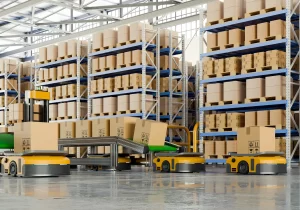
For operations that rely on automated warehouses and robotics, pallet strategy now interacts directly with technology roadmaps. Consistent, damage-resistant platforms reduce variability for automated storage and retrieval systems, autonomous lift trucks, and robotic picking stations. Pooling providers that guarantee defined quality thresholds and feed asset data into warehouse systems become critical partners, because fleet performance affects uptime, maintenance schedules, and throughput.
A Small Asset With Network-Level Reach
Pallets sit at the base of the load, yet the data now attached to them reaches into planning, finance, technology, and sustainability. Organizations that treat pooled platforms as part of network architecture, rather than as consumable packaging, gain a concrete lever for aligning automation investments, ESG reporting, and capital discipline around a single, measurable asset class.