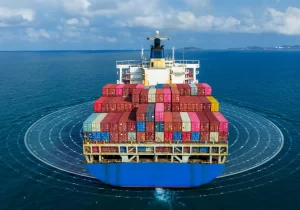
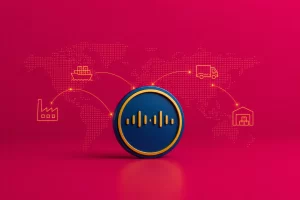
Supply chain digital transformation has moved beyond experimentation to become a strategic imperative for business resilience. In 2025, firms are no longer just installing point-solutions, they are rethinking how their end-to-end supply networks operate. This shift is driven not only by technology capability but by relentless external pressures, geopolitics, energy volatility, ESG mandates and talent gaps, that force a more adaptive architecture.
From Linear Chains to Dynamic Networks
The traditional view of supply chains as linear links—from sourcing to manufacturing to delivery—is giving way to interconnected, responsive networks. Under true supply chain digital transformation, organizations deploy sensors, cloud platforms, and AI-enabled analytics to create real-time visibility across the network. This enables scenario-based decision-making across demand forecasting, inventory allocation, logistics routing, and supplier risk.
Yet technology alone isn’t sufficient: success hinges on reorganizing processes and decision rights to support a dynamic, networked model rather than rigid functional silos.
Technology, Talent and Trust: The Real Trifecta
At its core, supply chain digital transformation relies on three mutually reinforcing investments:
Technology orchestration: Firms must move beyond ad hoc deployments and stitch together data streams into coherent orchestration layers—digital twins, supply chain control towers, federated learning, and graph-based models are becoming more common. For instance, a recent study showed that combining federated learning with graph neural networks helps reveal hidden interdependencies in supply networks without exposing proprietary data. Meanwhile, leading consultancies and vendors are prioritizing interoperability and “intake/orchestration” middleware to simplify deployment atop legacy stacks.
Workforce upskilling and role redesign: High-tech stack alone won’t deliver unless teams can exploit it. Upskilling remains a top obstacle: in PwC’s 2025 digital survey, 92% of operations leaders admitted that their tech investments have underdelivered—often citing lack of human readiness. As the digital load grows, roles are shifting: analysts become model stewards, logistics leads become orchestration managers, and category buyers adopt demand optimization responsibilities.
Ecosystem trust and data governance: Intercompany visibility is powerful but sensitive. Supply chain digital transformation demands rigorous data governance frameworks, secure sharing protocols, and alignment on metrics and incentives across tiers. Enterprises are increasingly piloting controlled data-sharing environments and zero-trust architectures to ease adoption friction.
Trends Accelerating the Transformation Curve
A few forces are turbocharging supply chain digital transformation across industries:
Generative AI and predictive orchestration: KPMG ranks generative AI as among the driving trends for 2025, as it enables more autonomous planning for sourcing, fulfillment, and contract analytics. The World Economic Forum also sees AI as essential in building resilient, self-optimizing chains capable of absorbing shocks.
Nearshoring and regional rebalancing: As companies pursue shorter value loops, regional supply hubs reduce lead times and complexity—yet they require more distributed control and digital coordination to manage effectively.
Embedded sustainability metrics: End-to-end visibility now includes carbon footprints, water usage, and circularity. Graph-based digital twins are being extended to incorporate ESG metrics, giving operators real-time insight into trade-offs between cost and carbon.
Looking Ahead: What 2026 Might Require
By 2026, supply chain digital transformation must evolve from tactical optimization to continuous coevolution. Rather than “implement this system,” companies should expect to run adaptive experiments—deploying models, measuring impact, and iterating in live operations. The real question won’t be “Which tool?” but “How fast can you learn and adjust?”
Moreover, as networks mature, invisible dependencies (tier-3 suppliers, indirect logistics providers) will be exposed—and firms that haven’t built governance, data contracts, and trust models will be left scrambling. The incumbents who embrace supply chain digital transformation as a living, evolving system—not a one-off project—are likely the ones capable of enduring disruption rather than merely reacting to it.