For much of the past three decades, manufacturing strategy followed a familiar pattern. Companies outsourced production, reduced fixed assets and built increasingly global supply networks designed to maximise efficiency. Owning fewer factories was widely seen as a sign of a modern, asset-light business, while contract manufacturing became the preferred route to lower costs and greater flexibility.
That model helped many organisations expand rapidly, but it also exposed new vulnerabilities. Trade disputes, geopolitical tensions, component shortages and the disruption of recent years have highlighted the risks of relying too heavily on a single manufacturing approach. As production networks have become more complex, manufacturers have begun asking a different question. Instead of deciding whether to own production or outsource it, they are considering how to balance both.
Lenovo is one company that has deliberately taken that path.
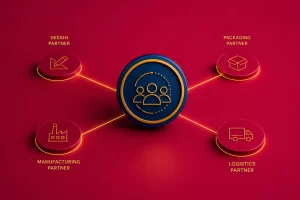
Rather than building a fully integrated manufacturing operation or relying entirely on contract manufacturers, Lenovo has developed a hybrid manufacturing model that combines company-owned facilities with strategic manufacturing partners. It is an approach that has allowed the company to expand globally while maintaining flexibility across production, capacity and regional demand.
The lesson extends beyond Lenovo itself. As manufacturers rethink their production strategies in response to economic uncertainty and changing customer expectations, the company’s approach offers useful insight into how manufacturing ownership is evolving.
Manufacturing ownership is no longer a binary choice
Manufacturing strategy has traditionally been framed as a choice between two opposing models.
One option is vertical integration, where companies retain ownership and control over production facilities. This provides greater oversight of quality, processes and intellectual property but requires significant investment and limits flexibility when market conditions change.
The alternative is contract manufacturing, allowing organisations to scale production more quickly, reduce capital expenditure and access specialist expertise through external partners. While this model offers agility, it also increases dependence on third parties and can reduce direct control over production.
For many years, businesses were encouraged to choose one approach or the other. Today’s operating environment makes that decision far less straightforward.
Regionalisation is changing where products are manufactured. Tariffs and trade policies are influencing sourcing decisions. Customers expect shorter lead times, while businesses need greater resilience against disruption. These competing priorities have made manufacturing strategy considerably more complex than simply deciding whether production should be owned or outsourced. Increasingly, the most effective networks combine elements of both.
Lenovo built a manufacturing network rather than a manufacturing footprint
One of Lenovo’s distinguishing characteristics is the way it has structured its manufacturing operations.
The company operates a global network of more than 30 manufacturing locations serving customers across approximately 180 markets. Rather than depending entirely on company-owned facilities or external production partners, Lenovo combines both, using its own manufacturing sites alongside Original Design Manufacturers (ODMs) and contract manufacturing partners.
This balance allows the company to retain direct control over critical production capabilities while also benefiting from the additional capacity, regional reach and flexibility that specialist partners can provide.
Importantly, this is not simply about increasing manufacturing capacity. It is about creating options.
When demand changes across different markets or supply conditions shift, production can be adjusted across a broader network than would be possible under a single manufacturing model. The objective is not to maximise ownership or outsourcing, but to design a production network capable of adapting as business conditions evolve.
That distinction is becoming increasingly relevant for multinational manufacturers operating across diverse markets with different customer requirements, regulatory environments and supply risks.
Regional manufacturing has become a competitive advantage
One of the strongest themes emerging across Lenovo’s manufacturing strategy is the importance of producing closer to customers. Over recent years, the company has continued expanding its manufacturing footprint across multiple regions, including investments in North America and the Middle East. These decisions reflect a broader shift taking place across global manufacturing, where regional production is becoming an important complement to global scale.
Producing closer to demand offers several advantages.
It can reduce transportation lead times, improve responsiveness to local market requirements and lessen exposure to international trade disruption. Regional manufacturing also provides greater flexibility when geopolitical events, logistics bottlenecks or changing regulations affect cross-border supply chains.
For Lenovo, regional manufacturing is therefore not simply about resilience. It is about improving the company’s ability to serve customers consistently across different markets while maintaining the benefits of a globally connected production network.
That balance between global coordination and regional responsiveness has become one of the defining characteristics of modern manufacturing strategy.
Flexibility comes from the network, not individual factories
When organisations discuss manufacturing resilience, the conversation often focuses on individual facilities.
- Can a factory increase production?
- Does it have sufficient capacity?
- Can another site take over if operations are disrupted?
While these questions remain important, Lenovo’s approach suggests that resilience is increasingly determined by the network rather than any single location.
A hybrid manufacturing model allows production to be distributed across company-owned facilities and trusted manufacturing partners, creating greater flexibility when market conditions change. Instead of relying on one production model, organisations gain access to multiple pathways for balancing capacity, supporting regional demand and responding to unexpected disruption.
That flexibility does not eliminate risk. It does, however, provide more options when difficult decisions need to be made. In an increasingly unpredictable operating environment, having options may prove just as valuable as having capacity.
A hybrid manufacturing model demands stronger coordination
While hybrid manufacturing offers greater flexibility, it is not inherently easier to manage.
Running production across company-owned facilities and external manufacturing partners introduces additional complexity into planning, governance and execution. Capacity decisions must be coordinated across multiple organisations, quality standards need to remain consistent regardless of where products are manufactured, and production schedules must adapt quickly as customer demand changes.
The challenge is no longer simply managing factories. It is managing a manufacturing network. This requires significantly greater visibility across production operations, stronger relationships with manufacturing partners and governance processes capable of coordinating multiple organisations toward common business objectives.
Lenovo’s manufacturing model demonstrates that flexibility is not created by outsourcing alone. It depends on building a network where internal teams and external partners operate with shared planning processes, consistent quality expectations and clearly defined responsibilities.
For many manufacturers, that organisational discipline is likely to be harder to build than the network itself.
Hybrid manufacturing is not the right answer for every business
It would be easy to conclude that every global manufacturer should adopt Lenovo’s approach. The reality is more nuanced. Manufacturing strategy should always reflect the nature of the business, the products being produced and the markets being served.
Highly regulated industries may require greater ownership of production. Companies producing highly customised products may benefit from retaining more manufacturing expertise internally. Others operating in highly cost-sensitive sectors may continue to rely extensively on contract manufacturing because commercial priorities demand it.
Lenovo’s experience should therefore be viewed less as a blueprint and more as an example of how manufacturing strategy can evolve as business priorities change.
The real lesson is not that hybrid manufacturing is universally superior. It is that manufacturing ownership should be treated as a strategic decision rather than simply a financial one.
Manufacturing strategy is becoming a boardroom conversation
Manufacturing was once viewed largely as an operational discipline. Today, it is increasingly shaping strategic business decisions.
Where products are manufactured influences market responsiveness, exposure to geopolitical risk, customer lead times and the ability to expand into new regions. Manufacturing decisions are now closely connected to investment planning, commercial strategy and long-term competitiveness.
This is one reason why manufacturing ownership has returned to boardroom discussions. Senior leadership teams are no longer asking only how to reduce production costs. They are asking how manufacturing networks can support resilience, enable regional growth and provide the flexibility needed in a more volatile business environment.
Lenovo’s hybrid manufacturing model reflects this broader shift.
Its combination of company-owned facilities and manufacturing partners is not simply an operational decision. It is part of a wider strategy to balance global scale with regional responsiveness while maintaining the flexibility to adapt as markets evolve. That is a conversation many manufacturers are now beginning to have.
The future is unlikely to be fully owned or fully outsourced
The debate around manufacturing ownership often presents two competing positions. One argues for greater control through increased ownership. The other advocates outsourcing to maximise efficiency and flexibility. Lenovo’s approach suggests there may be a more balanced path.
Its manufacturing network demonstrates that ownership and partnership do not have to compete with one another. When designed carefully, they can complement each other, allowing organisations to retain control where it matters most while accessing the scale and flexibility that external partners provide.
As supply chains continue to adapt to regionalisation, shifting trade policies and changing customer expectations, manufacturing networks are likely to become increasingly diverse rather than more uniform.
Success will depend less on choosing one manufacturing model over another and more on designing a network that reflects the organisation’s strategic priorities.
That may prove to be Lenovo’s most valuable lesson.
The company’s hybrid manufacturing model is not significant because it rejects outsourcing or promotes greater ownership. It is significant because it demonstrates that manufacturing strategy has become far more nuanced than either approach alone.
The manufacturers that outperform over the next decade are unlikely to be those that own the most factories or outsource the greatest proportion of production. They will be the organisations that build manufacturing networks capable of adapting as quickly as the markets they serve.
FAQs
- What is Lenovo’s hybrid manufacturing model?
Lenovo combines company-owned manufacturing facilities with Original Design Manufacturers (ODMs) and contract manufacturing partners. Rather than relying entirely on one production model, the company balances internal manufacturing capabilities with external partner capacity to improve flexibility, support regional markets and respond more effectively to changing business conditions.
- Why does Lenovo use both company-owned factories and contract manufacturers?
Using both manufacturing models allows Lenovo to retain control over critical production capabilities while benefiting from the scalability, regional reach and flexibility offered by manufacturing partners. This balanced approach helps the company adjust production capacity, support customers in different markets and strengthen operational resilience without relying exclusively on either model.
- How does regional manufacturing strengthen supply chain resilience?
Regional manufacturing places production closer to customers, reducing lead times and helping organisations respond more quickly to changing demand. It can also reduce exposure to international logistics disruption, trade restrictions and geopolitical uncertainty by diversifying where products are manufactured.
- What are the advantages of a hybrid manufacturing network?
A hybrid manufacturing network provides greater flexibility by combining internal production with trusted external capacity. It allows organisations to balance cost, responsiveness and operational resilience while adapting production across multiple facilities and partners as market conditions evolve.
- What can supply chain leaders learn from Lenovo’s manufacturing strategy?
One of Lenovo’s most important lessons is that manufacturing ownership should be viewed as a strategic business decision rather than a simple choice between owning or outsourcing production. Organisations should design manufacturing networks that reflect their products, customers, growth ambitions and risk profile instead of relying on a single production model.