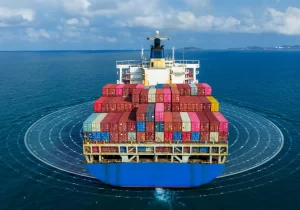
Iran conflict supply chain disruption is now visible in day-to-day operations as freight capacity tightens, routes lengthen, and logistics costs climb across modes. The pressure is forcing a rapid rethink of inventory strategies, sourcing footprints, and exposure to chokepoints such as the Strait of Hormuz.
Gulf Chokepoint Squeezes Air and Ocean Capacity
Freight flows through the Gulf have shifted sharply as the war in Iran spills over into trade lanes that link energy producers, manufacturing centers, and consumer markets. Transit through the Strait of Hormuz has fallen to a fraction of typical volumes, with recent vessel-tracking data showing only 16 crossings in a week that were visible via AIS, a near standstill for one of the world’s critical oil and product corridors.
That collapse is rippling across ocean networks that connect Europe, Asia, and the Americas. Major container carriers including Maersk, MSC, CMA CGM, Hapag-Lloyd, and COSCO have curtailed or rerouted services touching the Gulf, pushing ships onto longer paths around the Cape of Good Hope. Typical diversions add 10 to 14 days to transit times on some east–west strings, increasing bunker consumption and tying up equipment that was already in short supply.
Forwarders report emergency surcharges in the range of 1,500 to 4,000 dollars per container as lines seek to recoup extra fuel, insurance, and security costs. Estimates from regional operators point to roughly 450,000 containers delayed in and around Gulf networks, a volume that distorts vessel schedules and port productivity well beyond the immediate conflict zone. For shippers that depend on tight delivery windows for automotive, electronics, chemicals, and consumer goods, these delays are hitting production plans and customer service levels.
Air cargo is under parallel strain. Up to 18 percent of global air freight capacity is affected as carriers reroute widebody aircraft around shut or restricted airspace. Hubs in Dubai, Abu Dhabi, and Doha are experiencing congestion from diverted flights and altered flows, while operators such as Emirates, Etihad, and Qatar Airways have adjusted or suspended selected routes. Longer flight paths extend transit times and raise fuel burn per shipment, pushing up airfreight rates, particularly on Europe–Asia lanes where ocean alternatives are also disrupted.
Compounding the aviation challenge, strikes on refining infrastructure in Kuwait have removed roughly 10 percent of global seaborne jet fuel supply, according to industry intelligence. That reduction tightens a market that underpins both passenger and cargo belly capacity, limiting the ability of airlines to flex up capacity as ocean delays deepen. Logistics providers describe a feedback loop where reduced fuel availability, longer routings, and operational risk premiums all converge into higher unit costs.
Just-in-time Models Confront Systemic Geopolitical Risk
These shocks are exposing structural fragilities that accumulated during the long period of stable energy flows and predictable shipping patterns. Networks built around just-in-time logic and minimal buffers now face lead-time variability measured in weeks, not days. Automotive and electronics manufacturers that depend on high-value components moving through Gulf-related routes are already reporting postponed launches, extended order backlogs, and increased use of costly premium freight to keep lines running.
Statements from global forwarders underline how disruption is spread across modes rather than concentrated in a single pinch point. Ocean carriers reroute around the Gulf, air cargo operators navigate extended corridors, and inland logistics players absorb knock-on effects in warehousing and trucking as flows become less predictable. This pattern fits a broader shift identified in recent trade analysis, where geopolitical flashpoints now trigger multi-modal responses that persist long after the initial shock.
The current environment, as summarized in a daily intelligence report by maritime analytics firm Windward, reflects a tightly controlled Strait of Hormuz, declining export volumes, and a maritime system improvising through selective access and rerouting. That description points to a more persistent state of managed constraint rather than a short-term disruption that can be solved with one-off expedites. Contracting strategies that assumed free passage through critical energy and container corridors now appear mispriced.
Inventory and sourcing models sit at the center of the adjustment. Companies with diversified supplier bases, higher safety stocks, or alternative routings that bypass the Gulf have more room to maneuver. Others that rely on single lanes for raw materials, petrochemical inputs, or finished goods are being forced into rapid rebalancing of inventory positions, including forward-staging in regional hubs and pre-buying to cover extended transit times. Working capital tied up in goods in transit is rising, with finance teams pressed to quantify the trade-off between resilience and cash efficiency.
Industry reports indicate that more organizations are bringing geopolitical risk explicitly into network design, rather than treating it as an overlay on cost and service optimization. Scenario models now stress-test exposure to chokepoints such as Hormuz, the Suez Canal, and key refineries, assessing not only physical disruption but also sanctions, cyber incidents, and insurance restrictions. The Iran conflict is accelerating this trend by demonstrating how quickly a localized escalation can remove double-digit shares of capacity in both marine fuel and airfreight.
From Shock Management To Structural Redesign
An under-reported consequence of the current crisis is the signal it sends to investors and regulators about the durability of logistics strategies that depend on a small set of high-throughput corridors. As more capital flows into nearshoring, alternative fuel supply chains, and multi-route designs that avoid single chokepoints, companies that cling to legacy structures may face a higher cost of risk over time in the form of insurance premiums, credit terms, and customer penalties.