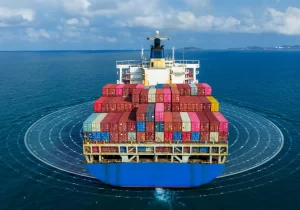
Tariff volatility supply chain pressures in 2025 pushed most US importers to advance shipments, rewire sourcing and rethink logistics networks to protect margins. New STG Logistics survey data shows that inventory, contracts and transportation are being reengineered around flexibility as companies brace for fresh policy swings in 2026.
Tariffs Turn Inventory and Sourcing Into Active Risk Controls
Trade policy swings in 2025 turned duty exposure into a planning variable, not a background assumption. According to STG Logistics research, 85.6% of beneficial cargo owners and shippers pulled freight forward ahead of tariff changes, treating calendar timing as a direct lever on landed cost and service continuity.
Front-loading delivered concrete benefits. Just over half of respondents, 52.3%, avoided higher duties through early shipping, while 43.7% reported stronger product availability through peak demand. These moves helped keep shelves and production lines supplied when new tariffs took effect.
The same tactic carried a financial and operational price. Higher inventory generated holding and storage costs for 42.3% of organizations, and 43.7% cited strain on working capital as cash was locked into stock sitting in warehouses. More than a quarter, 26.4%, then reported extended quiet periods while excess inventory was consumed, distorting normal replenishment and clouding the signal for future demand plans.
The survey highlights a broader strategic shift. Inventory is no longer just a buffer against variability; it functions as an explicit hedge against policy risk. That hedge creates balance-sheet consequences that must be weighed alongside duty savings in scenario models that link tariffs, cash conversion and capacity utilization.
The same dynamic appeared in sourcing decisions. Nearly 79% of respondents shifted at least some volume away from China in 2025, accelerating moves into Vietnam, India and other Southeast Asian locations. Shares reported include 23.4% of shifted volume into Vietnam and nearby markets, 24.4% into India and 21.6% into additional Southeast Asian hubs. These moves diversify exposure to single-country tariff and regulatory shocks but introduce new complexity in supplier reliability, compliance requirements and multimodal coordination.
Bonded warehouses and Foreign Trade Zones helped offset this complexity. More than 40% of surveyed organizations used bonded storage or FTZs last year to defer or reduce duty payments. Among users, 42% rated bonded storage effective and 40% said the same for FTZs, with the strongest results coming from integrated use of both. The pattern points to a playbook where infrastructure and customs strategy sit alongside sourcing as equal tools in managing trade volatility.
Flexible Contracts and Agile Networks Replace Static Commitments
Tariff uncertainty spilled directly into contract strategy with ocean carriers. Organizations pulled back from rigid, long-term commitments and prioritized options that preserved room to maneuver as policies and freight markets changed through 2025 and into the 2025–2026 contracting window.
The survey shows 31.2% of respondents secured more flexible terms, including shorter duration deals and variable-rate structures. Another 22.8% delayed signing agreements in search of clearer market direction, while 20.2% moved more volume to the spot market to retain tactical freedom. Only 9.8% accepted higher fixed contract rates to lock in capacity, indicating that adaptability now carries a premium over price certainty.
Transportation networks evolved in parallel. Most organizations re-routed between 26% and 50% of freight flows in 2025, experimenting with different ports, modes and handoff points. Intermodal shifts drew the highest effectiveness rating at 49%, reflecting the appeal of blending rail and trucking to balance cost, transit time and congestion risk. Port diversification, rated 44% effective, spread exposure across multiple gateways, while deeper use of container freight stations and transloading added flexibility at the inland interface.
These network changes depend on stronger analytics and coordination. Organizations need lane-level visibility on cost, duty exposure, capacity and service performance to know when to pivot routing or switch modes. Industry reports indicate that more importers are integrating trade data, contract terms and operational metrics into unified planning tools to support faster, evidence-based decisions when tariffs and freight rates move in different directions.
Lessons from 2025 are now shaping 2026 playbooks. More than 40% of surveyed companies plan to push diversification further this year, both in supplier portfolios and in logistics partners. Many are also expanding inventory buffers selectively, investing in data capabilities and renegotiating contracts with shared tariff risk clauses that align incentives across buyers, suppliers and carriers. Notably, over half of respondents indicated they would have diversified earlier if they could revisit last year, highlighting a growing bias toward pre-emptive redesign instead of last-minute reactions.
Turning Tariff Tactics Into Operating Discipline
Tariff-driven front-loading, sourcing shifts and contract changes delivered short-term protection in 2025, but they also introduced structural costs and planning noise that will persist if treated only as emergency measures. The next phase requires embedding these moves into disciplined network design, capital allocation and risk governance so that policy swings become one more modeled variable in an integrated, data-anchored operating system rather than a recurring shock that forces ad hoc responses.