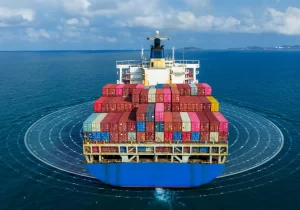
4D digital twins in supply chain operations embed AI into live network models, turning fragmented data into a single, continuously refreshed view of risk, capacity, and cost. As global flows face tighter service and ESG expectations, these virtual replicas support faster decisions with clearer trade-offs and governance.
From Static Network Maps To Live Supply Models
Most network models still behave like frozen diagrams: useful for design reviews, but limited once disruption hits. Conventional digital twins improved that picture by mirroring end-to-end flows, although many depend on manual data refreshes and scheduled scenario runs. A 4D digital twin adds an AI layer that ingests and interprets continuous streams of data so the model evolves in near real time as suppliers, demand, and constraints change.
At its core, a 4D twin is a virtual representation of plants, suppliers, logistics nodes, and customers, wired to transactional and sensor feeds, then enhanced by machine learning. Algorithms clean, reconcile, and align signals from planning, procurement, transport, and external risk sources into a single coherent view. The fourth dimension is time: the twin tracks how the network actually behaves, not just how it was designed to behave, which narrows the gap between planning assumptions and operational reality.
Industry forecasts place the overall digital twin market well above $100 billion by 2030, with manufacturing and supply networks among the fastest-growing uses. That momentum reflects a change in what visibility needs to deliver. A control tower that reports congestion after it appears has limited value; a model that can flag early-stage bottlenecks, estimate impact, and propose mitigation paths before service or margin erodes carries far more strategic weight.
When AI continuously refreshes structure and parameters, the twin becomes a dependable base for scenario work. Teams can stress-test supplier exits, product launches, or transportation constraints using a model that reflects current capacities, lead times, and route performance. Some implementations link twins directly to live climate, cyber, or trade alerts so that when a threat crosses a defined threshold, the system traces probable knock-on effects through multi-tier suppliers and forward to customers.
Decision Engines For Disruption, Capacity, And ESG
The practical value of a 4D digital twin lies in how it reshapes decisions on cost, service, and risk. Machine learning models trained on historical patterns can scan streaming data for weak signals of disruption, such as order anomalies at tier-2 suppliers or recurring dwell-time spikes at specific ports. When the twin detects these deviations, it can simulate alternative routings, allocation plans, or sourcing options and rank them on service impact, cost, and feasibility.
Studies of advanced deployments indicate that combining AI with network models can cut unplanned downtime significantly, raise inventory turns, and trim lead times by several days. Those gains arise because decisions occur closer to the moment of risk: instead of weekly escalations, the twin surfaces exceptions continuously and routes them to the right team or triggers pre-approved actions for lower-complexity cases, such as carrier changes or cross-dock reconfiguration.
Because the 4D twin consolidates data from procurement, manufacturing, logistics, and finance, it can also serve as a common reference point for capital and working-capital choices. Decision-makers can compare the effect of alternate buffer strategies on cash, service, and resilience in one environment rather than stitching together spreadsheets from separate functions. Some organizations extend this logic to sustainability, overlaying emissions factors on routes, suppliers, and materials so the twin can highlight options that reduce Scope 3 exposure while preserving capacity.
For many networks, the strongest near-term opportunity sits in capacity and constraint management. A live twin can recalculate effective capacity across plants, contract manufacturers, and logistics nodes on a continuous basis using actual performance, maintenance windows, and labor conditions. When demand or product mix shifts suddenly, the AI layer evaluates rebalancing moves, such as shifting volumes between regions or adjusting production sequences, and presents clear trade-offs instead of a single optimal answer that may be unrealistic on the floor.
Adoption still depends on disciplined data governance and operating-model change. The promise of 4D twins rests on stable identifiers, accessible event data, and clear rules for when recommendations can auto-execute and when they require human review. Recent deployments show that value rises sharply when teams redesign roles around network orchestration and scenario stewardship, and when the twin operates as shared decision fabric rather than a niche analytics tool.
Why Control Of The Model Will Matter Most
As 4D digital twins mature, attention will turn to how far organizations are willing to let modeled insight shape capital, sourcing, and customer commitments. The enterprises that treat the twin as a formal record of trade-offs, with auditable links between network behavior and board-level decisions, will be better placed to explain performance to investors and regulators when volatility tests the system again.