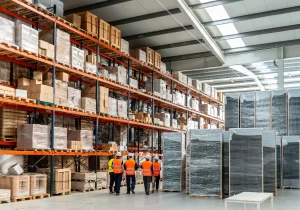
Physical AI is connecting software intelligence directly to robots, sensors and warehouse assets, allowing systems to execute tasks rather than simply recommend actions. As adoption grows, fulfillment performance will depend increasingly on how effectively organizations coordinate machines, data and physical workflows
From Software Insight To Machines That Act
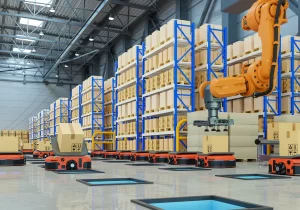
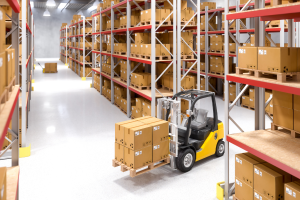
Most distribution networks already run on planning engines, transportation optimizers and warehouse management platforms that orchestrate flows in data form. These systems can prioritize orders, assign inventory to routes and expose bottlenecks on rich screens, but execution still hinges on a person stepping onto a forklift or pallet jack. Physical AI closes that gap by combining autonomous machines, edge computing and perception technology so that decisions translate into movement.
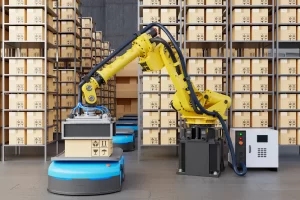
Vendors describe physical AI as connecting three building blocks: intelligent robots, advanced analytical models and digital twins that mirror real facilities. Robots and shuttles navigate aisles using vision, scanning and proximity sensors, pulling guidance from on‑board GPU chips that handle tasks such as object recognition, path planning and local exception handling. Those machines work against a virtual representation of the warehouse, where strategies such as pallet building, slotting patterns or aisle zoning are tested before code reaches the floor.
The model depends on assets with a digital footprint. IoT tags, low‑cost sensors and edge beacons now attach to pallets, containers and individual cases, streaming signals on location, temperature, humidity or exposure. Data platforms aggregate those triggers into a live map of material positions and conditions, creating the substrate that AI models need to assign work to machines without human dispatch. Recent industry reports show falling sensor costs and expanding wireless coverage in industrial sites, making it economically feasible to tag a far greater share of inventory.
Robotics providers stress that these applications rarely require the full power of cloud large language models. Most mobile robots execute defined missions within structured environments and need reliable, bounded decision logic rather than open‑ended conversation. The critical advance lies in giving hardware enough local intelligence to interpret instructions, adapt to obstacles and verify that the correct load has been handled, then feeding that telemetry back into the orchestration layer.
Designing Physical AI as a Cross‑Functional System
Physical AI changes how technology, operations and engineering collaborate. Automation initiatives used to follow a linear pattern: operations leaders defined throughput goals, engineers specced mechanization, and IT integrated software. With robots now executing AI‑generated tasks, the interface between digital design and physical consequence has tightened. Misaligned parameters can trigger congestion, unsafe maneuvers or asset damage at scale.
Effective programs are emerging as joint ventures that span hardware, cloud infrastructure, control software and frontline workflows. Robotics teams need clear safety envelopes and escalation rules. Cloud and data teams must ensure that models ingest accurate sensor data, reflect current layouts and respect maintenance windows. Operations teams define service promises, labor constraints and exception paths, then oversee how machines interact with people on shifts. European and North American case studies show that sites with integrated governance realize quicker ramp‑ups and fewer stoppages than projects run as standalone automation pilots.
Digital‑twin environments are becoming the coordination hub for that collaboration. Simulation models allow planners to test new picking strategies, palletization rules or robot fleet sizes against realistic demand and disruption scenarios. Those twins reflect not only conveyor diagrams and rack locations but also travel times, congestion points, battery cycles and labor availability. As designs stabilize, configuration changes roll into execution systems and down to robots, with monitoring loops measuring whether real performance matches the simulated plan.
Physical AI also reshapes workforce design. Roles shift from pure equipment operation toward orchestration, exception resolution and continuous improvement. Teams supervise fleets of machines through control interfaces, adjust priorities when demand spikes, and intervene when sensors flag anomalies. Training expands to include human‑robot interaction, data interpretation and basic parameter tuning. Industry salary surveys already indicate rising demand for technicians and supervisors who can bridge mechanical knowledge with data literacy.
Execution Quality Becomes The New Measure
As physical AI expands, the advantage may come from how quickly organizations can convert digital decisions into reliable physical outcomes. Many warehouses already possess visibility tools and analytical models. The next performance gap is likely to emerge between facilities that can consistently execute those decisions through connected robots and assets, and those where information still waits for manual intervention before action occurs.