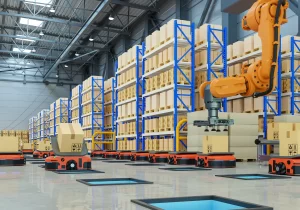
Peak season warehouses are handling outbound orders and product returns at the same time as earlier promotions and faster customer returns compress traditional holiday workflows. The overlap is increasing pressure on labor, docks, storage space and carrier capacity across retail supply chains.
The Operating Sequence Has Broken
The strategic break is the loss of a predictable handoff between fulfillment and reverse logistics. Earlier shopping, extended promotions, omnichannel purchasing and rapid return initiation have pulled reverse volume into weeks that still carry elevated outbound demand. Facilities designed around sequential peaks must now run two competing flows through shared infrastructure.
The scale of the overlap matters. The National Retail Federation projected US holiday sales above $1 trillion, representing growth of 3.7% to 4.2%. Consumers returned 14% of purchases made between November 1 and December 31, with nearly one in seven of those returns arriving during the final six days of December. That timing places reverse flow inside a period when fulfillment activity remains above normal levels.
Congestion can propagate quickly under these conditions. Returned inventory occupies space needed for outbound staging and replenishment. Receiving backlogs delay check-in and inspection, which slows put-away and keeps inventory in temporary holding areas. Labor, equipment and dock doors are pulled between workflows with different processing requirements. Carrier capacity faces the same conflict as outbound shipments and returns move through the network concurrently.
Seasonal labor offers less protection than it once did. Retail hiring in 2025 was on pace for its lowest level since 2009, while warehousing and transportation added fewer seasonal positions than the previous year. Cross-training therefore becomes a capacity control. Flexible teams can move between receiving, inspection, put-away and fulfillment as bottlenecks migrate during the day.
Plan For Where Volume Lands, Not Only How Much Arrives
An accurate forecast of total holiday demand can still produce an operational miss. Exposure depends on when returns enter the network, which facilities receive them and which processing steps become constrained. A moderate increase concentrated at one receiving area or within a narrow time window can cause more disruption than a larger increase distributed across the network.
Planning ranges provide a stronger basis for action than a single volume estimate. Scenarios should test returns arriving earlier, running 20% above plan or concentrating in unexpected locations. Each scenario should expose the first limiting resource, whether labor, inspection stations, storage positions, docks, equipment or transportation capacity. This turns forecasting into a practical assessment of what could break under stress.
Predefined triggers can then connect visibility to execution. Backlog age, dock utilization, inspection throughput, labor productivity and occupied capacity should activate specific responses at agreed thresholds. Those responses may include reallocating labor, converting space, changing appointment patterns or engaging contingency carrier capacity. The decision rights and partner commitments need to be established before congestion forms.
Capacity validation must also extend beyond the facility. Warehousing, processing, last-mile and carrier partners may be planning against different peak assumptions. Their ability to scale, the time required to add resources and the location of their own constraints determine whether contingency capacity is genuinely available.
Capacity Assumptions Need Regular Validation
Peak planning should test whether warehouse layouts, labor models, carrier commitments and processing rules still reflect current buying and return behavior. Reviewing these assumptions before each major trading period helps identify where facilities, partners or workflows have become misaligned with demand patterns, allowing capacity decisions to be based on current network conditions rather than historical peak sequences.