As peak season extends from back-to-school promotions through year-end sales, warehouses face sustained pressure on labor, capacity and fulfillment accuracy. Flexible automation can help manage recurring demand surges, but its value depends on year-round utilization, reliable system integration and readiness planning that begins well before volumes rise.
Peak Has Become a Capacity-planning Problem
Peak planning was built around a concentrated holiday window. That assumption no longer fits an operating calendar in which back-to-school activity flows into major November promotions and year-end demand. The strategic break is the replacement of a four-week surge plan with a rolling capacity model that coordinates labor, inventory, equipment, carrier access and system performance over several months.
A longer peak changes the economics of labor. Hiring and training for one sharp spike can be justified when temporary capacity has a clear start and end date. Repeated surges create more onboarding cycles, scheduling pressure and quality risk, while turnover erodes the benefit of each training investment. Fulfillment accuracy and customer service then become capacity constraints alongside headcount.
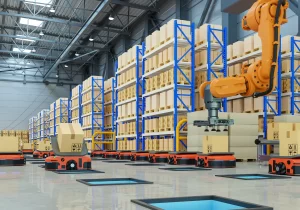
Flexible warehouse automation addresses this problem by allowing throughput to rise without a matching increase in temporary labor or permanent infrastructure. Configurable systems can support additional picking and movement capacity as order profiles change. Reported implementations have handled millions of peak units while reducing physical strain and shortening the time required to bring new workers into productive roles.
The investment case depends on utilization beyond the busiest weeks. Equipment configured solely for maximum holiday volume can sit underused for much of the year. A stronger model treats automation as shared capacity that can be redeployed across workflows, facilities or demand periods. That requires careful analysis of order variability, process stability and the points where human judgment remains essential.
Readiness Determines Automation’s Value
Technology cannot compensate for unstable processes, poor inventory records or inconsistent execution. Peak-season failures often begin before demand rises. Unresolved integration defects, weak exception management and uneven training become more damaging when additional volume reduces the time available for manual intervention.
The Infios Peak Season Warehouse Readiness Assessment organizes preparation around six operational capabilities, with a seventh evaluation for warehouses using voice technology. Its 90-, 60- and 30-day timeline provides a useful governance model. Early reviews can identify capacity and system gaps, the middle phase can test corrective actions, and the final month can focus on validation, contingency procedures and workforce readiness.
This phased approach also clarifies where automation should be applied. Stable, repetitive activities are stronger candidates than poorly defined processes with frequent exceptions. Readiness scoring can identify whether the immediate constraint sits in labor availability, process consistency, technology performance or operational visibility. That distinction prevents capital from being directed toward a symptom while the underlying bottleneck remains intact.
Preparation should include realistic load testing across connected systems. Warehouse software, automation controls, inventory data and carrier interfaces must perform as one execution environment. A local improvement can still create congestion downstream if packing, staging or dispatch capacity cannot absorb the additional flow. End-to-end testing exposes those imbalances before they affect service.
Capacity Commitments Need a Longer Planning Horizon
A longer peak season also changes how warehouses should evaluate capacity commitments. Equipment leases, automation contracts and temporary labor arrangements negotiated around a single holiday surge may carry costs that extend well beyond the demand they support. Future investment decisions should account for how quickly capacity can be added, reduced or reassigned as volumes change, particularly when demand peaks occur at different times across facilities.