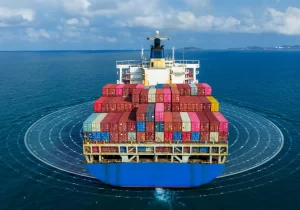
A new Kearney brief, The Top Five Supply Chain Bets for 2026, highlights how shifting customer expectations, pricing pressure, and persistent geopolitical volatility are reshaping how organizations design and run their operating models. While many of last year’s themes, resilience, integrated planning, and AI readiness, still apply, Kearney’s latest view highlights an emerging divide between companies that can deliver predictably and those that rely on efficiency alone. Recent disruptions in semiconductors and critical materials have further exposed the cost of slow decisions and fragmented execution, reinforcing the need for deliberate, capability-based operating choices.
Reliability Becomes a Competitive Asset
Kearney argues that the market is now bifurcating between firms that consistently deliver under volatility and those that cannot. As customers adopt near-instant feedback loops and switching costs fall, reliability itself becomes a lever for growth. According to trade reports, several sectors, including electronics and industrial manufacturing, have seen measurable shifts in customer loyalty following supply shortfalls, suggesting that operational dependability increasingly shapes commercial outcomes.
This is driving a structural redesign: instead of operating a monolithic supply chain, companies are configuring a portfolio of capabilities tuned to different value propositions such as speed, customization, cost-to-serve, compliance, and dependable replenishment. Kearney notes that when commercial teams commit to service levels without operational alignment, the repercussions appear later as excess inventory, margin compression, and service failures. Leaders are therefore becoming explicit about where they will outperform and where performance targets can be more restrained by design.
As part of this shift, organizations are segmenting channels and customers more intentionally and translating those design choices into measurable KPIs across service, cost, cash, and risk. Kearney emphasizes that integrated planning and execution, not traditional S&OP calendars, will determine whether these differentiated models can perform repeatably.
AI Meets an Earnings Test
AI is moving into a more consequential phase, but Kearney warns that most supply chain pilots will fail to progress this year. The reasons, unclear value cases, weak data foundations, and fragmented tech stacks, echo what many companies encountered in early digital transformations across visibility platforms and planning tools. Recent data shows that firms with strong master data stewardship and unified architectures have been first to translate AI into measurable improvements, particularly in forecast accuracy and decision cycle times.
Kearney stresses that AI must be treated as an industrial capability, with defined ownership, governance, and integration into daily workflows. Organizations stuck in perpetual experimentation are accumulating prototypes and internal skepticism instead of results. Leading companies, by contrast, are managing AI use cases as a portfolio with firm scale and stop gates, focusing investment on a small set of initiatives tied directly to cost, cash, service, or risk improvements.
This aligns with broader market behavior: several global manufacturers have publicly acknowledged that while AI adoption is accelerating, only a narrow subset of use cases, such as anomaly detection, predictive maintenance, and real-time optimization, are demonstrating clear P&L contribution.
Where Leadership Signals Matter Most
A growing factor shaping supply chain performance in 2026 is how decisively leadership frames the operating model changes ahead. Public filings and earnings commentary across sectors show that when executives articulate clear priorities, whether around service reliability, data foundations, or AI governance, teams move faster and investment trade-offs become more coherent. As boards place greater scrutiny on operational exposure and cash discipline, the companies that provide unambiguous direction tend to reduce internal friction and accelerate execution. That clarity, rather than new tools or reorganizations, is increasingly influencing which organizations build momentum as conditions shift.