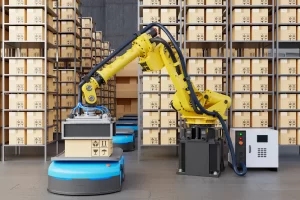
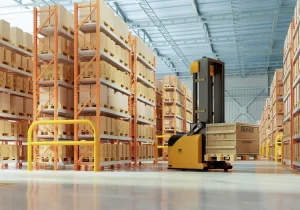
As automation accelerates across e-commerce, one of Britain’s major online retailers is preparing for steep workforce reductions, a shift increasingly echoed across the wider retail and logistics landscape. Nick Glynne, chief executive and founder of Buy It Direct, said the company expects to shrink its U.K. workforce by roughly two-thirds over the next three years as AI and robotics take over a growing share of both office and warehouse tasks. Speaking on BBC 5 Live’s Wake Up To Money, Glynne said the retailer could potentially cut 500 roles from its current staff of 800, though he stressed the projection was not yet a formal plan.
Costs Rise, Tech Investment Accelerates
Glynne said the move toward automation has been underway for years but is now being hastened by rising labor costs, including the higher national living wage and national insurance contributions introduced in April. Those policy changes, he argued, have increased the pressure on retailers with large operational footprints, particularly in high-volume categories like appliances where margins are thin.
HM Treasury, in response to ongoing criticism from employers, noted that higher tax receipts from businesses help fund national priorities, including public services and social programs. But sector analysts note that U.K. retailers have been investing more heavily in warehouse automation and digital workflows since the pandemic, mirroring trends reported by logistics companies upgrading fulfilment sites with autonomous mobile robots and AI-driven process orchestration.
Buy It Direct, which also operates overseas, employs roughly 150 staff outside the U.K., including a customer service hub in the Philippines. Glynne said the combined impact of generative AI in back-office operations and robotics in the warehouse is pushing more activities away from traditional labor models. “The future for employing U.K. people is very bleak for someone like us,” he told the BBC.
AI’s Expanding Reach Fuels Job Concerns
The comments add fuel to broader concerns about how quickly AI is beginning to reshape large operational teams. Recent trade reports show that retailers, consumer-goods distributors, and third-party logistics firms are deploying AI tools to cut call-handling times, automate order exceptions, and pre-position inventory, all areas that historically supported entry-level employment. In the U.S., several major retailers have similarly cited AI-enabled productivity improvements in forecasting, customer service, and distribution center operations as reasons for slowing hiring.
At the same time, industry data shows investment in warehouse robotics hit record levels in 2024 and 2025, driven by lower hardware costs and more accessible AI-based control systems. These deployments are accelerating the shift toward smaller, more technical teams responsible for supervising automated assets rather than performing manual tasks.
A Wider Strategic Question Ahead
For companies weighing the balance between automation and labor, the next three years will test how far productivity gains can stretch before they reshape operating models entirely. One emerging counterpoint comes from firms that are reinvesting savings from automation into higher-skill roles, such as robotics maintenance, workflow design, and AI supervision, rather than solely cutting headcount. If more retailers follow that path, the narrative around automation could shift from net job loss to job transformation, especially in markets prepared to expand technical training pipelines.