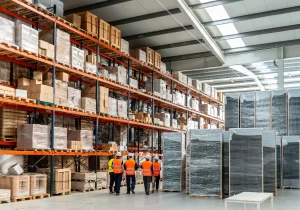
Warehouse operators are reopening capital budgets for forklifts and automation as throughput pressures intensify across fulfillment and distribution networks. New Interact Analysis research suggests receiving docks, not storage aisles, are becoming the proving ground for the next generation of autonomous equipment.
Forklift Buyers Regain Confidence and Push For Autonomy
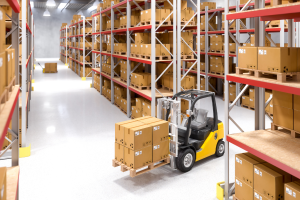
Interact Analysis’ latest Voice of Market study reports a clear improvement in capital expenditure expectations for forklift and pallet handling equipment compared with 2025. Nearly half of respondents who expected capex to rise from a year earlier now anticipate growth above 15 percent, signaling a renewed willingness to fund fleet renewal and new technology.
E-commerce operators show the strongest intent to automate. The research assigns these companies an automation spend index of 82.9 on a 0–100 scale, where 50 is neutral, placing them well ahead of retail, manufacturing, third-party logistics, and parcel players. The pattern aligns with recent trade data, which shows fulfillment networks adding high-bay storage, sortation, and dense picking infrastructure that depend on more precise and data-rich truck operations.
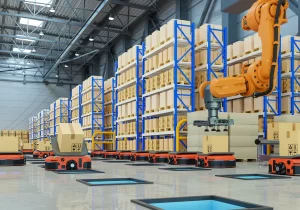
The study highlights a marked shift toward autonomous and semi-autonomous vehicles in warehouses and yards. Monica Sanchez, senior research lead for Voice of Market at Interact Analysis, notes that demand for hybrid manual-autonomous forklifts is rising, but that running both vehicle types in congested dock zones creates coordination and safety challenges. She argues that suppliers which can prove robust safety mechanisms and smooth interaction between human drivers and automated trucks will stand out in procurement decisions.
Throughput ranks as the top performance metric for 2026, followed by order handling and the extent of automation. This priority stack confirms that most operators are chasing more volume per facility rather than simply adding sites. As a result, forklift strategies are being evaluated against their impact on flow: how quickly pallets move from inbound doors through storage and into outbound staging.
Receiving and Unloading Become Automation Test Beds
The research identifies receiving and unloading as the leading target for new automation, with 54 percent of respondents listing it as the top priority workflow. These tasks are also cited as high pain points because of accuracy problems, stock damage, and the variability of inbound loads. Unlike controlled storage lanes, dock activity is exposed to inconsistent packaging, late arrivals, and human fatigue, which compound error rates.
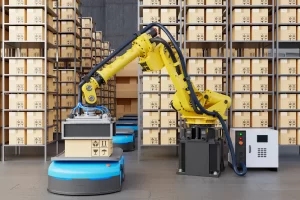
Today, receiving and unloading processes are only 26 percent fully automated across the sample, with a further 50 percent using partial automation such as guided trucks, scanners, or conveyor interfaces. The remaining operations still rely entirely on manual handling. This mixed landscape explains why 68 percent of surveyed organizations intend to add labor to improve performance in this area, while 56 percent plan to deploy additional technology.
The split in investment plans reveals a transitional architecture. Many facilities are layering automation on top of manual processes rather than jumping straight to fully autonomous docks. That approach allows operations teams to preserve flexibility for irregular freight while gradually standardizing repetitive flows that suit automated forklifts, pallet shuttles, or conveyor-fed receiving cells.
Sanchez emphasizes that safety dominates supplier selection criteria when organizations consider new forklift and pallet handling technologies. Operating humans and automated vehicles side by side demands more than basic collision avoidance; it requires clear right-of-way rules, shared visibility, and integration with yard management and warehouse execution systems. Vendors that can demonstrate credible incident reduction, stable performance under peak loads, and straightforward governance for mixed fleets are likely to gain share as automation budgets unlock.
Where The Returns On Forklift Automation Will Be Measured
The next phase of warehouse automation may depend less on how many autonomous vehicles are deployed and more on whether facilities can standardize the inbound environment around them. Receiving remains one of the most variable parts of the warehouse, with inconsistent packaging, trailer conditions and arrival patterns limiting automation performance. Organizations that invest in dock processes, supplier compliance and data visibility alongside equipment upgrades are likely to capture a larger share of the productivity gains than those focused solely on fleet modernization.