Bonded warehouse strategy is stepping into the foreground as tariff policy swings, high interest rates, and shifting production hubs strain traditional cross-border logistics. By keeping goods under customs control without immediate duty, enterprises gain time, liquidity, and routing choices that standard storage cannot provide.
The Bonded Node as a Financial and Routing Instrument
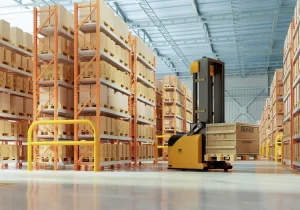
At its core, a bonded warehouse is a customs-authorized facility where imported goods sit ‘in bond’ until they either enter the domestic market or leave the country. Duties and many taxes are triggered only when stock is released into local commerce, which creates a programmable duty clock embedded directly in the physical network. In many jurisdictions, inventory can legally remain in bond for several years, giving planners a far wider decision window than standard import clearance allows.
This structure turns bonded locations into a financial instrument inside the supply chain architecture. High-duty, high-value, or slow-moving items can be landed close to demand without tying up cash in duties on day one. When tariff schedules or trade policies change, inventory that remains in bond can often be cleared under the new regime, allowing companies to benefit if rates drop rather than being locked into yesterday’s cost structure. Recent trade tensions at key borders, including shifting U.S. tariff policies on nearshored production, have made this buffer more valuable.
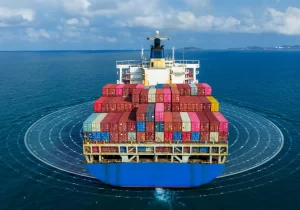
Bonded facilities also support re-export plays. Goods can move into a country, sit in bond, be broken down, relabeled, or consolidated into new outbound flows, then shipped to third markets without ever attracting local import duty. This model underpins many free trade zones and transshipment hubs, where companies stage global inventory, test new channels, or serve multiple regions from a single coastal or border node.
Operationally, bonded warehouses now act as stabilizers for inventory planning. Companies with long lead times or pronounced peaks can import in bulk and throttle duty exposure in line with actual pull from the market. Rather than overcommitting to a forecast, planners can adjust release volumes from bond as demand signals firm up, reducing both stockouts and overhang. Industry analyses of pandemic-era disruptions showed that networks with bonded staging capacity near key ports recovered faster because they could reallocate stock without re-importing or incurring duplicate duties.
The trade-off is complexity. Operating in bond requires tight integration between warehouse management systems, customs declarations, and audit trails. Operators must track lot identity, status, and permitted activities at a level of rigor above typical third-party logistics contracts. Some countries restrict what can be done to bonded goods, while others allow light assembly or packaging under customs supervision. Governance design therefore becomes as important as location choice when adding bonded capacity.
Designing Bonded Capacity Into Network and Risk Strategy
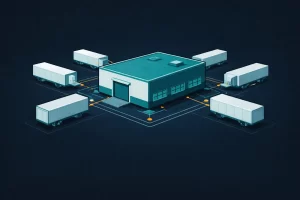
The strategic conversation around bonded warehousing increasingly centers on how much bonded capacity belongs in the target network design. As manufacturing footprints tilt toward new hubs such as Mexico, Vietnam, or India, cross-border corridors are being rebuilt. Bonded nodes near major ports, land crossings, and air gateways give networks a way to absorb regulatory shocks without constant redesign of sourcing or plant locations.
In practice, this redesign often starts with mapping where tariff exposure, duty rates, and service requirements intersect. Product families with high duty rates, volatile trade treatment, or frequent re-export patterns are strong candidates for bonded flows. Seasonal assortments can be pre-positioned in bond close to destination markets, then sequenced into final delivery lanes as selling seasons unfold. For many enterprises, this approach converts bonded warehousing from a narrow tax choice into a core working capital and resilience lever.
Technology capability now plays a central role in provider selection. Facilities that can expose real-time stock status, customs milestones, and value-added activities through integrated platforms reduce the risk of compliance failures and enable more granular planning. Recent customs modernization programs in several regions have increased electronic filing and data validation expectations, which means bonded operators without robust systems can become points of failure rather than risk reducers.
Cost remains a constraint. Storage, handling, and compliance overhead can erode the benefits if turnover is low or if goods linger in bond without a clear release path. Not all products or industries qualify for bonded treatment, and coverage is patchier inland than at major gateways. Decisions to introduce bonded nodes therefore need full landed-cost modeling, inclusive of duties, storage, and potential route changes, rather than a narrow focus on tax deferral.
A disciplined provider selection process is essential. Licensing and customs standing are baseline requirements, but the more strategic questions involve location fit, the scope of value-added services, and the operator’s experience managing complex, multi-client bonded environments. Some facilities can handle temperature-sensitive or restricted goods under bond, while others are limited to general cargo. The right match depends on the profile of trade lanes, regulatory regimes, and the balance between domestic and re-export flows.
Next-stage Questions For Bonded Network Design
One practical next step is to place bonded capacity inside the same modeling lens used for digital twins and scenario planning, rather than treating it as a legal footnote. When bonded nodes sit in the network model alongside lead times, service levels, and carbon data, decisions on where to hold duty risk become part of a single, repeatable planning discipline instead of an ad hoc tax decision made at the margin.