RFID and AI in logistics are tightening the gaps between scans, photos, and physical handoffs that still derail delivery promises at scale. As networks add sensors and on-device intelligence, the real advantage lies in how quickly those signals reshape routing decisions, labor use, and service recovery.
Closing The Gaps Between Scans and Suppliers
Delivery commitments increasingly depend on what happens in the silent stretches between barcode scans. Each time a parcel moves through a trailer, cross-dock, or outbound lane without a data capture event, the network loses the ability to pinpoint delays, prove handoff, or challenge a loss claim. At high volumes, those gaps multiply into rework, search time on the dock, and growing pressure on contact centers.
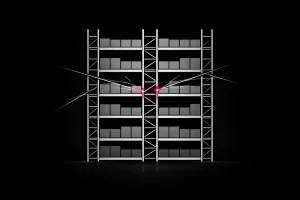
RFID has become a practical tool for shrinking those blind spots while preserving established barcode processes. Tags applied to parcels, containers, or assets broadcast their identity when they pass readers embedded at dock doors, conveyor points, or sorter chutes. The primary article highlights how this arrangement produces billions of additional location and status records, yielding a much denser picture of what flows where, and when. With that signal, hub managers can spot congestion earlier, redirect trailers, or rebalance work across gates before outbound cutoffs are at risk.
The same pattern shows up further upstream, where procurement teams struggle to see beyond direct suppliers. Research cited in the reference material reports that only 12% of organizations track more than half of their tier‑2 suppliers and that tier‑3 visibility remains sparse. Roughly 30% of suppliers do not provide emissions data, leaving a blind corner in sustainability reporting and risk analysis. Enterprises may feel informed about tier‑1 relationships yet still lack insight into where disruption, non‑compliance, or cost pressure originates.
AI and automation are starting to fill some of these gaps in procurement. Industry surveys referenced alongside the article indicate that around 68% of companies apply AI to analytics, data cleansing, and supplier risk checks. However, about 36% of suppliers report no plans to adopt AI tools. That split keeps buyers and their supply base out of sync and reduces the benefit of richer data streams gathered elsewhere in the network.
AI at The Edge and Inside The Facility
The final handoff to the recipient remains the most fragile step in many delivery models. A network can track a parcel flawlessly across hubs and linehaul legs, yet a missing or disputed proof of delivery still drives refunds, reships, and erosion of customer trust. To guard that moment, the primary article describes handheld devices that run AI models directly on the unit. Drivers capture a photo when they drop a package; the device then checks, within milliseconds, that the image is clear enough to serve as evidence and that it avoids sensitive content such as people or visible house numbers.
This on-device screening enforces privacy and quality rules without slowing the route. Drivers avoid extra taps and retries, customers receive a clear visual record, and customer service teams gain a reliable asset for resolving disputes. The approach also reduces the risk of storing or transmitting inappropriate images to central systems, which eases compliance concerns in markets with strict data protection rules.
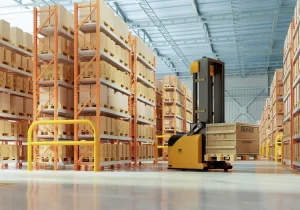
Inside distribution centers, the ambition many executives discuss is a highly automated site where machines handle most routine activity. Yet tasks such as trailer unloading, handling irregular cartons, and dealing with damaged labels remain difficult for robotics. The primary article points to a more layered path that relies on industrial scanners, machine vision, and AI working together.
Fixed and mobile scanners capture codes with high accuracy. Vision systems read labels even when skewed or partially obscured and can classify packages by size or shape. AI engines stitch these inputs into routing decisions that direct items to specific chutes, storage zones, or exception areas. Routine labor shifts away from repetitive scanning and lifting toward supervision, exception handling, and process tuning. This change helps ease labor shortages and also creates more attractive roles for experienced staff, who can focus on problem solving instead of pure throughput.
From More Data To Better Orchestration
The common thread across RFID deployments, on-device image checks, and automated facilities is pressure to convert more granular data into faster, better coordinated responses. Industry reports show that many enterprises claim strong visibility close to their own operations but still contend with weak insight into deeper tiers and partner behavior. Adding tags, sensors, and AI models will not close that gap on its own. The organizations that pull ahead will be those that treat each new data stream as part of a shared decision layer, aligning planning, transport, and procurement around the same view of risk, cost, and service.